
Phelim McAleer: Trump’s handling of crime is working – even his opponents have to admit it
As President Donald Trump deployed the National Guard to police Washington DC leftist media and Democratic politicians doubled down on their claims that crime in the US is at historic lows.
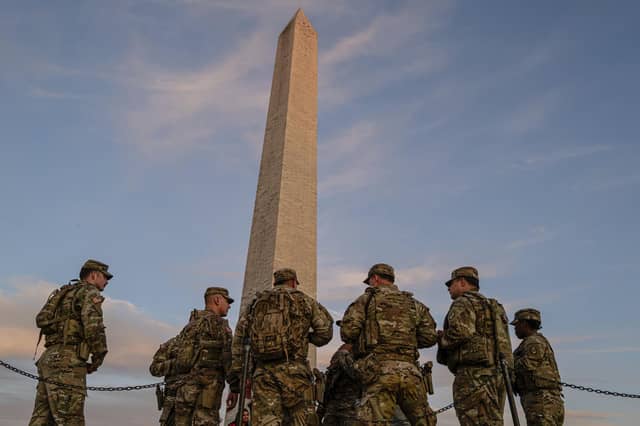

These voices, soft on crime by nature or perhaps nurture, have pushed narratives of declining violence even as everyday realities suggest otherwise. DC Mayor Muriel Bowser stated that "violent crime in DC is at its lowest level in 30 years." The Guardian echoed this, reporting that "violent crime in DC hit a 30-year low in 2024."
They claim this is part of a US-wide trend. Yet, walk into any drugstore or retailer in major US cities and you'll see a starkly different reality: you can't buy razor blades, deodorant, shampoo, toothpaste, or anything of value without it being locked behind glass cases, secured with anti-theft tags, or requiring a store associate to unlock it, because shoplifting and organised retail theft have become so rampant.
This disconnect between rosy official narratives and the fortified shopping experience underscores a deeper crisis in America's urban centres. My hometown of Los Angeles decriminalised theft if it was less than one thousand dollars in value. Most Democrat cities also have a policy of giving bail to virtually every person arrested. The results were predictable.
The reality is that city dwellers know their cities are less safe despite what the official statistics claim.
Whistleblowers have revealed that police management are either underreporting crime or mischaracterising it to pretend their cities are safe.
If you live in a large Democrat-run city, you are also living through a crime spike which started in 2020 and has never ended. The left likes to falsely blame that 2020 spike on the pandemic. But this is a lie. The rise in crime is because of the ‘George Floyd effect’, where police were scared to enforce the law for fear of also being charged with murder if a fentanyl addict like Floyd died in their custody.
Crime actually decreased as the pandemic lockdowns took effect in early 2020, with overall crime falling over 23% and homicide rates dropping in April and May. It spiked dramatically in June, coinciding with Floyd's death on May 25, the charging of police officers, and widespread riots where rioters burned American cities. This led to de-policing, with arrests and police-initiated activities plummeting up to 60% in some areas.
President Trump’s response is not subtle, but it is mighty popular with those enduring the resulting crime wave. He declared a "public safety emergency" and sent in the troops. It's working, and even his enemies have to admit that. Violent crime fell 45%, and as I write this, there has not been a murder since the first National Guardsman arrived in the city. Of course, Trump’s enemies cry authoritarianism, but in crime-ridden U.S. communities, it's mostly seen as salvation. The National Guard is particularly welcome in minority areas which suffer the most from violent crime waves.
Post-deployment, some black residents have expressed support, noting safer streets. A viral video captured locals praising the National Guard for making DC "safe again," arguing it has saved more black lives than movements like Black Lives Matter ever did.
This sentiment isn't isolated; polls show Trump's handling of crime as a relative strength, with his approval rating rising five points after the deployment. In communities weary of drive-by shootings and drug-fuelled chaos, the Guard's presence – patrolling parks and playgrounds – feels like community service, not occupation. Minority voters, traditionally Democratic, are shifting: recent surveys indicate growing Republican support among Black and Hispanic Americans frustrated with progressive policies like defund-the-police rhetoric.
Opposing the deployment is a losing issue for Democrats. The party, long dominant in urban America and with minorities, has been painted as enablers of crime that disproportionately damages minority communities. In DC, a Democratic stronghold, the mayor initially resisted but later thanked Trump for the results – exposing internal rifts. Nationally, Democrats have attacked Trump’s actions – labelling him "racist" and "totalitarian".
However, hundreds are being shot in American cities every day. The party risks alienating urban voters who prioritise safety over ideology. Opposing what works in minority communities could erode their base further, especially as Trump's poll bump suggests voters reward decisiveness and results.
While critics wail about authoritarian overreach, residents are too busy enjoying unlocked toothpaste aisles and murder-free weekends to care. Who knew tough love could be so popular?
Phelim McAleer, from Tyrone, lives in LA