
Phelim McAleer: US lawmakers in both the Republican Party and Democratic Party want the government shutdown to drag on
The US federal government shut down as the clock struck midnight on October 1st.
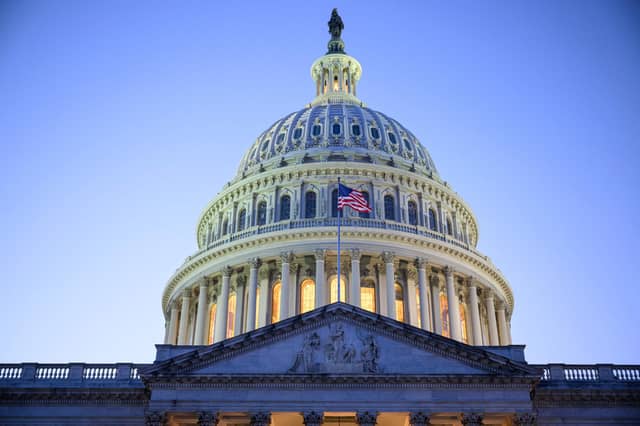

The US federal government shut down as the clock struck midnight on October 1st.
As predicted, pandemonium erupted across the nation. National parks transformed into lawless wastelands, with armed grizzly bears raiding unattended campgrounds. In Washington Smithsonian museums were decimated as priceless artifacts self-deported to their countries of origin.
Then planes were grounded while unpaid security agents formed rogue militias, patrolling with pitchforks fashioned from confiscated nail clippers. In shops and restaurants, food inspections ceased entirely, sparking a nationwide outbreak of sentient salads rebelling against their dressings.
Okay, none of that has actually happened. In fact, as we enter the seventh day of this latest US government shutdown, most Americans remain blissfully unaware that anything is amiss.
A shutdown occurs when Congress fails to agree on a funding bill for the government. And so most government money cannot be spent halting non-essential federal operations. It's not a full collapse; essential services like the military, pensions (social security), and other welfare continue, but many agencies close, and hundreds of thousands of civil servants work without pay or are put on leave. (They will receive the money they are owed when the government reopens.) But right now, the lights are still on, and daily life hums along uninterrupted for the average person.
The economy hasn't ground to a halt, and the stock market has barely blinked. Perhaps most importantly Taylor Swift’s latest album was released without a hitch.
This is all a testament to how remote everyday life can be from Washington's political scene. (That's probably part of the reason why President Trump is so popular, because he is seen as an outsider and not part of the Washington establishment.)
Most people are not dependent on Washington because of America's deeply decentralized political system, where power is distributed across federal, state, and local levels. In many places, they really do elect the dog catcher.
But nothing good lasts forever. Eventually, we in America are going to miss the federal government. It will probably start with air traffic controllers. In the US, they're deemed essential and must work without pay during shutdowns. This is unsustainable and strains will start to show. Eventually flights will be cancelled and you will have a lot of angry Americans.
Most US government shutdowns—and there have been a lot of them—follow a predictable pattern.
Politicians stand on principle, public outrage builds as inconveniences mount, and eventually, one side compromises to avoid the backlash. Which is why most shutdowns end not with a bang but a whimper.
Yet this 2025 edition feels different, more entrenched, because lawmakers on both sides know their hardcore supporters actually want the shutdown to drag on.
Republican voters traditionally don’t like the federal government, viewing it with suspicion as too powerful and too wasteful. They enjoy seeing it being brought to heel in a shutdown.
And President Trump is freezing spending on often unnecessary urban transit and climate projects in Democratic-leaning states. Trump voters see this as a bulwark against out-of-control spending for liberal fantasies.
They also oppose reopening the government because Democrats are pushing for a budget that would provide free, taxpayer-funded healthcare to illegal immigrants. Democrats deny this, citing laws that prohibit illegals from accessing government healthcare programs. But this is disingenuous. Under federal law, hospitals and emergency rooms are required to treat anyone who shows up, regardless of immigration status or ability to pay, and when bills go unpaid, hospitals receive reimbursement from government sources for "uncompensated care, effectively shifting the cost to taxpayers.
However, the Democrats' base is also stubbornly fired up in their support of the shutdown. They lost everything in the last election. They don't control the Presidency, the Senate, the House of Representatives, or even the Supreme Court. It was a trauma, and the politicians are powerless with a base that wants them to fight. The shutdown battle is their way—perhaps the only way—of satisfying that base.
This mutual base-pleasing explains the impasse, and it is amplified by the forthcoming 2026 midterm elections—where control of the Senate and the House will be determined. The midterms don’t normally excite the average American, so success depends on exciting the base. Supporters of both sides will be alienated by a compromise, so we might be in for a lot more shutdown than normal.
Taylor Swift supported Kamala Harris in the last election. It was a disaster and until now Swift’s songs tended to focus on failed dreams and relationships. Her new album The Life of a Showgirl is more upbeat and about finding true love again. If they can pull off a successful shutdown the Democrats will be hoping it's the soundtrack to their political revival.
• Phelim McAleer is a Co Tyrone-born journalist/producer working in Los Angeles. He is on X @PhelimMcAleer