
Philip Barnes: Proposed new primary school religious education syllabus raises many questions
Christianity will “remain central” to religious education (RE) in schools, the education minister, Paul Givan, said on February 3 this year.
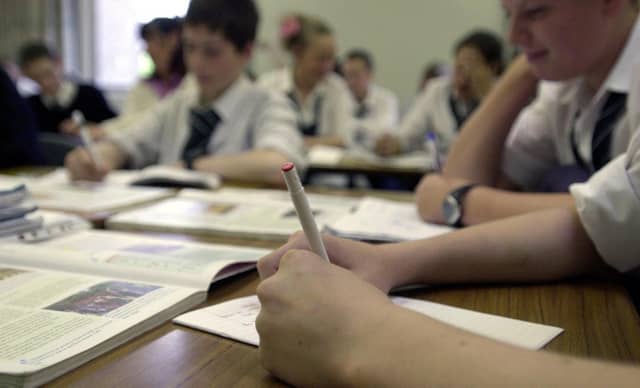

It was a welcome reassurance following a controversial Supreme Court judgment that found Northern Ireland’s both exclusively Christian religious education in the primary school and collective worship unlawful.
The court held that the curriculum was not delivered in an “objective, critical and pluralistic manner” and therefore amounted to indoctrination. Yet this conclusion is not without difficulty. Forms of state-funded, constitutionally protected Christian education continue to exist elsewhere in Europe, including Austria and Germany, without necessarily being regarded as incompatible with the same human rights principles.
The Northern Ireland judgment therefore reflects one interpretation of those principles rather than an inevitable legal outcome.
The publication of Northern Ireland’s proposed new primary RE curriculum marks more than a revision of content; it represents a fundamental change in the nature and purpose of the subject itself. Primary pupils are now expected to study Christianity alongside a range of religious and non-religious worldviews. Even the distinction between a religion and a worldview appears to have been blurred in the drafting of the syllabus.
Only a few years ago such a syllabus would have seemed improbable. Yet this is the direction in which RE has moved following the Supreme Court judgment. Ironically, it is also the very model that many Christian churches once opposed, arguing that introducing multiple religions at primary level risked confusing young children rather than helping them develop a secure understanding of faith and their primary culture. Research evidence lends support to this concern.
Once the Supreme Court ruled that Northern Ireland’s RE curriculum was insufficiently "objective, critical and pluralistic”, reform became inevitable. The question was never whether change was required, but how those principles could be translated into a curriculum appropriate for young children. What has received far less attention is what may be lost in the transition from the old syllabus to the new: classroom hymns, prayers, songs, and school plays rooted in the Christian tradition are all likely to disappear.
The defining characteristic of the proposed curriculum is its breadth. Alongside Christianity, primary pupils are expected to study five additional worldviews together with a non-religious worldview. But does greater breadth inevitably come at the expense of depth? Even the more progressive models of RE in England have not aspired to such an ambitious range. Indeed, a recent Ofsted report observed that pupils often learned very little when religions were presented “like slices of a pie” rather than studied in sufficient depth.
The issue, therefore, is not simply the number of traditions included. Reassurances that Christianity will remain “central” do not address the more significant change. The rules governing representation, pedagogy and educational purpose have fundamentally altered.
Christianity is no longer the framework within which pupils encounter other faiths; it becomes one worldview among several, each presented within the same comparative framework.
The question has never been whether children should learn about other religions. Few would dispute that they should. The real questions are when children are developmentally ready to engage critically with multiple religious traditions and whether primary-aged pupils can realistically develop meaningful understanding while studying so many different belief systems simultaneously.
More concerning still is the suggestion, voiced during a recent radio discussion on the proposed curriculum, that the parental right of withdrawal should itself be abolished. A judgment founded upon human rights should not culminate in the erosion of parental choice.
If increasing numbers of parents choose to withdraw their children, the more important question is not how those rights might be curtailed, but why so many parents feel compelled to exercise them in the first place.
There remains another possible way forward. Existing legislation already permits denominational RE within controlled schools. An optional Christian syllabus operating alongside the proposed statutory curriculum would respect the Supreme Court’s judgment while preserving genuine parental choice.
Such an arrangement would acknowledge the continuing desire of many parents for their children to receive a broad and inclusive Christian education, one grounded in the Christian command to love God and neighbour. It would also recognise that families continue to hold sincerely differing convictions about the purpose of religious education while reducing the likelihood of widespread withdrawals.
The forthcoming consultation should therefore revisit questions that have been raised consistently throughout this process but remain inadequately answered or simply ignored. Is this syllabus simply too ambitious for primary children? Will breadth inevitably diminish depth? How will teachers navigate competing truth claims while maintaining professional neutrality? Will Christianity gradually come to be regarded as merely one option among many? How many parents will conclude that withdrawal is now their only realistic choice?
And should greater consideration be given to a parallel, opt-in Christian syllabus that accommodates the convictions of many families?
There is a final irony. The legal challenge originated with one non-religious family who objected to an element of Christian nurture in schools. The resulting judgment has produced a curriculum that many religious families will find equally objectionable. A decision intended to protect conscience may ultimately generate a different set of conscientious objections.
l L. Philip Barnes is Emeritus Reader in Religious and Theological Education at King’s College London.