
Roamer: Bloodthirsty buccaneer linked to Ballymoney street name
Messages to Roamer’s mailbox about local history are particularly intriguing when there’s an international angle.


James Lynn emailed from Newtownabbey recently - “It will be the 195th anniversary of the formation of the Royal Gibraltar Police on June 30th.” He included more details - the core of much of this page - and explained “the first head of the new police force was Ulster-born Major James Rowan (1782-1859)”.
From a prominent family living in the townland of Mullans near Ballymoney, Major Rowan was appointed by the then UK Home Secretary and future Prime Minister (twice) Sir Robert Peel.
Formed nine months after Peel’s London Met and now the oldest Commonwealth Police Force outside the UK, Major Rowan’s constabulary was originally called the Gibraltar Police Force. The Royal prefix was added in 1992. “The backstory of Major Rowan's appointment is exceedingly interesting,” James Lynn’s note enticingly emphasised.
There was a notorious Spanish pirate called Benito de Soto “whose story has been re-written and re-imagined over 200 years to create his modern rebel reputation,” according to researchers of de Soto’s “vicious and murderous activities in the south Atlantic.”
His blood-thirsty career ended in 1828 in a Gibraltar tavern where he was arrested. But where did de Soto’s brutal life on the ocean wave begin?
Born into poverty in 1805 in Pontevedra on the Galician coast of Spain, Benito de Soto went to sea and became second mate on a Brazilian slave ship, the Defensor de Pedro.
The crew mutinied in 1827 - de Soto gained control of the ship and became the pirate leader. In 1828, off Ascension, he attacked the British ship Morning Star.
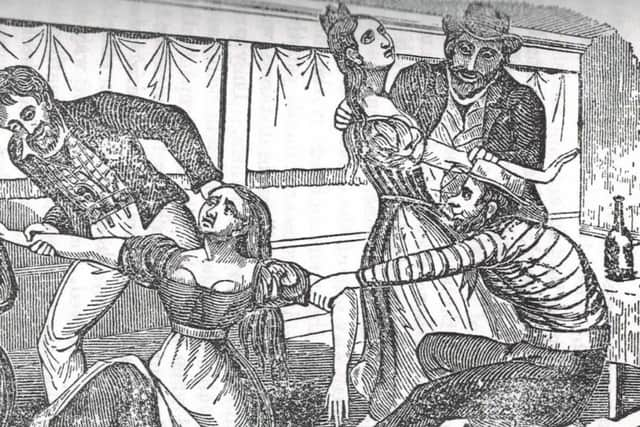
The pirates murdered Morning Star’s skipper, beat up her crew, raped the women passengers and after trying unsuccessfully to scuttle the vessel Defensor de Pedro departed.
Fortunately another British ship rescued Morning Star’s survivors who returned to London.
Next on de Soto’s lethal logbook was the American ship Topaz whose crew was massacred and then several other vessels encountered similar attacks by de Soto - their crews murdered, cargoes ransacked, ships sunk.
Eventually Defensor de Pedro docked in Pontevedra, de Soto’s hometown, where he offloaded and buried a considerable booty before setting sail for Gibraltar.
On 9 May 1828 Defensor de Pedro ran aground near Cádiz in southwestern Spain where the local authorities arrested 17 of the pirates. De Soto escaped and fled to Gibraltar, then a British military garrison.
He was spotted in a tavern in July and though arrested, the security breach embarrassed Gibraltar’s Governor, Sir George Don, and his military administration.
Back in Britain, the Secretary of State for War and the Colonies, Sir George Murray, was outraged at Gibraltar’s slack security and was further angered in the autumn of 1828 by an outbreak of yellow fever started by ‘infected’ travellers.
In order to properly control Gibraltar’s borders, and to boost internal surveillance, both duties were taken from the military and given to a newly established Police Force, closely modelled on the Robert Peel’s Metropolitan Police recently introduced in London.
So closely, indeed, that Major James Rowan, given command of the force on 30 June 1830, was the brother of Sir Charles Rowan, London’s first Metropolitan Police joint-Commissioner, along with Sir Richard Mayne.
Not that Benito de Soto was much bothered about the two sibling bobbies from Ballymoney - in January of that year the barbaric buccaneer had been tried on a charge of piracy, found guilty, and hanged.
It’s said that his last words as he dropped to his death were “adeus todos” - goodbye everyone.
His head was then impaled on a pike.
Maybe a photo and more biographical material for Major James Rowan will emerge, apart from what James Lynn has kindly provided, who points out “the Rowan bothers were notable figures in their own right.”
And there were more! Sir Charles, previously mentioned, was London’s first Metropolitan Police joint-Commissioner and a highly decorated British Army officer. Another brother was the much-decorated Field Marshal Sir William Rowan.
The eldest brother was soldier-turned-Resident Magistrate, Lieutenant-Colonel John Rowan, who lived at Merville demesne in Whitehouse, which became todays Merville Garden Village.
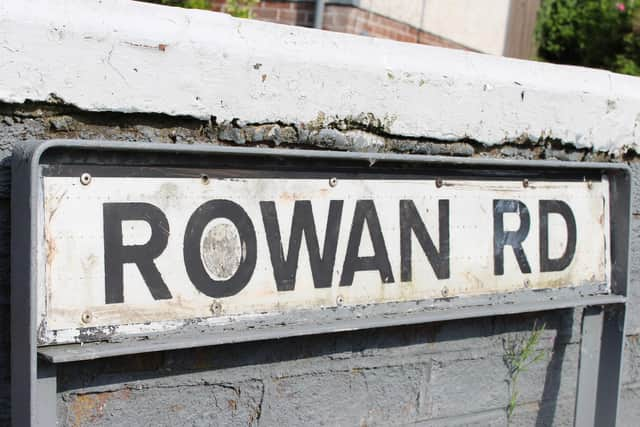
“The aptly named Rowan Road in Ballymoney gives a nod, albeit an inconsiderable one, to the family’s bonds to the district,” James Lynn explains, adding “the Rowans outstanding achievements and place in history have never been properly recognised in their motherland.”