
Roamer: Contrasting memories of the first VE Day 80 years ago
With the 80th anniversary of VE Day drawing nigh Greenisland’s victory celebrations were recalled here last Saturday. Today it’s Fermanagh’s turn!

And shortly - a harrowing account of the liberation of Dachau concentration camp in Germany just a week before the first VE Day.
Down the years this page has shared numerous remarkable wartime stories - from the front lines and the home front - though sadly, the local veterans who recounted their stories here are no longer with us.
The late Rita Hamilton from Maguiresbridge died aged 96 at the end of January 2021.
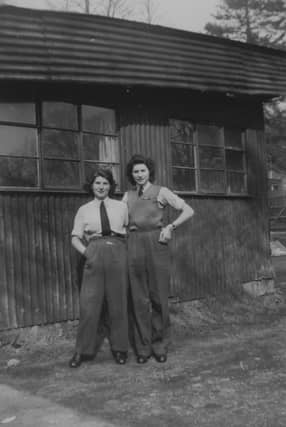
She was a Women’s Auxiliary Air Force (WAAF) driver at Castle Archdale sea-plane base in Fermanagh during WWII and on more than one occasion reminisced here.
WAAF drivers transported aircrew to the flying boats based on Lough Erne; Rita also chauffeured two Air Commodores around the country in a Humber Snipe!
“We drove everybody everywhere. We went to the officers’ mess with supplies of beer or groceries,” she once explained, adding “we delivered depth charges to the seaplanes in trucks and we drove ambulances.”
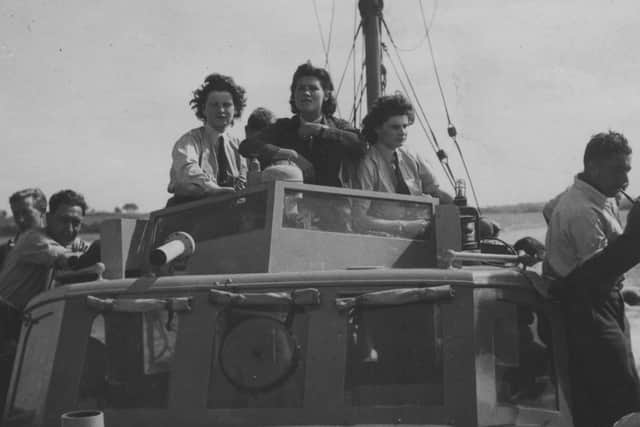
After hearing Churchill’s victory speech on the wireless, her friend and comrade-driver Francis Hornby (who died on April 2 last year) and Rita’s sister Constance, celebrated VE Day on the lough with nine or 10 other WAAF drivers!
Two young RAF boatmen ferried them “on a small motor boat up Lough Erne, as the sun was setting.”
They had no refreshments or food on board “and the boat was rather unstable,” Rita recounted, “but it was an unforgettable trip!”
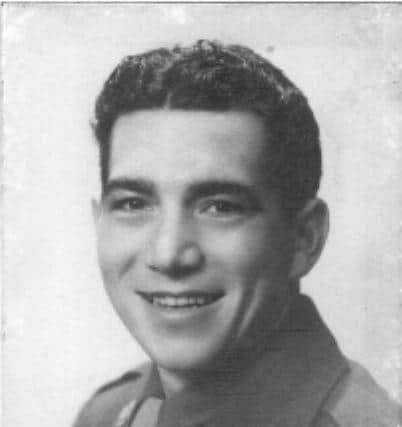
Born in New York but brought up in Northern Ireland when his family moved to Belfast, Teddy Dixon died aged 100 in November 2020.
Teddy was drafted into the US Army in 1944 and at the end of April 1945 took part in the liberation of Dachau concentration camp in Germany.
He also helped recover a hoard of priceless paintings stolen by the Nazis and hidden in salt mines.
In May 2018 Roamer attended a small gathering in Belfast City Hall held in recognition of Teddy’s distinguished wartime service.
In her opening speech the then Deputy Lord Mayor, Councillor Sonia Copeland, explained that Teddy’s family had emigrated to New York in the early 1900s but returned to Belfast in time for their son to be schooled and become a baker.
He was an Air Raid Warden during the Belfast Blitz of 1941 and when the US government issued draft notices to citizens living abroad the 24-year-old Cregagh lad signed up.
Teddy arrived in France with ‘F’ Company, 42nd Rainbow Division, in December 1944.
On the April 29, 1945 he entered Dachau in southern Germany and helped liberate 33,000 prisoners. Over 40,000 had died there before the US troops arrived, many shot or gassed; thousands of others from disease, hunger or relentless forced labour.
Teddy told the City Hall gathering in 2018 that his 12-man squad of American soldiers were Dachau’s first liberators.
He remembered the “horrible, terrible smell.”
As they approached the camp along a railway line they discovered “endless boxcars full of rotting corpses.” They found one man who had been left for dead in a carriage but was still alive and they gave him some medical attention.
“The dead were lying everywhere and the smell was indescribable. There were bodies all over the place” Teddy quietly recounted.
The soldiers gave their rations to those who could still eat but “it was too late for many who died in front of our eyes.”
With deep, silent, unimaginable memories punctuating his words, Teddy recounted “the barrage of German mortars at midnight” as his Rainbow squad tried to sleep in their tents outside Dachau.
Three of his buddies were killed. Teddy’s unit later encountered 40 German soldiers. “We killed about 30 of them,” said Teddy “because we were in the mood for fighting.”
A week later on May 8, 1945 the war in Europe ended and Teddy’s division went to Austria, searching for Nazis hiding in the Alps.
They were also involved in an unusual operation south of Salzburg, in a salt mine, where the Nazis had hidden around 2,000 priceless paintings stolen from Europe’s art galleries.
They included famous artworks by Michelangelo, Vermeer and Van Eyck.
Teddy Dixon’s death in 2020 came less than a week after 97-year-old Bill Eames died - one of the last surviving D-Day pilots, from County Fermanagh.
Teddy and Bill were close friends.