
Roamer: Hats off to the Coates family’s remarkable role in our past
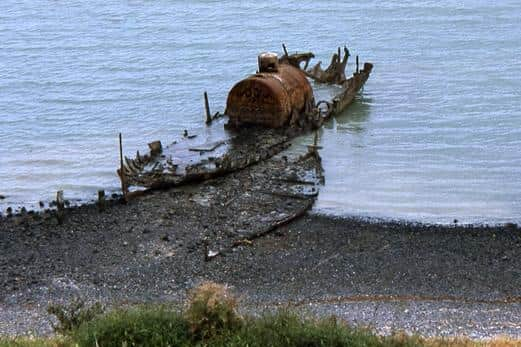
An incoming South Pacific tide concealed much of the old Belfast-built ship shown here last Saturday.

Launched on the Lagan in 1855, the 170-year-old vessel was photographed recently in Lyttleton Bay, New Zealand - apart from some rust, her broken ribs and keel have endured surprisingly well and her old iron boiler seems virtually intact.
She’s The Mullogh, probably the oldest Belfast-built vessel still visible on - rather than under - the sea.
The 60-feet-long, 46-ton, single-propellor, two-masted sailing ketch was built by the almost forgotten Coates and Young shipyard in 1855 and after an historic career (recounted here last Saturday) The Mullogh was beached in 1923 on Quail Island in Lyttleton Bay near Christchurch.
Aside from her extraordinary endurance, the vessel has remarkable pedigree.
Coates and Young’s industrial roots were in pottery, delph starch and muslin; the company launched Belfast’s first iron steamship in 1838, 23 years before Harland and Wolff was founded; The Mullogh sailed to Australia four years before H&W launched their first ship and the Coates family had an enormous influence on the development of Belfast.
Generations of Coates spearheaded Belfast’s linen, engineering, pottery and shipbuilding industries as well as leading the city’s banking, legal and stockbroking institutions, and much else besides.
Local historian Richard Graham from Lisburn specialises in Ulster society families and he writes about them extensively for History Hub Ulster.
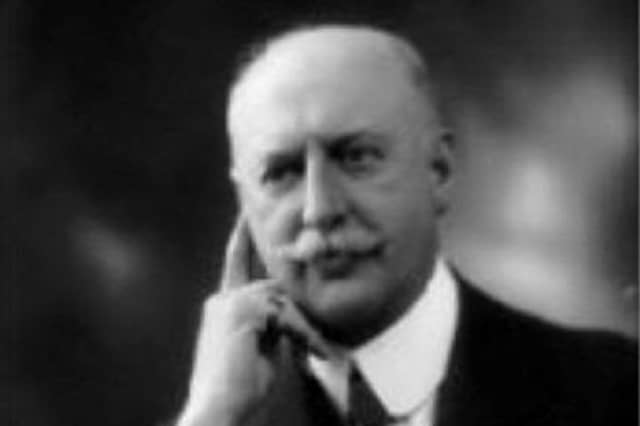
The bulk of today’s page is just a fraction of Mr Graham’s extensive Coates family research, and there’ll be more here in the near future, particularly about Sir William Frederick Coates.
“Like many of our Victorian leaders,” Richard explained, “Sir William Frederick’s achievements have probably faded into time, but he is only one example of ‘the boy made good’ that can be found in Belfast’s rich history.” The first member of the Coates family to come to Ireland from Scotland was Israel Coates (died 1764) who settled in the Falls area of County Antrim in the early 18th century.
Israel’s son Victor (1760-1822) soon established himself in business at the Lagan Village, an industrial enclave on the County Down side of the river close to the Ballymacarrett glassworks, trading as a potter making ‘red ware and a course kind of delph’ from 1791 onwards.
Victor soon diversified into starch manufacturing and by 1798, in partnership with John Young, a muslin manufacturer, he established one of Belfast’s first foundries, trading as Victor Coates, Son and Young, at the Lagan Foundry.
Victor’s eldest son, also called Victor, died at the early age of 21 in 1812, but his second son William (1796-1878) proved more than capable at expanding the business and soon the company had a second foundry at Princes Dock, off Corporation Street.
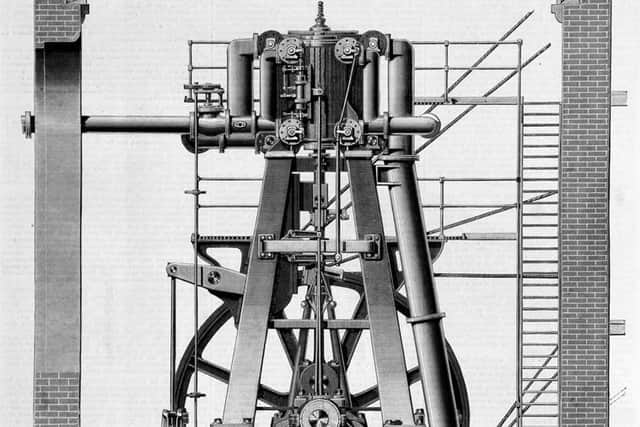
As brass and iron founders, the company specialised in building steam engines for the rapidly expanding linen industry in Ireland. And ships too.
The engine for the first steamboat in Ireland - a wooden vessel - was built at the Lagan Foundry in 1820 and Coates also built the first iron steamship in Ireland in 1838.
Coates’ engines were to be found in numerous mills in Ulster.
William also served as a member of the Belfast Chamber of Commerce; became a magistrate for Co Down and was elected to serve as Deputy Lieutenant for the town of Belfast, before becoming High Sheriff in 1869.
He lived at Glentoran, a large house in Lagan Village, not far from the foundry, and married Mary Ann Lindsay of the linen family who operated as manufacturers at the Mulhouse Works with wholesalers and retailers at Donegall Place.
Although it was his father Victor who had started the foundry, it was William who developed not only the business but also raised the family’s social standing in the town of Belfast.
William had four sons, two of whom, Victor (1826-1910) and David Lindsay (1840-1894), joined him in the business, whilst the eldest boy Maurice Lindsay, established himself as a cotton spinner on the Springfield Road.
Both brothers, trading as Victor & David Coates Ltd were not only extremely successful businessmen but amassed incredible wealth as the demand for their products grew. Victor purchased 170 acres at Dunmurry where he built Rathmore House as his residence in 1865, whilst David chose to live in Strandtown in East Belfast where he bought a large villa called Clonallon.
Watch this space - there’ll soon be an account here of the remarkable life of David’s eldest son, Sir William Frederick Coates.