
Roamer: The scrake of dawn on a country farm on Christmas day
On this final Roamer-page before Christmas, Ballycarry reader Sam Dunn brings seasonal greetings to you all with a wonderfully evocative Yuletide poem.
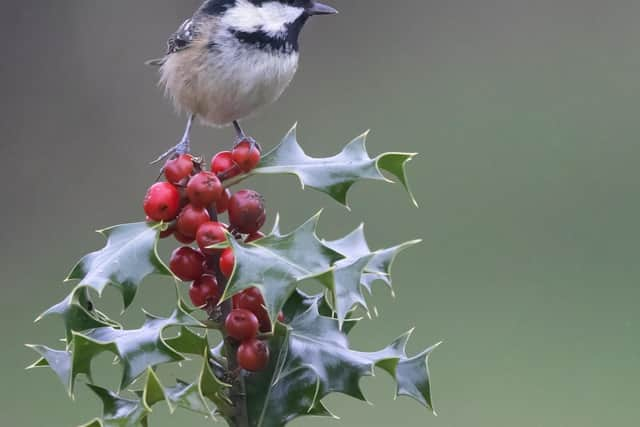
Feeling similarly nostalgic, Roamer has been perusing the archives relishing the vast range of festive stories down the years. There’s been everything here from the origins of carols and the Alpine ‘tannenbaum’ (Christmas tree) to WWII’s American GIs building Hitler-lookalike snowmen in Fermanagh and Dromara photographer Terry Hanna’s seasonal Goldfinches and Coal Tits instead of traditional Robins.
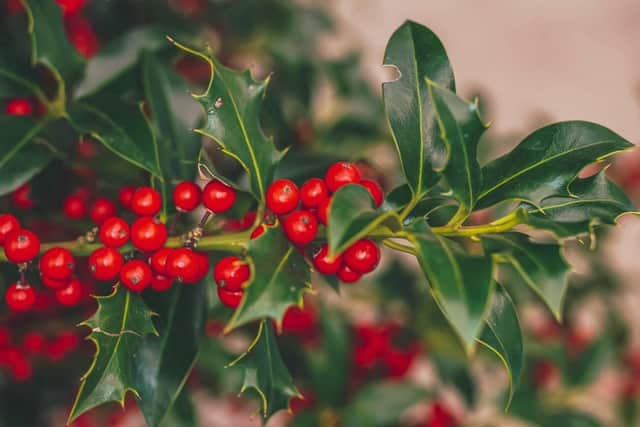
Back in 1988 the previous Roamer, Louis Malcolm, compiled a magnificent Christmas page with childhood memories of his “holly safaris” around local hedges “to knock a few branches” with the reddest berries and prickliest leaves.
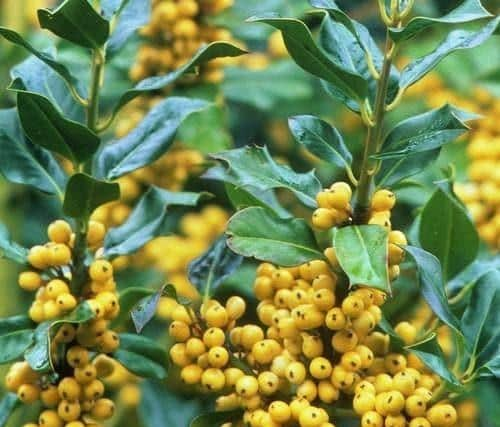
“Do the shops sell natural, yellow-berried holly any more?” he asked. Thus inspired I made some enquiries and yes, there are yellow varieties still available, and one called Ilex aquifolium ‘Amber’ with orange berries.

I also discovered that holly berries make excellent brandy, a revelation that begged more research.
The brandy is called either ‘Eau de vie de Houx’ or the lengthier ‘Eau-de-Vie de Baie de Houx’. ‘Eau de vie’ - with or without hyphens - is French for ‘water of life’. ‘Houx’ is holly and ‘baie’ is berry.
A number of outlets stock it and I contacted Jonas Larsen, owner of Fine Drams in Sønderborg, Denmark.
“Do you have any Eau de vie de Houx?” I asked, adding apprehensively “Is it really made from holly berries?”
“Yes, we do have it in stock,” said Jonas “and it really is made with holly berries. Feel free to place an order!”
Jonas’s brand is ‘Nusbaumer Baie de Houx Eau-de-Vie’, from a distillery in Alsace established in 1947 by Joseph Nusbaumer, famed for saying “to distil is to extract the soul of the fruit”.
Another celebrated French distiller, Rene de Miscault, commented on the sad reality that holly brandy is by far the most expensive Eau-de-Vie. “Because you must be brave to pick the berries,” he said, referencing the prickly leaves, and adding “plus, it's very cold when they ripen!”
(Rene’s concern about the temperature is understandable - his business has a distillery in Tahiti experimenting with brandy recipes using mango, banana and papaya.)
‘Nusbaumer Baie de Houx Eau-de-Vie’ is over 50 euros for a 70cl bottle and “harvesting these berries is a painstaking process” Jonas Larsen explained, “so this style of liqueur is very rarely made.”
There is a minimum of 5kg of holly berries per litre of spirit, which is aged for a couple of years in stainless steel casks to ensure “full integration of flavour”.
The result is described by connoisseurs as “a fragrant, slightly vegetal spirit with notes of forest floor, bittersweet berries, sour cherries and fresh green leaves.” The distillery adds a hearty commendation - “it’s totally unique.”
I mentioned earlier that Sam Dunn from Ballycarry is ending Roamer’s final page before Christmas with his wonderfully evocative poem about Yuletides of yore.
“There's a lot of talk and articles about farmers,” Sam told me, “the importance of the work they do, increasing the tax they pay, that sort of thing.”
Sam’s father was a dairy farmer “milking cows, morning and evening, seven days a week, 365 days a year, on a farm near Straid, Ballynure, close to a junction called ‘Showy Glen’”
Sam’s poem is about his earliest memories of Christmas morning around 1960.
Country Christmas Morning 1960
At the scrake of dawn my father would rise
to do the milking. In the ticking-clock-quiet
kitchen he would pause;
read a chapter from the Bible;
then pull on his wellington boots and step
out to the frosty farmyard.
Under swaddling blankets, we heard a screech
as he pushed the big sliding byre door.
We stirred, grumpy, then dozed in sleep
to the lowing of cattle and bleat of sheep.
‘Long time ago in Bethlehem . . .’
Harry Belafonte was singing on the wireless
and we remembered - It’s Christmas Day!
Our drowsiness scattered,
we clattered downstairs, pyjamas
tripping us, then, bare feet on cold tiles
unnoticed, we rummaged our presents:
oranges, socks, books. ‘Something useful.’
Outside, earth in darkness, heaven’s stars
shining through aeons of space and time,
my father would be taking the barrow,
ice-cold piercing his hands, wheeling silage
(treacle-coloured, like Christmas pudding)
for the cows, and forking it
into the manger.