
Roamer: Underground with the men who monitored nuclear bombs
Last week’s page concluded 15 feet below ground in the Royal Observer Corps (ROC) nuclear monitoring post near Portadown.

I’d negotiated a 20-runged rugged iron ladder inside a narrow concrete shaft to get down to the 17x10 ft rectangular bunker, about 7 ft high with 2-ft-thick concrete walls and ceiling.
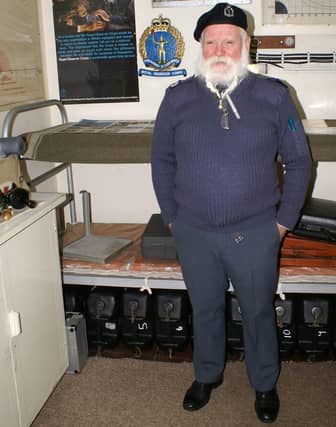
“Compact and bijou”, quipped its restorer-curator Alistair McCann.
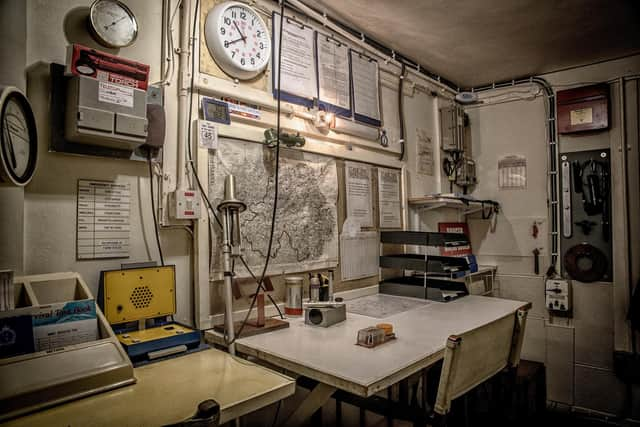
Furnished with desks, chairs, workbenches, a double bunk-bed and a tiny ‘ensuite’ chemical toilet, it’s packed with gadgetry, technical equipment, maps and charts.
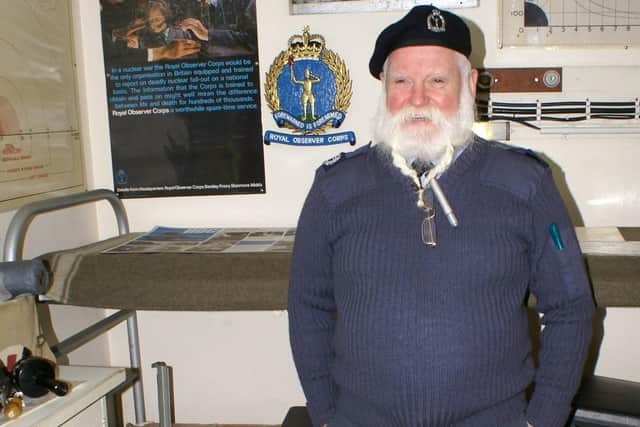
“The moment you’d hear the rumble,” Colin Woods told me, pointing at what looked like a clock, “that needle would go up!”
It was the ominously-named Bomb Power Indicator, crucial to Colin’s duties as Leading Observer in the bunker from 1983 to 1991. “The needle measures the bomb’s pressure wave,” he added.
Another device “with a wee button on it marked Teletalk,” he continued, “an observer would press that and call out ‘tocsin 45 post, tocsin 45 post’!”
Portadown was number 45 post (of 58 ROC posts across Northern Ireland) and ‘tocsin’ was the code word for a nuclear explosion.
There were 10 observers attached to 45 post who’d have been alerted by radio and television.
Each observer had a ‘grab bag’ containing extra clothing “and we were encouraged to bring books, puzzles, games and magazines”, Colin recounted, “anything that was going to make life that wee bit more interesting; also stuff like sweets, extra carbohydrates, pasta, spices and rice. I know some of the observers over in England actually wallpapered their bunker to make it home from home!”
He pointed to a row of water canisters under the bunk-bed that were regularly refilled “so we constantly had a fresh water supply in there…for whenever,” Colin added.
And should ‘whenever’ come “we’d have worked out a shift schedule called ‘Stage One Operations’,” Colin explained, “with three of us on duty at any one time. The first three would get the post up and running.”
Number one observer went to ROC HQ in Lisburn for supplies - “cardboard boxes full of rations,” Colin outlined, “dried and tinned food, dried milk and all the rest of it - he would have picked that up, and fuel to cook it with, and would have stored it here.”
Number two stayed in the bunker, at the Teletalk, communicating with HQ and the other posts, and “recording anything and everything that happened in the post diary”, Colin added.
Number three “changed the photographic plates and other apparatus upstairs that needed setting up, like the radio mast and have the radio ready to go if we needed to use it.”
With Stage One complete “we’d have informed HQ, moved to Stage Two Operations and changed designations so that we weren’t doing the same job all the time.”
In a nuclear explosion they’d have to stay in the bunker for up to three weeks so they’d need change duties to “keep everything as varied and interesting as possible”, Colin explained.
He pressed a button that set off a series of loud bleeps.
“That was called ‘the sound of peace’”, he explained, “as long as that was going nothing was happening, but you never wanted to hear this!”
He pressed another button which set off a deafening, unnerving, wailing siren followed by a loud, continuous recording - ‘attack warning red, attack warning red….’
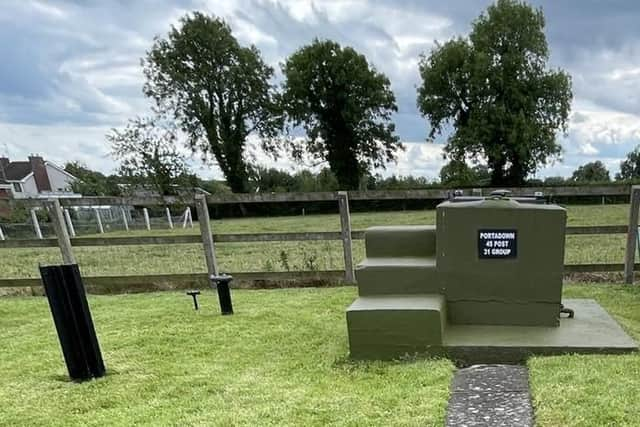
“Once you heard that you knew inter-ballistic missiles or whatever else were on their way and we’d work to do,” said Colin, calmly explaining what would have happened next. There was a pinhole camera outside on top of the hatch called the Ground Zero Indicator which indicated the compass direction of the explosion - it was an observer’s duty to retrieve and replace the photographic paper.
Another observer would have read the pressure on the Bomb Power Indicator and activated the ‘Tocsin 45 post’ callout “and we’d have been feeding back the information to HQ, constantly keeping an eye on radiation levels,” explained Colin.
The observers were also required to go outside to take additional readings, to crank the warning sirens and fire off flares.
I wondered about protective clothing.
“Some posts were supplied with coats, thick coats,” Alistair McCann told me, “but there were no gas masks, there were no NBC (nuclear, biological and chemical protection) suits, nothing like that.”
l The bunker reopens next April, with at least one monthly entrance free open day. Details at facebook.com/nibunker