
Roamer: White House was raised, razed, and raised again by Irishmen
Behind the current tsunami of Presidential headlines, Washington’s White House and U.S. Capitol are the stately stone symbols of American democracy.
And besides the many U.S. presidents who had, or claimed, Irish ancestry (or an Irish golf resort) the history of Washington’s iconic government buildings is profoundly impacted by Irishmen.
There were two main players from the Emerald Isle involved in their construction (and destruction, and reconstruction etc!) - Robert Ross, born in Rostrevor (then called Ross-Trevor) in 1766 and James Hoban, born in a thatched cottage in Callan, County Kilkenny, in 1758.
James became a wheelwright and carpenter and after training as an architect in Dublin he went to America in 1785. He opened an office and in 1791 he met President George Washington who was impressed with the young designer’s elegant, Irish-Georgian style.
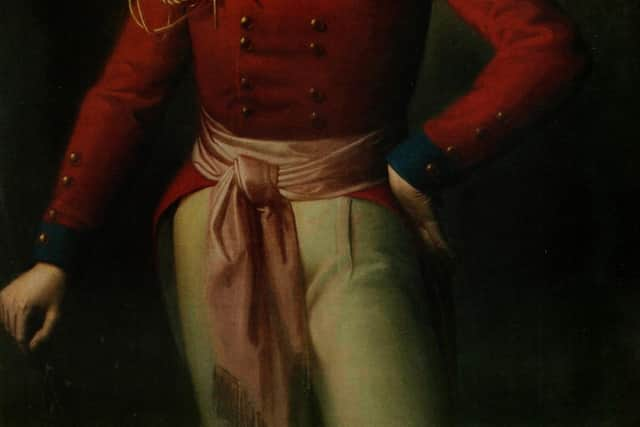

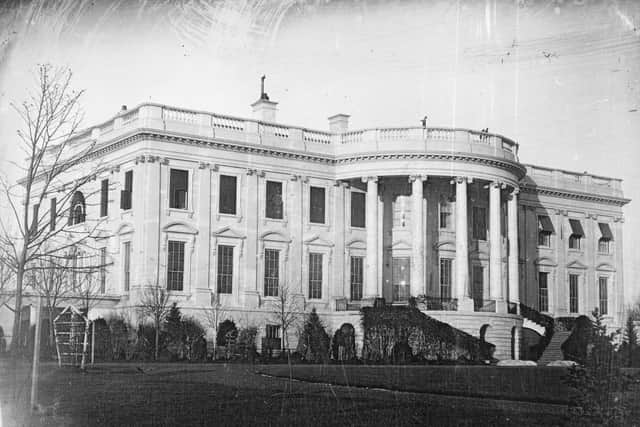
In July 1792, following a public competition, the President and his advisors chose Hoban’s design for the executive mansion - the White House - apparently inspired by Dublin’s Leinster House.
James wasn’t successful competing for the design of the US Capitol building, which was awarded to another architect, but in 1793 President Washington commissioned Hoban to “take on himself the general super intendency of the Capitol.”
A few years later Rostrevor’s Robert Ross entered the fray!
The capture of Washington is “one of the most extraordinary stories in British or American history”, according to historian and journalist Peter Snow.
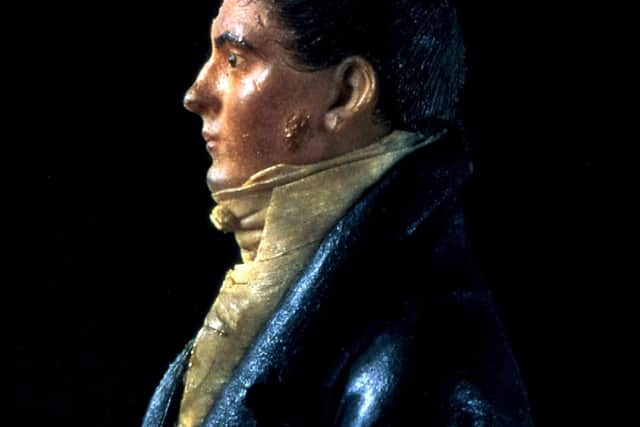
A military man from a military family, General Robert Ross served gallantly under the Duke of Wellington in the war with Napoleon, and in 1814 he was posted to North America with British troops to help end the war with America, then into its third year. Ross landed in southern Maryland and advanced on the capital.
In August 1814, outside Washington, Ross led his troops to victory over a powerful American force at Bladensburg.
The British entered the city that night and over the next 24 hours, the White House and the Capitol were torched along with many public buildings. When news of the victory reached London in September, Rostrevor’s General became a national hero.
But sadly, he died three weeks after his Washington victory, when he fell under American militia-fire during the failed British attack on Baltimore. General Ross was greatly loved and respected by his troops and was a multiple-hero for his exploits in the Napoleonic Wars and for what he accomplished in America, as well as numerous other battles.
In commemoration of his historic military career his family name became ‘Ross of Bladensburg’ and their coat of arms was amended to depict a captured American flag.
This incensed the Americans who apparently planned an attack on Rostrevor, but the war ended before the plot was hatched and in 1826 soldiers who served under Ross erected a monument in Rostrevor to celebrate their hero.
Back now to Irish architect James Hoban, whose White House was incinerated by Ross. In 1814 Hoban was commissioned to rebuild it, virtually a total redesign as the structure had been almost completely destroyed.
Thus the White House was raised, razed and raised again by two Irishmen, but like everything else in Irish history, there’s some disagreement!
I mentioned earlier that Hoban’s design for the White House was said to have been inspired by Dublin’s Leinster House, the home of the Irish Parliament in Dublin.
(The Washington mansion took eight years to build, and every President since John Adams lived there. President Adams moved in on 1st November 1800 before building work had been completed and wrote to his wife Abigail from a damp unfinished study “may none but honest and wise men ever rule under this roof!”)
But Queen’s University historian Colin Armstong argued in the press a few years ago that Castle Coole in County Fermanagh was the much more likely inspiration for the White House than Dublin’s Leinster House.
Colin cited numerous architectural analyses and historical theories.
He stated: “The differences between the White House and Leinster House are more obvious than the similarities” and like the White House, Castle Coole “has two stories and a projecting portico with Ionic columns matched by a bow (curve), also with Ionic columns, on its rear elevation.”
But unless archival evidence emerges, said Colin, the theory “will have to stay hypothetical. And I might add,” he concluded “that the Fermanagh building is more elegant than the one in Washington DC!”