
Ruth Dudley Edwards: Sorry Michelle, despite what you think the election results mean, people still want security and money, not the end of the UK
I try to be charitable to Michelle O'Neill, first minister of Northern Ireland. It is only partly her fault that she can never say anything interesting, since the politburo in Sinn Fein HQ are ever vigilant.
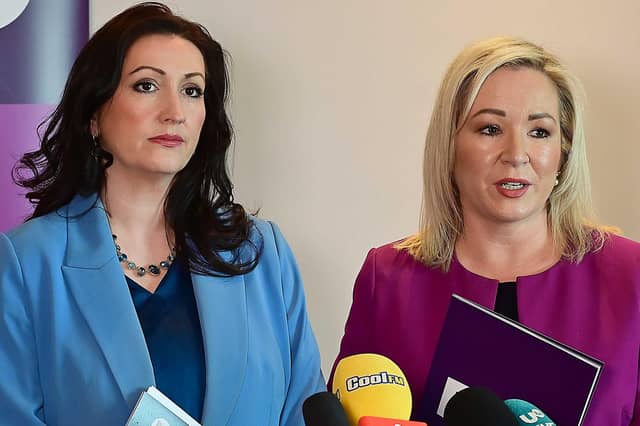

She wasn't given the job by Martin McGuinness in his dying days in order to be original or independent-minded.
She was required to be female, smartly dressed, have family links to the IRA, and follow the party line at all times.
If you’re interested, check out Grok.com for the action-packed lives and — in two cases, deaths — of Michelle’s father, her uncle Paul, and her cousins Tony and Gareth.
And for balance, look at the colourful career of the father of co-equal first minister, Emma Little-Pengelly, a former British soldier who was jailed for his illegal activities in the loyalist Ulster Resistance.
Both Michelle and Emma often make heroic efforts to show each other courtesy in public, but anything involving constitutional issues is difficult.
As is anything contentious, since underlying all the tensions is the simple fact that Sinn Fein want Northern Ireland to fail; unionists want it to prosper.
So although Northern Ireland had no elections last week, reacting to the results was a challenge.
The Union was “cracking at the seams”, explained Michelle.
She and Rhun ap Iorwerth and John Swinney had agreed “to work together to stand up for the best interests of our people and for the right to self-determination”.
The people were “tired of the shackles of Westminster, both in Scotland and Wales”.
“For the first time ever, there will be three nationalist, pro-independence first ministers in office, here in the north of Ireland, in Wales and in Scotland.”
Emma – who is a lawyer – responded bluntly.
“I am a unionist, and Michelle is a republican.
“We are not led by a nationalist.”
Emma told the assembly: “I believe what NI really needs is a first and deputy first minister for Northern Ireland, not a first minister for its abolition.
“I do believe that we should be unashamedly proud of this place. I am.”
She counted it a huge honour to speak up for it and have responsibility to get the opportunity to do so.
She wanted “to see economic growth in Northern Ireland for absolutely everyone, unionist, nationalist and neither, and I think that is the best way that we stabilise this place”.
In Scotland, after two years of nationalist leadership, the vote had gone down, she pointed out.
And in Wales, split unionism cost the first minister position, "which was a lesson for everyone here in NI”.
“I believe the Union is strong. I believe in working together across this United Kingdom, but most of all I believe in being deputy first minister for Northern Ireland and supporting everyone.”
The horrors of trying to free the UK from the EU, showed graphically the problems of breaking up the UK.
The grim truth for nationalists is that devolution has been a catastrophe which has turned large swathes of the population against independence and made it ever more keen on having large English subsidies.
Popular support for independence is hitting bottom in all parts of the UK, as is any interest in a united Ireland.
It’s all about money and security in the end, Michelle.
l Ruth Dudley Edwards is the author of The Faithful Tribe: An Intimate Portrait of the Loyal Institutions and also of Aftermath: the Omagh bombing and the families’ pursuit of justice