
Ruth Dudley Edwards: Why the upcoming election campaign in the Republic of Ireland is not to be missed
I had begun to write about something completely different, but I couldn’t ignore the bombshell hurled into the imminent Irish general election campaign by Senator Michael McDowell.
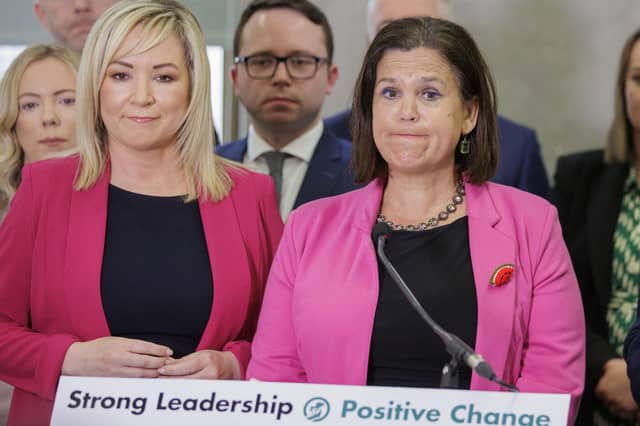

“Sinn Féin is not a conventional political party,” he wrote in his Irish Times column on Wednesday.
“It is a tightly controlled revolutionary movement still in the grip of a very small group, many of whom were active in the IRA’s campaign of violence.”
An ex-tánaiste (deputy prime minister) who is once again a powerful voice in the Irish Republic, as minister for justice from 2002 to 2007 he had always been an instinctive supporter of law and order and a hardline opponent of the Provisional IRA.
He has had a career full of dramatic ups and downs.
Since I have a deep dislike of cant (a word meaning pious hypocrisy that was much used in my home about the language of priests my sceptical parents particularly disliked), and found the Irish affection for what is called “the soft word” to be usually simple cowardice, I admired McDowell particularly for the often merciless frankness that made him thoroughly unpopular with many.
I also liked his hatred of sectarianism, his unusually open mind, and his grasp of history.
He also has a cutting wit, which you either love or hate.
I admit that he has had the priceless advantage of being a prosperous barrister whose family would still have had plenty of food on the table had he lost his seat, but it was his honesty and courage that has driven him to take such monumental risks with his career. (And he gives all his considerable Dail pension to charity.)
His highest and lowest moments came with the general election of 2007, when, in a bare-knuckle television debate he showed his contempt for Gerry Adams and his economic illiteracy and loose relationship with truth.
Anyone who followed politics and had any brains knew that the Sinn Féin claim that its representatives took only the average industrial wage and selflessly donated the surplus to the party was boloney, but worried about lawyers, few challenged it.
McDowell enquired how Adams could afford his holiday home in Donegal.
It was owned by the bank, was the answer.
“Which bank is that, the Northern Bank?” asked McDowell, who was not inclined to ignore politely the links between Sinn Fein and the IRA’s 2004 £26.5m Northern Bank robbery.
He won the debate hands down, saved his country from Sinn Féin but upset people who like the soft word, destroyed his Progressive Democratic party and quit politics for ever.
However, the old warrior returned in 2016 when he won an independent Senate seat, led the opposition in 2024 to the two appalling proposed family-destroying constitutional amendments backed by all major political parties and hated by the electorate, and became enormously popular again.
And now that Sinn Féin have hit yet another rocky patch with recent revelations about child abuse, lies and covers-up, McDowell’s message about the reality of the party is perfectly timed.
His argument is that the fundamental reason why it’s crashing in the polls is that the centrist public are suspicious of the hard-left agenda driven from Belfast, want reconciliation in Northern Ireland rather than constitutional confrontation, and have no appetite for a polarising and pointless border poll.
“The Army Council still exists,” he explained. Sinn Fein leaders “are not really leaders but more like glove puppets for unseen controllers”.
This will be an election campaign not to be missed.