
Simon Hamilton: The increasing Uber-fication of politics has made us all impatient
Cast your mind back two years. Trump triumphant again. The tech bros offering tribute. World leaders fawning. Democrats in disarray. Executive order after executive order. Governing and getting things done on steroids.

Fast forward and his Republican Party has lost control of Congress in one of the most emphatic political reversals of modern times.
Keir Starmer suffered much the same fate. Elected as Prime Minister in a landslide. A massive majority. Apparently unassailable. Talking about a decade of renewal as though the next election was already in the bag. Within two years, he was out. Another former Prime Minister joining the procession out of Number 10.
I’m not saying that either gentleman didn’t have a hand in his own downfall or difficulties. War in Iran sending fuel prices soaring. Trying to take winter fuel payments away from pensioners. These and plenty of other missteps played their part.
But it isn’t the ebbs and flows of politics that are remarkable. That’s what has always happened. One minute you’re up. The next, the electorate or your own party has decided it’s time you retired.
What is astounding is how little time leaders now get to prove themselves.
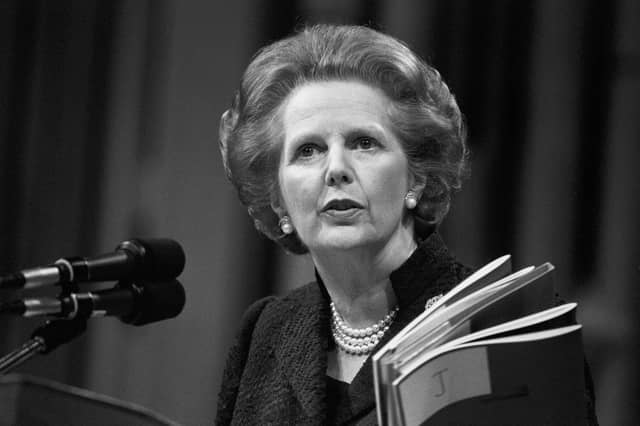
When I was growing up, Reagan and Thatcher seemed to rule supreme. Reagan was re-elected in a landslide, winning every state bar one. Thatcher won three elections and spent more than eleven years in Downing Street.
What history can sometimes gloss over is that both had rocky starts. Re-election wasn’t assured but they got the chance to turn things around.
You might say the same about football managers. It is highly unlikely that Sir Alex Ferguson would have been given the chance to prove himself at Old Trafford today.
Why, when we know that the world is an incredibly complicated place, with myriad issues facing our political leaders, are we so impatient?
I blame what I call the increasing Uber-fication of politics.
Reach for your smartphone, tap a few buttons and an Uber is at your door within minutes. Order a pizza and it’s with you in a fraction of the time it would take to drive there and collect it yourself. Buy something from Amazon today and it arrives tomorrow.
And when the Uber, the pizza or whatever we’ve ordered online hasn’t arrived some of us are quick to complain and demand to know what’s gone wrong.
We can even watch its progress on a little map. We know where the driver is, how many stops are ahead of us and when we should expect a knock at the door.
Is it any wonder that, in a world of almost instant gratification and the literal delivery of our demands, we aren’t willing to give presidents or prime ministers much longer than two years?
Tony Blair, someone who stayed in power for a decade, wrote that changing a country takes ten years at a minimum. Fifteen is better. Twenty is optimum.
Change years to months. That’s the shelf life nowadays.
Don’t like your leader? Change them. Uber taking too long? Cancel and order a new one. Much the same response.
Technology is a great thing. It has helped us make enormous progress. Being able to get what we want when we want it is something most of us happily take advantage of. But I wonder whether we have carried those expectations into parts of life where they simply cannot be met.
The Health Minister can stand up at Stormont and announce a new healthcare facility in an afternoon. Getting it planned, funded, built and staffed takes years. Changes to education might take a generation to show their full value. A serious attempt to improve a country’s fortunes will involve difficult decisions whose benefits arrive long after the discomfort. That is a hard sell to people accustomed to next-day delivery.
Politicians aren’t innocent in all of this. They promise to fix things quickly, sweep away obstacles and get the country moving. Then they get into office and discover why their predecessors found it so difficult. Having encouraged us to expect an express service, they can hardly complain when we ask what’s keeping them.
But there is a consequence to our impatience. If leaders believe they have only months to make their mark, the temptation is to reach for whatever produces a result, or at least a headline, within months. The difficult work that might make the biggest difference over a decade gets put off again.
Leaders should be held accountable. Nobody is entitled to twenty years in power simply because they say they have a plan. But constantly changing the person in charge can mean constantly changing the plan before we know whether it works.
Of course, there is always the exception that proves the rule – Northern Ireland. Here, no matter how poorly the Executive performs, how little it delivers or how long it takes to get things done, we have more or less the same parties in power all the time. Politically, we are still analogue in a digital world. I’m not entirely sure that’s something to celebrate. But somewhere between cancelling the Uber before it turns the corner and waiting indefinitely for one that never arrives, there must be a happy medium.
Simon Hamilton is MD & co-founder of Confluence Consulting