
Trevor Ringland: An interdependent model for society allows us to embrace diversity
The ‘culture war’ over Northern Ireland’s future appears to have intensified recently. This has involved aspects of culture being used effectively as weapons, which creates more division in our society in attempts to stoke constitutional uncertainty.

The irony is that these things, which are often employed so aggressively, are legitimate aspects of our shared home place, as it was so thoughtfully described by Seamus Mallon.
A number of campaigners keep talking about a shared Ireland, even though their ‘conversation’ contains little substance, but first and foremost we should surely learn to share properly this place that belongs to all those who live here.
Three fronts in particular continue to rage particularly fiercely in this ‘culture war’.
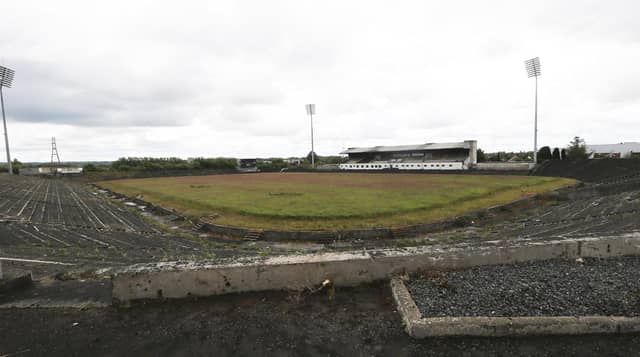
Firstly, there is continued uncertainty over the redevelopment of Casement Park. This has caused strong feelings on all sides, but the debate should be kept in context.
After the Maze stadium project was abandoned, funds were provided for the three large sports (football, rugby and GAA) to redevelop separate stadia.
For a variety of reasons, the plans for Casement Park could not be delivered. An initial estimate of £77 million rose recently to as much as £400 million, which dwarfed the allocations for other sports.
There are now discussions around more modest plans, but, if the development is still substantially more expensive, we must at least see a facility that is shared when needed with other sports, which could, for example, include staging a rugby international in Belfast.
An even more controversial topic is rolling out Gaelic Irish signage, despite previous assurances that this was not a priority. For some groups close to Sinn Fein, this is clearly being used as a continuation of their war, which is now being waged through other means.
It is designed to provoke and create differences, rather than underlining what we share. Language is first and foremost about communication, and traffic signs should be clear and easy to understand. For that, Gaelic is unnecessary.
Yet, Irish is also one of the native languages of the UK and it can help us to better understand our surroundings. Perhaps, to help us appreciate it, it would be more fitting, where a street’s name has a clearly Gaelic-Irish origin, to erect a plaque explaining its meaning.
So Belfast, which in English is just a collection of letters, could have its origins highlighted in the Irish words Beal Feirste or (Beal) mouth of the Farset (Feirste) river. In that way, the language would draw us together rather than pushing us apart.
A third concern is the continued segregation of education, exacerbated by the expansion of the Gaelic language sector.
A leading educator indicated to me that I would just have to accept that many Catholic families want a Catholic education for their children. As I pointed out to him all I want is for four year-olds, irrespective of their backgrounds, to have a chance to make friends and stay friends throughout their lives.
We should be challenging Irish medium schools and others to set out how they will achieve that. There are plenty of examples of how to do so.
An interdependent model for society works. It allows us to recognise that everyone is different, embrace diversity, but still aspire to work together and enjoy close relationships. Northern Ireland has problems, but it is doing well in many respects.
We should appreciate that our constitutional arrangements have played a part in that success, and try to work on a genuinely shared future, rather than trying to open up new divisions in our society or pick at old wounds.
Trevor Ringland is a lawyer and reconciliation campaigner