
Victor Warrington: Opportunities such as Co Tyrone gold mine plan don't come often - council's approach so far has been fundamentally short-sighted
As a local councillor on Fermanagh and Omagh District Council, I believe it is time for honesty in how we approach the proposed mine by Dalradian in County Tyrone.
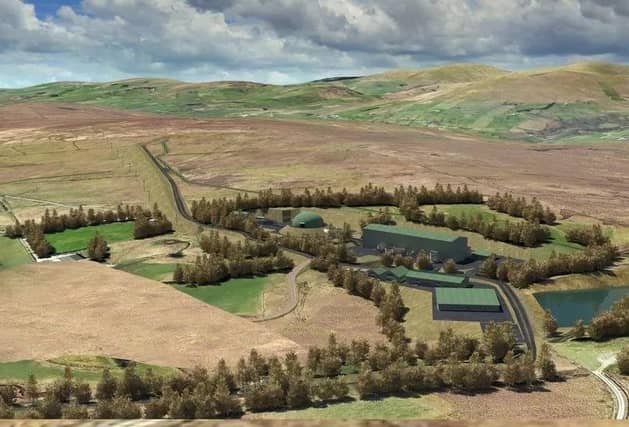

From the outset, my Ulster Unionist colleagues and I have consistently opposed the decision of Fermanagh and Omagh District Council to use ratepayers’ money to oppose Dalradian’s underground mine plans at public inquiry. The commitment of up to £700,000 of ratepayers’ money on a barrister and specialist consultants to oppose the planning application is entirely the wrong approach.
No other council in Northern Ireland has ever committed this level of funding to oppose a planning application in this way.
Yet the course of action, pushed through by Sinn Fein and the Alliance Party, means the council will spend hundreds of thousands of pounds to effectively duplicate the role of statutory consultees and other government bodies tasked with scrutinising the application.
At a time when public services across Northern Ireland are under strain, serious questions must be asked about priorities. Households and businesses are facing rising costs. Councils are under pressure to deliver core services such as waste collection. Against that backdrop, spending vast sums attempting to block a planning application cannot be justified.
The approach of the Sinn Fein-dominated council has been fundamentally short-sighted. It has actively opposed Dalradian, which itself is a ratepayer and an employer within our district. Rather than constructive dialogue and fair scrutiny, the council chose confrontation.
That sends a worrying signal to investors: that major economic proposals in the west of Northern Ireland will be met with hostility.
In August 2019, Dalradian removed cyanide processing from the proposal after listening to concerns raised during consultation. That was a significant move and change to the project.
Yet some continue to describe the proposal for an underground mine using emotive language such as ‘toxic mining’. That does not accurately reflect the reality of a modern and regulated underground mine, operating under strict environmental oversight standards in Northern Ireland.
If we are serious about regional balance and economic growth west of the Bann, something repeatedly championed by Sinn Fein economy ministers, then we cannot simply dismiss or try to block overseas investment when it arrives.
The west has long argued, and rightly, that it needs stronger economic drivers. Opportunities of this scale do not come along often. The proposal for the mine represents up to 1,000 direct and indirect jobs, around £1billion injected into the local supply chain and at least £4million in a community fund.
Over the 20-year lifetime of the mine, the company is expected to contribute over £2.3billion in taxes to the exchequer. That is new revenue that could be used to support vital public services. For example, those tax receipts alone would exceed NI Water’s widely reported £2billion funding shortfall.
It is reasonable to ask: how can parties and politicians claim to champion economic growth and regional balance on one hand, yet oppose a project of this scale on the other?
You cannot champion “jobs and investment in the west” in principle while rejecting them in practice.
The contrast with other parts of the United Kingdom is striking. Cornwall Council has supported the reopening of the historic South Crofty tin mine, recognising the importance of domestic mineral supply job creation, and regional regeneration.
In an increasingly technological world, access to critical minerals is no longer a niche issue, it is a strategic one. Gold, silver, copper, and other critical minerals are essential components in electronics, renewable energy technologies, medical devices, and advanced manufacturing.
Across the UK and Europe, there is a growing recognition that we cannot remain dependent on imports, particularly from China, for the raw materials that are needed for digital infrastructure and the green transition.
It is easy to oppose mining. The reality, however, is that it is a necessity. We cannot insist on the technologies of the future while pretending that the raw materials required to build them simply appear without mining.
Dalradian’s application has now been in the planning system for over eight years. For any major development that delay is unacceptable.
A credible planning system must provide certainty. Investors, communities and third parties deserve clarity and timely decisions.
The Ulster Unionist Party supports the public inquiry process. It is the proper forum to test the evidence rigorously and transparently, including environmental safeguards, economic impact, and regulatory compliance. We will respect the outcome of that independent process.
But supporting due process is not the same as spending unprecedented sums of ratepayers’ money to oppose an application before that process has concluded.
This proposal should be judged on evidence, regulation, environmental protection and economic merit — not on political positioning.
It is not too late for the council to change course. There remains an opportunity to step back, reconsider this approach and recognise the potential economic opportunities that this project could bring to our district.
As Ulster Unionist councillors, my colleagues and I will continue to encourage the council to adopt a more balanced and constructive position, one that respects due process, protects ratepayers’ money and acknowledges the potential benefits of the Dalradian proposal.
Cllr Victor Warrington is the Ulster Unionist Party group leader on Fermanagh and Omagh District Council