
David Thompson: The Orange Order's attitude to Drumcree has shifted massively since the 1990s, why hasn't Sinn Féin's?
When I reported on an Orange Order legal challenge over Drumcree at the start of the summer, like most people, I did not think it would ever result in a green light for a walk down the Garvaghy Road – simply because it seemed to me a closed issue.
If the Parades Commission had banned it for the past 28 years, what on earth could have changed now to upend that?

What was different this time was the tactics deployed by the Portadown District. This is an organisation which has, for almost three decades, abided by the legal determinations of the Parades Commission – but got nowhere in challenging them.
Enter Jamie Bryson. His core message to grassroots loyalists and unionists is to use the law. Despite not being known as someone keen on compromise, that’s what he and the Orangemen did.
They accepted a scaled back parade, no bands and early in the morning – a level of flexibility which left the commission little choice but to accept.
For people my age, Drumcree conjures up images of thousands of people on a hill above police and army lines. Barbed wire across fields and a steel barricade on the road to stop the Orangemen making their way towards the Garvaghy Road.
I think of protests and riots right across the country, inflamed by both sides of the dispute, which caused mayhem in the long hot summers of the mid to late nineties.
There were many deaths as a result of these wider sectarian tensions. Among them were Constable Francis O'Reilly, a 30-year-old Catholic police officer and married father of three – the last RUC man murdered during the Troubles. By loyalists.
The impact of these summers of violence over parades had on the police – and within the unionist community – is often overlooked.
In June 1997, a loyalist mob murdered RUC officer Gregory Taylor in Ballymoney in an attack linked to a banned band parade in nearby Dunloy. The 41-year-old Protestant father of three was kicked to death in the street outside a pub.
That murder caused tensions in the County Antrim town that live on to this day. Ordinary unionist people – band parade goers and in the Orange themselves – who refused to donate money for the policeman’s killers were intimidated.
The following year, a mile away, the Quinn children, Jason (8), Mark (9, and Richard (10), were burned to death in their home.
To be clear, the Orange Order had no role in any of these murders. As the peace process neared a conclusion, Northern Ireland was a tinderbox that both loyalists and republicans were happy to ignite if it helped them get what they wanted.
At that time, the Orange institution was an organisation that wasn’t for budging on its right to walk the Queen’s highway – and declined talks. Sinn Féin, who had exploited grievances over parading right across Northern Ireland, were equally uncompromising. No Orange feet on this street was a rallying call.
Grievances were stirred up by republicans all across the province, with parading disputes providing a convenient distraction from republicans’ concessions.
Orange men and women, and the marching band culture, were painted as hate organisations to the world. This slur by the people who killed more Catholics than any other group during the Troubles – the Provisionals – was another convenient distraction.
Or worse, it was gaslighting a community they had terrorised – telling them it was indeed Sinn Féin and the IRA who protected them.
In 1998, the Garvaghy Road parade was banned – and as the decades wore on, the issue was seemingly put to bed forever. Except it wasn’t for the Orangemen, for whom it mattered deeply.
They did the right thing by abiding by the law, and using the legal system to expose the sloppy practices of the Parades Commission. For all its faults, the commission has largely kept a lid on parading disputes for nearly 30 years.
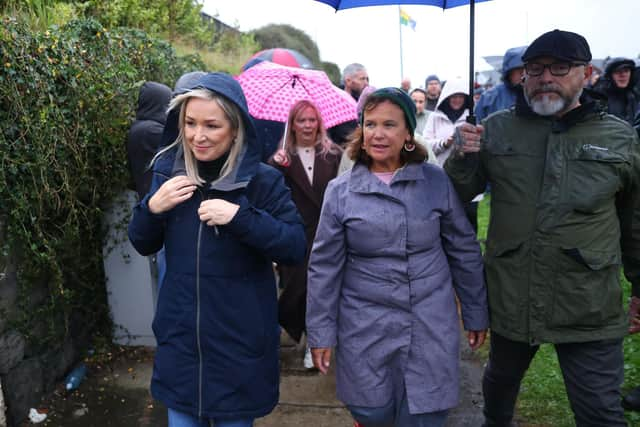
Therefore, it is a dangerous strategy by Sinn Féin and the SDLP to refuse to accept the legitimacy of the latest Drumcree decision. Worse to hold rallies outside the courts and to block the road to frustrate the law. While there has been no hostility shown by the Orange to the Garvaghy Road residents – the hostility shown by nationalism towards some of their Protestant neighbours has been shocking.
Sinn Fein have for weeks branded Orange parades “sectarian harassment” and “supremacist”. The SDLP has said the orange tradition “has been about one thing and one thing only…. walking past our houses to remind us who’s in charge”.
Despite all the progress, the two main communities in Northern Ireland often fundamentally misunderstand each other. Nationalism has no concept of the damage it has done to its ‘new Ireland’ project. Similarly, many unionists misjudged the level of opposition this parade would create in political nationalism.
I don’t believe that anything approaching a majority of unionists are interested in the resurrection of the Drumcree dispute. But what even moderate unionists are furious about, is the law breaking and the uncompromising attitude of nationalists in response.
The Orange order has changed, it would likely accept one final parade to close the issue for good. Yet there has been no softening of position from Sinn Féin. Its politicians, from the First Minister down, have been willing to risk convictions in order to block an Orange parade.
While the Orange Order has changed, it is Sinn Féin who are as uncompromising as they were in the 1990s.