
Jackie McGregor: The link between menopause and sciatica – subject for a Hollywood movie
“How do you feel?” asked my new physiotherapist as I straightened up from attempting to touch my toes.
“Nostalgic!” I replied, “I haven’t seen my feet since 1998!”

She smiled politely.
Looking at this athletic, young specimen of womanhood, who had no trace of a muffin top belly to spoil her perfect view of her feet, I felt porky, inflexible and old.
What age is this child anyway, I asked myself, where are all the grown-ups?
I found the doctor I visited recently disturbingly youthful, and my new dentist is practically an embryo! I currently seem to find myself adrift in a sea of children, all treating me for one age-related ailment or another. I have such a list of painful complaints; the physio is having to work through them one at a time. We are currently on my crippling sciatica. After getting rid of two frozen shoulders (common with women aged 40-60).
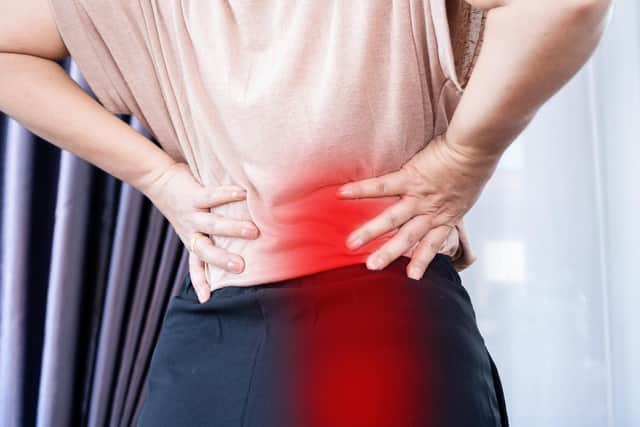
My latest midlife affliction is sciatica. The pain gets worse when I’ve been sitting, when I arise from a chair I now walk like Quasimodo.
As I stood in front of my young physio I felt like an item on the Antiques Roadshow as she assessed me. These menopausal years have not been an easy ride. I’ve been hit repeatedly with horrible conditions, from ringing in my ears, to not being able to remember why I walked into a room. Presently, just being able to walk into a room upright would be wonderful, even if I couldn’t recall why was I there!
While menopause doesn’t directly cause sciatica, the hormonal changes associated with it can create bodily conditions that make the sciatic nerve more vulnerable to compression and irritation. As oestrogen levels take a nosedive the spinal discs, the little cushions between the vertebrae, can become less hydrated and more prone to bulging or herniating.
Think of them as deflating cushions no longer providing the support they used to, add menopausal weight gain and the weakening of core muscles, which are crucial for supporting the spine, all these puts added pressure on the lower back, a recipe for sciatica.
The combo of menopause and sciatica can feel like a cruel joke of Mother Nature. Thankfully, there are things we can do to alleviate the discomfort – physiotherapy, gentle exercise like swimming, yoga, heat packs, ice packs and over-the-counter pain relievers.
My friend is also currently suffering from sciatica. We met to compare notes on our shared affliction and menopausal journey.
“I was mortified undressing in front of that young physio,” I sighed as we sat in a café, “she was so perky, and I felt so … saggy!”
“Don’t worry,” replied my pal looking into a tiny mirror, “at least you’re not growing a beard, like me!
“What was that documentary Davina McCall made about her menopause?” I queried.
“Sex, Myths and Menopause” my friend replied.
“I wonder what a film about our menopausal journey would be called?” I pondered.
“When Hairy Met Saggy” she suggested.
We laughed then hobbled off home, one pain-riddled step at a time.