
Letter: A different perspective on USA 250 anniversary - let's not forget Canada and the United Empire Loyalists
A letter from Martyn Boyd:
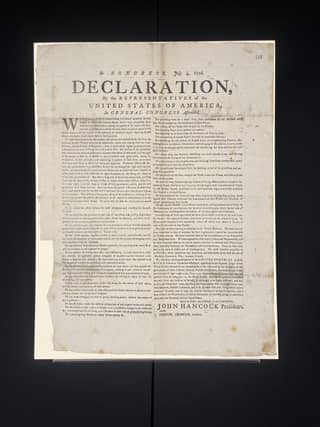

On July 4, 1776, the 13 British colonies in the eastern part of what is now the USA declared independence from Great Britain and the British Empire, a day known as Independence Day in America.
However, the majority of colonists remained loyal to the Empire. They became known as United Empire Loyalists. Many of them were Ulster-Scots and Scots; they outnumbered the American rebels but faced persecution for their loyalty.
Their properties were destroyed, people were murdered, and families were forced to flee their farms. A great many fled north, during and after the revolution, to what became British North America, greatly contributing to the creation of what would become the modern nation of Canada.

Some argue that the Revolutionary War was unnecessary, suggesting that America could have progressively achieved independence without the bloodshed and ten years of war, just as Canada would within 91 years of the Declaration of Independence.
Others believe it was a war initiated by a wealthy colonial elite seeking to expand westward into protected Indian lands in pursuit of greater enrichment.
George Washington and others were concerned that, after the British victory in the Indian wars, they were vulnerable to a lower class increasingly unhappy with the wealth of the likes of Washington and other wealthy slave-owning landowners, who diverted negative attention from themselves to the British.
The British Army, once protectors of colonial America against French aggression just a few years earlier, became portrayed as an occupying force. Taxation was a deceptive tactic to rally the masses. The revolution benefited the wealthy by exploiting the common enemy, the British.
While Americans remember their separation from Britain, Canadians celebrate the Loyalists as key figures in their nation’s foundation. The influx of so many United Empire Loyalists into British North America resulted in expansion and the creation of new colonies. In 1867, Ontario, Quebec, Nova Scotia, and New Brunswick joined in Confederation to form the self-governing Dominion of Canada.
By 1905, Canada had peacefully grown into its modern form, with Newfoundland joining in 1949. Canada now spans the Atlantic, the Pacific and the Arctic Oceans, a “True North, Strong and Free”, as their national anthem proclaims.
The Loyalists’ legacy continues to shape Canada’s close ties to Britain. Like the UK, Canada is a constitutional monarchy, with the King as head of state and a similar legal system.
Of the 1.7 million Canadians who fought in alliance with Britain in both world wars, many thousands were immigrants or descendants of immigrants from all parts of Ireland, predominantly Ulster-Scots.
Many of their graves can be found all across Northern Ireland and Great Britain.
Canada Day is celebrated annually on July 1.
Martyn Boyd, Bangor