
Letter: The Lough Neagh action plan falls dramatically short of what is required to protect it from further ecological devastation
A letter from Louise Taylor:
Lough Neagh plan fallsbadly short
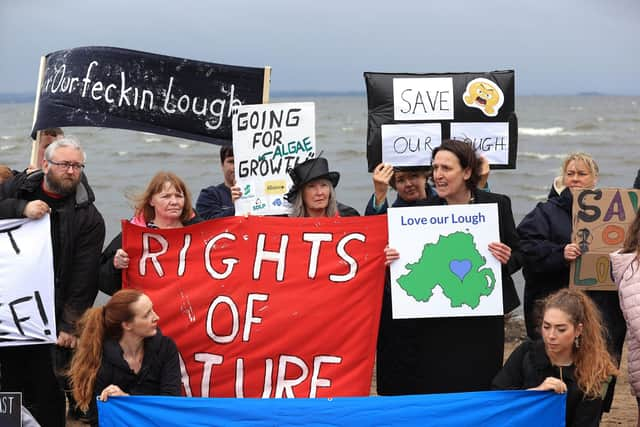

Last year when the blue green algae blooms in Lough Neagh erupted and at their peak, we had a non-functioning government, yet again.
In April of this year, Stormont was back up and running and Andrew Muir was assigned the unenviable task of heading the Department of Agriculture, Environment and Rural Affairs (DAERA), the department in charge of Lough Neagh. He was the first DAERA Alliance minister, a strategic move by the other parties noted by those politically interested, especially with the Lough Neagh crisis looming for almost a year by that point.

On Thursday the Lough Neagh Report and Action Plan was approved which is structured around four main pillars – Education, Incentivisation, Regulation, and Enforcement. While any plan being produced is welcome after almost a year of radio silence from our departments, it falls dramatically short of what is required to protect the Lough from further ecological devastation. In a report I co-authored with Professor John Barry and Dr Calum McGeown with the Centre of Sustainability, Equality and Climate Action at Queens we found that many local people held no hope that the government would manage to effectively protect the lough. The participants largely held the departments and extreme levels of political dysfunction responsible for the ecological crisis and public health emergency.
None of the points in the plan indicate that Stormont is committed to seriously tackling the high levels of pollution entering the largest freshwater lake in the UK and Ireland. If they were serious, then they would treat this situation like a crisis. An extreme event requires mobilisation and effective, collective political action, we have not seen that from our department, and I find that worrying, particularly as the blooms with a vengeance.
If the plan was serious about tackling this crisis, then the objective would be to adopt a Zero Pollution Strategy and design an all-island Water Quality Agreement between Stormont and the Dail. The catchment area includes both the Republic and over 40% of Northern Ireland, why has this not been mentioned?
Covid-19 demonstrated how quickly restrictions can be implemented, social behaviours adapted, and regulations put in place to protect public health and wellness. The Lough Neagh crisis has been widely documented and stated to be a public health emergency and concern. Yet where has the Department for Health and the Public Health Agency been? Why have they never been involved?
The uncomfortable truth is we all pollute and while the agricultural industry has been identified as the main polluter of Lough Neagh, we are all responsible for the state of our environment to varying degrees. NI Water is also a massive polluter, and septic tanks play a huge part in this issue, but large amounts of money and investment are needed to tackle these problems which are largely attributed to a growing population, outdated infrastructure, and decades of systemic and governmental negligence and failure.Lough Neagh is not going to recover unless she is protected and the pollution is stopped, four pillar programmes are well-meaning and a move in the right direction, but they aren’t anywhere near enough. What is needed is effective, collective, community action and envisaging what a sustainable NI would look like, until we start doing that these plans are not going to do anything substantial or meaningful and the Lough will continue to suffer and the crisis will escalate.
Dr Louise Taylor, Founder of Love Our Lough