
Letter: Believing in those who may want our votes goes far beyond words and manifesto
A letter from (Very Rev Dr) Norman Hamilton:
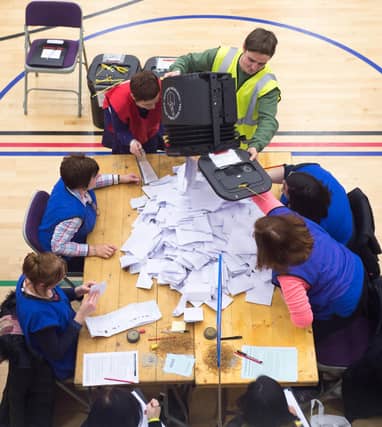

In the next few weeks before the election we will be talked to, talked at and possibly talked out.
Promises will be made, jibes will be swapped, and social media will be awash with bitterness. And all the while, a great future will be dangled in front of us from a variety of perspectives.
I am absolutely not a cynic, and my Christian faith would not allow me to be, even if I wanted to indulge. And yet, there is a crucially important ethical background from the recent past that will often be set aside in the attempts that will be made to have your vote - and mine.
In the recent sessions of the covid inquiry in Belfast, alongside the evidence given in the Post Office scandal, and the damning indictment of so many in the infected blood scandal, we have seen a consistent pattern of cover up, shameless self-interest, spin doctoring and blame often being attributed to others.
The public service principles of transparency, honesty and integrity have been seen to be seriously and publicly relegated to the back benches.
In conversation with some leading people in the public realm, a devastating question has been raised with me more than once. It is this. Is there any reason to believe anything we are told any more, whether it be by politicians, public servants or so called 'expert' witnesses?
The answer is usually a despairing 'No', though some individuals have been singled out as honourable exceptions to the general pattern.
Yet a key reason for voting at the election is to try to ensure that we get good government. Most of us can cope with the truth, no matter how unpalatable it may be, provided that mistakes in the past are openly acknowledged alongside clear commitments to seek to do what is right and just; to use scarce resources compassionately and wisely; to value people properly both for who they are and for what they do - even though all of these will be open to robust debate and even legitimate disagreement.
In the coming few weeks, I will actually read party manifestos, but I will also listen carefully to the tone as well as the content of answers given in interviews. I will look for humility alongside conviction; for honesty about the past and present alongside realistic hope for the future; for respect for opponents alongside coherent disagreement with them.
In a word, having confidence to believe those who may want our votes goes far beyond words and manifestos. It really is distressing that there is so much ground to be made up.
(Very Rev Dr) Norman Hamilton, Former Presbyterian moderator