
Letter: ‘First minister’ myth is a shallow game of symbolism which has undermined political unionism
A letter from Edward Ferrin:

David McNarry’s recent letter (Strategy to reclaim post of first minister?, March 12) arguing that unionism must come up with a strategy to win the next NI Assembly election and install a unionist first minister is a prime example of unionism's failure to deliver politics of substance rather than a shallow game of symbolism which has undermined political unionism.
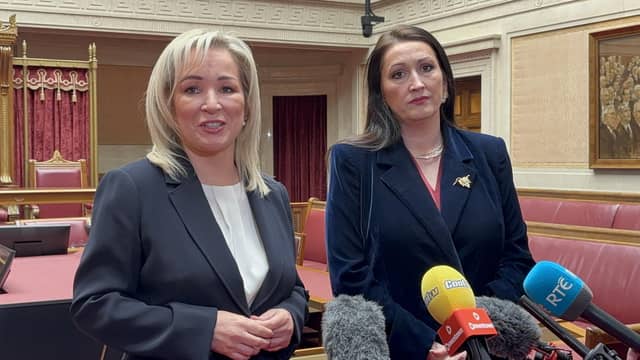
His analysis that failure to return a unionist ‘first minister’ will hand a ‘free pass to Sinn Féin to walk without challenge back into the first minister's office to dominate for five more years’ is not grounded in the reality of Stormont politics. Let’s make it clear – Michelle O’Neill as ‘first minister’ has no more power than Emma Little-Pengelly as ‘deputy first minister’. The two joint heads of government within the NI Executive have the same power as each other.
For all the huffing and puffing of certain unionist politicians - particularly in the DUP - about the doomsday when there would be a Sinn Féin first minister, the powers granted to Emma Little-Pengelly as deputy first minister are no different to that of her unionist predecessors when they were first minister.
What was particularly laughable last week was when DUP MLAs backed the right of Michelle O’Neill to remain as ‘first minister’ than be more accurately named as ‘joint first minister’ – keeping the meaningless word of ‘deputy’ for Emma Little-Pengelly.
Unionists should be appalled by this blatant act from the DUP to keep the good old ‘make a unionist first minister’ argument that has so often been used by the party to squeeze the UUP and TUV.
The DUP could have supported the motion to rename both positions as 'joint first ministers' but chose to keep Michelle O'Neill in the role titled 'first minister' for short-term electoral gain.
The fear of a ‘Sinn Féin first minister’ is just a tactic to make the DUP the only unionist party in Northern Ireland strong enough to be the largest party – it worked in 2007, 2011, 2016 and 2017 but it failed in 2022. Unionist voters want a positive case to be made for Northern Ireland's place as a part of the UK, not a pre-prepared scare tactic to gain votes off fellow unionists.
The politics of symbolism serves no purpose other than to further alienate unionist voters and strangle any new, fresh, alternative ideas as to how political unionism best tackles social and economic issues.
For those unionist politicians who have little to offer other than mantras to ‘reclaim the first minister role’ and unite all brands of unionism in a single party, maybe it is time to leave the stage and let fresh thinkers take control of the direction political unionism will travel upon in the coming years.
Unionist voters need more than election ploys and wishful thinking to feel energised.
Edward Ferrin, Belfast BT14