
Letter: If GAA chooses to honour paramilitaries, it cannot credibly claim to represent a shared future
A letter from Colin Berry:

The recent controversy in Comber over the GAA’s involvement in a summer scheme has generated more heat than light.
Much of the media coverage focused on local reaction, but the deeper questions: about memory, identity, and the role of paramilitarism in public life, remain largely unexamined. Yet these are precisely the questions Northern Ireland must face if we are to move beyond uneasy compromise toward genuine reconciliation and normalization.
As a society, we’ve come to a kind of truce with our past. Many accept that paramilitary violence, however regrettable, played a role in shaping the peace process.
But recognising that reality is not the same as excusing the ongoing romanticisation of violence.
We cannot credibly reject political violence while turning a blind eye to its celebration.
Institutions that receive public funding and present themselves as inclusive, such as the GAA, must be held to the same moral standards as any other civic body.
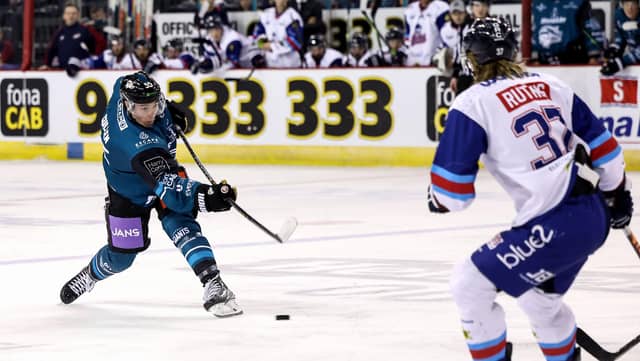
Take the Belfast Giants. They’ve chosen not to play the UK national anthem at home games; a decision that breaks with standard practice in the Elite Ice Hockey League, but is widely seen as a thoughtful gesture toward neutrality and inclusion.
Why doesn’t that same principle apply to the GAA, especially when it is presented as a vehicle for cross-community engagement?
This isn’t a theoretical concern. In Dromintee, the Lochrie/Campbell GAA Park is named after two IRA members who died while attempting to plant a landmine.
Kevin Lynch GAA Club in Dungiven, named after an IRA hunger striker who died in prison, still competes under that name.
Would the same tolerance be extended to a football team that disgracefully named itself ‘Shankill Butchers FC’ or competed for the ‘Top Gun McKeag Trophy’?
The very suggestion would be rightly condemned. So why is one form of violence sanitised, while another is universally reviled?
This isn’t incidental; it’s a consistent pattern, and one that sits uneasily with the GAA’s claims to inclusivity.
I write not as a distant observer, but as someone with roots in both places. I grew up six miles from Dromintee. I now live in Comber.
I’m in my thirties; I have no memory of the Troubles, only a clear and lasting horror at the violence that shaped so much of our political discourse.
We’re often told ours is the first generation to grow up in peace, but what kind of peace are we preserving if we quietly uphold the legacy of those who used threats and violence to achieve political ends?
Northern Ireland cannot have it both ways. Either we renounce paramilitarism outright, or we accept that violence remains a legitimate political tool.
There is no neutral ground. If the GAA, or any institution, chooses to honour paramilitaries, it cannot credibly claim to represent a shared future.
Inclusion and neutrality are not slogans; they are principles. They require consistency.
Colin Berry, Comber