
Letter: Jon Burrows is right to challenge unionist love affair with Reform UK
A letter from Edward Ferrin:
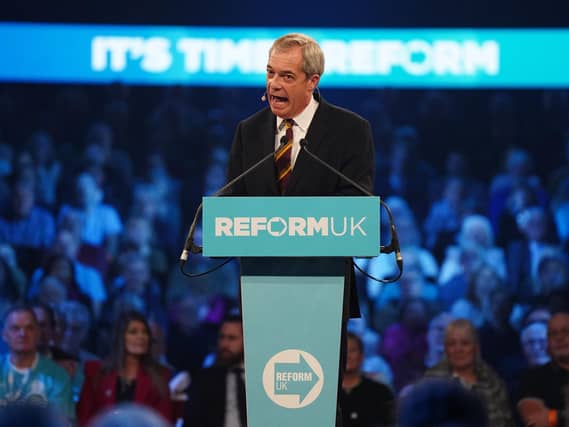

The recent comments by Jon Burrows that it would be a disaster if Nigel Farage and Reform UK gained government at Westminster are a welcomed departure from some within the DUP and TUV who seem to enjoy the on-off love affair with Reform UK.
Indeed, the attraction of unionist politicians to team right-wing icons such as Margaret Thatcher and Nigel Farage together in the same box highlights the huge void in some of unionism’s understanding of political philosophies and ideologies.
Reform UK claims to be a party grounded in ‘Thatcherism’ – the role of free markets, free trade, the rolling back of the frontiers of the state and individual freedom. However, this does not stack up.

How can a party, which supports free markets and free trade, be aligned with the Trump administration in the US, which supports tariffs and economic protectionism? How can Reform UK claim to be a ‘Thatcherite’ party, yet be opponents of the continuing slide towards further globalisation?
Globalisation and its so-called damaging effects on the UK labour force is a biproduct of Thatcherism and free trade.
Farage is aiming to overturn the mass deindustrialisation of towns and cities throughout the UK, such as Port Talbot with the commitment to bring the blast furnaces back to Wales. He essentially means reversing the consequences of Thatcherism in Britain.
No one can challenge the fact that under Margaret Thatcher, globalism and free markets took jobs out of the UK and put them into the hands of cheaper labour markets around the globe.
Looking simply at balance of payments – a one-time key economic indicator – during the Thatcher years, the UK’s trade surplus was just over £1.8 billion in 1980. In 1989 and after a decade of Thatcher government, it was a trade deficit of almost £23.5 billion.
Since Thatcher’s term of office, the UK has never had a trade of goods surplus in any given year – the outworking of Thatcherism promoted globalisation and the free market which ultimately meant the abandonment of British manufacturing or heavy industry.
Instead, it was the huge surplus in the trade of services, particularly financial services after the Big Bang, which brought the economic growth to the UK under Thatcher.
The rules of Thatcherism meant it was cheaper to import goods from abroad than it was to manufacture those goods at home – that simply shifted jobs from the UK to other, cheaper labour markets throughout Europe and beyond.
The problem with Reform UK is that if they claim to be the real ‘Thatcherites’ of the 21st century, they cannot promise policies to reverse the damaging effects of Thatcherism that have hanged over the UK economy until today – globalisation and an uncompetitive labour market in the era of free trade.
For many unionist politicians in NI, they seem to overlook these fundamental ideological differences between Reform UK and Thatcherism. The failure of the DUP and TUV to call out Reform UK’s hypocritical policies that will damage the UK is a dereliction of their duty to NI and the protection of its role within the UK.
Nigel Farage and Reform UK are the biggest adverts for a united Ireland – unionists across NI need to stop cosying up to English nationalism and protect NI’s place within the UK.
Edward Ferrin, Belfast BT14