
Letter: PSNI chief constable rejects criticisms over Operation Kenova as they rest on inaccurate assertions and sensationalist framing
A letter from the PSNI: [This was sent by the PSNI in response to yesterday’s essay by Austen Morgan calling for Jon Boutcher to be sacked. The response was based on a summary of the article sent to police before its publication. We asked yesterday if they wanted to update their response having seen the full essay and they said no. The web version of this letter will link to the essay by Dr Morgan]:
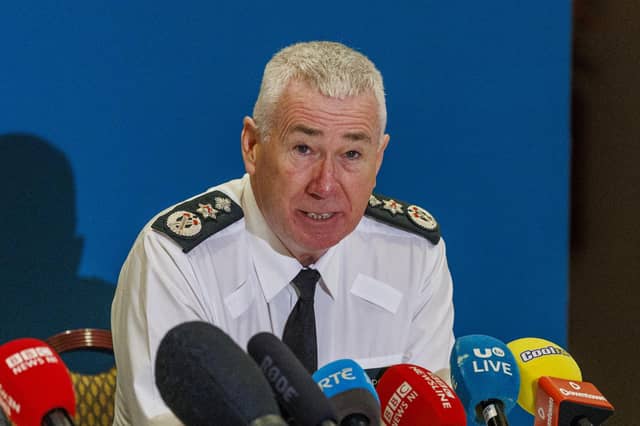

We cannot comment on or reply to the essay by Dr Morgan BL (Boutcher should be sacked over his handling of Kenova, January 13) as you have not provided the full text, but the criticisms you have summarised are rejected by the chief constable of the PNSI Jon Boutcher QPM, because they rest on inaccurate assertions and sensationalist framing.
In the summary you provided it was not clear if Dr Morgan understood that Operation Kenova did not produce one report, but instead produced public interim and final reports and multiple private family reports. The interim report was written by chief constable Boutcher when he was in command of Kenova (2016-2023) and the final report was written by his successor.
In addition, Kenova produced a separate report on the death of Jean Smyth-Campbell (Operation Mizzenmast) and is currently finalising a further report on the Glenanne Gang Series covering 98 incidents and 127 deaths (Operation Denton). The headline figure for expenditure on Kenova relates to all of its casework and reports.

Dr Morgan appears ignorant of the fact that neither Kenova nor the courts selected the matters dealt with and that the Stakeknife investigation was directed by the Director of Public Prosecutions for NI under legislation (section 35 of the Justice (NI) Act 2002).
The criticisms being made by Dr Morgan distort the factual record of Operation Kenova and the realities of legacy justice in NI. Operation Kenova’s casework was far from futile. Indeed, multiple independent reviews recognised that it was both victim-focused and resource-efficient and it has been praised as a model for legacy processes by, amongst others, the governments of both the UK and the Republic of Ireland. The secretary of state for NI commended the Kenova team for the ‘exemplary way’ in which they conducted their work, referring to trust that was built with families and ensuring victims were put first.
An independent review by the National Police Chiefs’ Council described how Kenova’s investigation’s ‘…outstanding operating practices have undoubtedly contributed to the excellent 'value for money' that Kenova represents when compared with other large-scale investigations and, certainly, to the potential costs associated with a public inquiry.’
The Public Prosecution Service NI made clear that its prosecution decisions on the Stakeknife files were influenced by the death of a key suspect in early 2023.
Dr Morgan also ignores the recognition given in the interim and final Kenova reports to the extraordinary challenges faced by police officers who sought to uphold the rule of law through courage and commitment.
Chief constable Boutcher QPM is immensely proud of the work done by the Kenova team to deliver long-awaited information to many families who waited decades for truth about the deaths of their loved ones. This core aim is reflected in the opening preface to the Kenova final report, which is incorrectly attributed to chief constable Boutcher, as an example of ‘embarrassing self-regard’. The preface highlights the complexity of investigating Troubles-related events with the passage of time and the particular challenges that exist in NI. The success of Operation Kenova cannot be sensibly measured by reference to numerical data of prosecutions. The real measure of its success is the truth and accountability it has delivered to families who were previously denied clear answers, and the operational lessons it offers for future independent review mechanisms.
Turning to the Thompson litigation, chief constable Boutcher welcomed the clarity brought by the Supreme Court judgment on what are difficult, complex and significant constitutional legal issues. It should also be borne in mind that the case concerned a challenge to a decision taken by a coroner and it is absurd to suggest that it involved a claim that the chief constable for NI might be responsible for the national security of the UK. The Supreme Court also acknowledged, and sympathised with, the chief constable’s desire to ensure transparency and recognised that he is entitled to form his own view on disclosure issues in consultation with partner agencies.
In the sections of the essay in which Dr Morgan writes about informers, there is speculation about the nature of the information at issue in the Thompson case which has not been made public.
The chief constable has publicly welcomed the NI secretary of state’s commitment to engage with PSNI on the implications of the Thompson judgment and future processes for ensuring the disclosure of information to victims and courts. As an organisation, PSNI continues to advance investigations which are outside of the remit of the Independent Commission for Reconciliation & Information Recovery (ICRIR). The PSNI further reiterates its commitment to work with ICRIR in respect of investigations within its responsibility.
Police Service of NI