
Letter: Refusal to grant Bangor schools integrated status is bewildering
A letter from Dr Matthew Milliken:
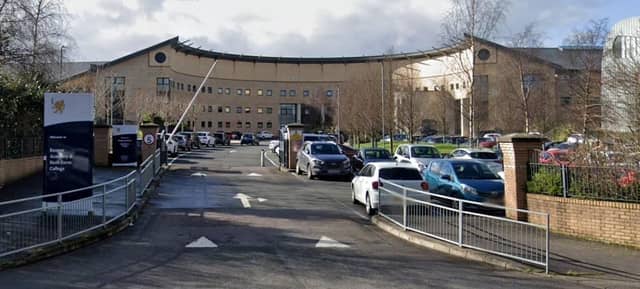

I am bewildered and concerned by the minister for education’s decision to arbitrarily reject the proposals by Bangor Academy and Rathmore Primary to attain integrated status.
The decision could be considered to be undemocratic, potentially hypocritical and may even be lacking the legal justification claimed.
The process of moving towards becoming an integrated school is complex. It requires real effort by parents who must be balloted if the proposal is to progress. Firstly, it requires the submission of a request by at least 20% of parents/guardians of pupils attending the school to start the ball rolling. If this is achieved, then at least half of the parents must vote in an independently facilitated ballot, and more than 50% of these must indicate that they are in favour of integration.
In the case of both Bangor Academy and Rathmore Primary around 80% of parents voted for their schools to become integrated. By way of comparison, Paul Givan owes his position as MLA to fewer than 10% of the first preference votes cast in Lagan Valley.
The minister’s decision to overturn the wishes of parents of children attending these schools also flies in the face of the minister’s own party (the DUP) use of the ‘parental choice’ argument to justify the continuation of academic selection at age 11 – for which, it must be noted, that no democratic, parental ballot has ever been held.
The recommendation from senior DE officials to the minister was to approve both applications – he opted to reject both. It is no doubt troubling for the whole of the civil service that the minister has seemingly no faith in the considered, informed, professional decisions made by those appointed to inform and advise him.
Were the minister to have accepted the expressed choice of parents and the advice given by his mandarins, unmet demand for integrated post primary places in Ards and North Down would have been met without any additional expenditure. Such a decision would have been in keeping with Article 64 of the 1989 Education Act to ‘encourage and facilitate’ integrated education as well as Article 5 of the Integrated Education Act 2022.
Transformation is a process of change, growth and development, as previous decisions in similar circumstances (such as in the case of Glengormley High) have recognised.
It stands to reason that schools cannot be expected to be the finished article at the start at the process. Indeed, the legislation that the minister has referred to justify his decision dictates that the school enrolment should represent a ‘reasonable balance for the area’. Even a cursory glance at electoral results will testify that Bangor has a pronounced pro-Union, Protestant majority.
While the integration of schools alone can never address the enduring legacy of community mistrust and animosity, those who chose to leave the current system unchanged (against the wishes of the majority of parents) do little to address the underlying causes of inter- community tension.
It could even possibly be argued that maintaining segregation in education - and thereby checking the development of cross-community understanding and cohesion - might be acting to the benefit of the DUP at the ballot box by embedding mistrust of the ‘other’ for future generations.
Dr Matthew Milliken, award-winning author of academic research into factors affecting the segregation of schools in Northern Ireland.