
Letter: The deliberate removal of British heritage runs throughout Irish history - in the past, the methods used were direct and visible, nowadays it's more subtle
A letter from William Mitchell:
An uncomfortable truth runs through modern Irish history: British-linked heritage was not simply allowed to fade, it was often deliberately targeted, destroyed, or erased.

Nelson’s Pillar in Dublin is a clear example. Its 1966 destruction was not urban redevelopment but an IRA bombing, with the remains later cleared by the Irish Army. The site was deliberately repurposed, and its history effectively removed from view.
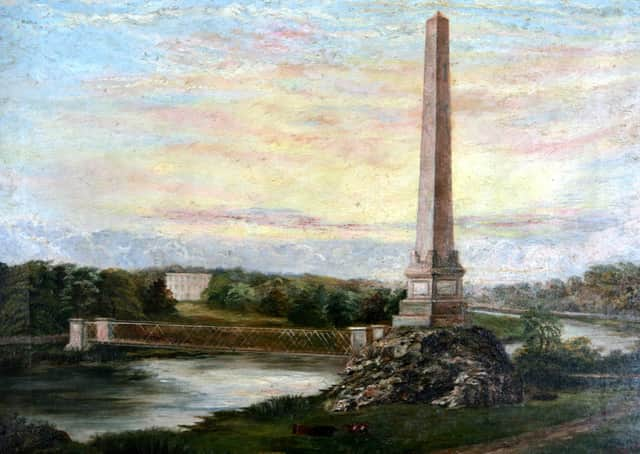
This was not an isolated case: the Boyne Obelisk was destroyed; statues of William III and George II were repeatedly attacked and ultimately removed; and monuments in Phoenix Park were blown up.
Similar patterns appeared elsewhere, including the Walker Monument in Londonderry and the statue of Rev Hugh Hanna in Belfast – bombed and destroyed by the IRA.
Even without violence, the outcome was similar when the statue of Queen Victoria outside Leinster House was removed and shipped to Australia rather than incorporated into Ireland’s historical narrative.
This reflects a broader pattern: British and unionist heritage was treated as expendable, with little effort to preserve or contextualise it as part of a shared past.
Today, that pattern has evolved with the gradual removal of Union Flag displays, and expansion of Irish-language signage on minimal 15% thresholds. Even commercial pressures to withdraw Union Flag-themed products in M&S point to a quieter reshaping of identity.
What is presented as neutrality can, in practice, result in the steady reduction of British cultural expression.
At the same time, there is reluctance particularly among Sinn Féin and increasingly the Alliance Party to confront the spread of IRA-linked memorials, often erected without proper authorisation.
While historic British monuments were destroyed or removed, these modern installations are strangely tolerated.
The inconsistency is striking, and inaction reinforces a one-directional trend.
The removal of British heritage was once direct and visible. Today, it is more subtle, driven by policy, process, and political convenience.
The methods have changed, but the direction, some would argue, has not.
Welcome to Sinn Fein's New Ireland.
William Mitchell, Lisburn