
Trevor Ringland: An interdependent Northern Ireland which respects that everyone is different gives us the best chance of building a socially and economically successful province
A letter from Trevor Ringland:
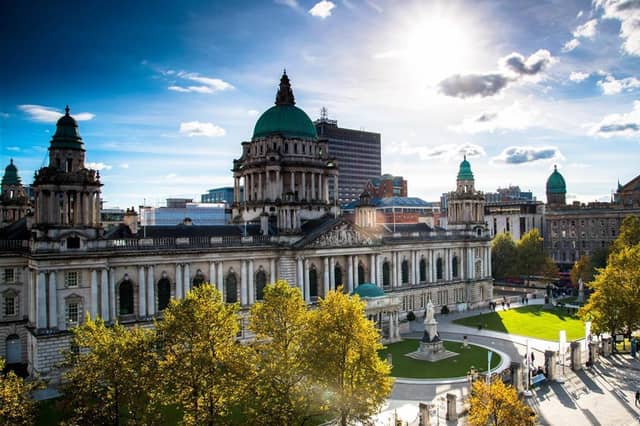

Belfast, to adapt Margaret Thatcher’s famous phrase, is as British as Finchley, but it is not as English. Likewise, it is as Irish as Cork, but not as Gaelic Irish.
If we appreciated these nuances more and accepted that Northern Ireland is constitutionally part of the UK, but physically part of the island of Ireland, we could more constructively accommodate our cultural influences.
In an increasingly culturally diverse place, these statements are not contradictory. They might also help us in debates like how we incorporate the Irish language into our community.

There are perhaps three models we could use as a basis for our society.
The first is forced assimilation, as favoured by De Valera and Irish republicanism. It defines Irishness very narrowly and strives for a society where everyone is the same.
We saw it in Sinn Fein’s ideology and the Provisional IRA’s violent campaign, which one former terrorist told me, aimed to “drive the British into the sea!”
Although there have been attempts to rebrand this instinct, including in the Republic, anti-British sentiment still runs deep. It too often relies on an understanding of ‘Irish’ that excludes over one million people on this island, who are also British.
The second model is multiculturalism. It allows everyone to be different, but encourages people to organise in groups, which do not have to relate to their neighbours. Often, this is justified by misusing the idea of rights, without any emphasis on responsibilities to others. It tends to Balkanise societies.
The third model is interdependence, which respects that everyone is different, but works to find ways to work and live together for the benefit of all. In my view, this aspiration gives us the best chance of building a socially and economically successful Northern Ireland.
With that in mind, there must be a better way of promoting Irish Gaelic than forcing it into areas where there is little evidence that it is needed, or imposing costly demands on public services to be bilingual.
I attended Irish classes at Skainos in east Belfast. I am no linguist, but, while the language is not required for communication between people on this island or to conduct business, it gave me a better understanding of my surroundings, the origin of townland names, streets etc.
If the name of a place, street or road is Gaelic in origin, perhaps we could have a sign explaining that. Otherwise, we’re just adding another meaningless word that means nothing, apart from to the roughly 12% of the population that speak some Irish (2.4% speak some on a daily basis.).
Likewise, we should certainly support the language and culture in radio, TV, the arts, and sport could play a role such as the use of the ‘game of three halves’ (rugby, football and Gaelic football.) in schools.
There is a better discussion to be had around our many cultures, including of course our Scottish and British heritage.
It should be led by those of us who want to build a shared home place which embraces and enjoys diversity, rather than those who just wish to force their cultural preoccupations on others.
Trevor Ringland, Bangor