
John Dunlap, Ulster printer of US Declaration of Independence, learned his trade in Strabane
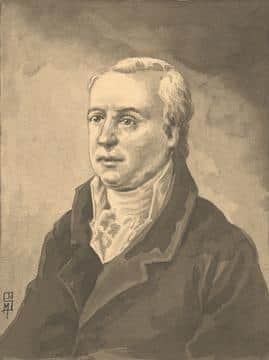
John Dunlap, the man who printed the American Declaration of Independence, was born in either 1746 or 1747.
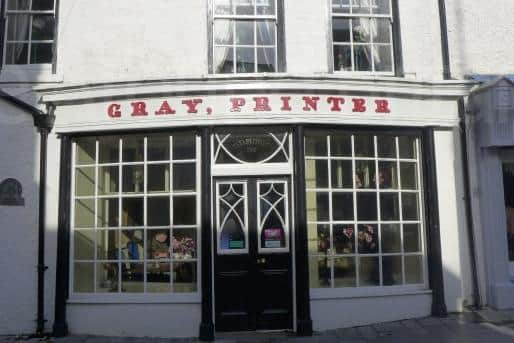
Dunlap began to learn the rudiments of his trade at Gray's Printing Press at 49 Main Street, Strabane. Gray’s Printing Press is still there, a property managed by the National Trust.

In 1757, aged 10, Dunlap was sent to Philadelphia to work as an apprentice to his uncle, William Dunlap, a printer, and bookseller in that city.
In 1766 William Dunlap sold his stock of books and put his printing house in the care of his nephew to pursue his religious studies. Two years later, William Dunlap was ordained as an Anglican priest and took charge of the parish of Stratton in Virginia.
John eventually bought his uncle’s business, paying him off in instalments. During this period Dunlap’s close friend Dr Benjamin Rush, a Pennsylvania signatory of the Declaration, recalled that John was so poor that he lived in his shop, sleeping on the floor under his counter.
Nevertheless, John managed to earn a living printing sermons, broadsides and handbills. In November 1771 Dunlap felt sufficiently confident to embark upon publication of the Pennsylvania Packet, or General Advertiser, a weekly newspaper.
The paper proved to be a success. On February 4 1773 he married Elizabeth Hayes Ellison, a widow from Liverpool.
During the Revolution, Dunlap served as an officer in the Philadelphia Cavalry, and saw action at the battles of Trenton, scene of George Washington’s victory over the Hessians on December 26 1776, and Princeton on January 3 1777.
Of the impact of these two American victories, G O Trevelyan, the 19th-century British historian, observed: ‘It may be doubted whether so small a number of men ever employed so short a space of time with greater and more lasting effects upon the history of the world.’
After the revolutionary war Dunlap continued to serve in the Philadelphia Cavalry, attaining the rank of major and leading Pennsylvania’s cavalry militia to help suppress the largely Ulster-Scots inspired ‘Whiskey Rebellion’ in south-west Pennsylvania in 1794.
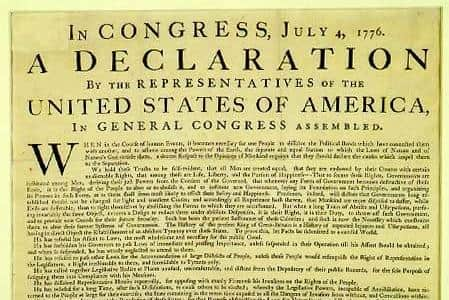
In 1776 Dunlap became an official printer to the Continental Congress. On July 2 of that year the Second Continental Congress voted to secede. Two days later, they approved the final wording of a public declaration regarding their decision, which we today call the Declaration of Independence.
That evening John Hancock, the president of the Second Continental Congress, instructed Dunlap to print broadside copies of the declaration. They would have been printed in his shop close to the corner of 2nd and Market Streets in Philadelphia, just blocks away from the State House (Independence Hall). Dunlap printed an estimated 200 broadsides – known as the Dunlap broadsides – which were the first published versions of the Declaration.
They were to be distributed to members of Congress, the individual colonies, all army units, and prominent people, but the location of only 26 of these broadsides can be now identified – dispersed among American and British institutions and private owners. Sotheby's sold a copy in January 1990 for about $1.6 million.
In 2000 an unsigned Dunlap broadside sold for $8.14 million.
It was discovered in 1989 by a man browsing in a flea market who purchased a painting for four dollars because he was interested in the frame. Concealed in the backing of the frame was an original Dunlap Broadside.
Dunlap also printed items for Pennsylvania's revolutionary government. In 1777 he took over the printing of the Journals of the Continental Congress from Robert Aitken, but lost the contract in 1779 after printing in his newspaper a letter from Thomas Paine that leaked news of secret French aid to the Americans.
In 1784, Dunlap’s paper became a daily with a new title: the North American and United States Gazette. Dunlap narrowly missed out on becoming the founder of the first daily in the United States. That distinction belongs to the Pennsylvania Evening Post which was launched in 1783. However, Dunlap’s paper became the first successful daily.
Although a very successful printer, the bulk of Dunlap’s wealth was derived from real estate speculation. During the American Revolution, he bought property confiscated from Loyalists who refused to take Pennsylvania’s new loyalty oath. After the war, he bought land in Kentucky.
By 1795, when he was 48, he was able to retire with a sizeable estate. He found retirement disagreeable. According to his friend, Dr Benjamin Rush, Dunlap sought refuge in the bottle and became a drunkard in his final years. He died of apoplexy in Philadelphia on November 27 1812. He was buried with full military honours at Christ Church, Philadelphia. Elizabeth Hayes Ellison Dunlap died, aged 89, on April 7 1836.