
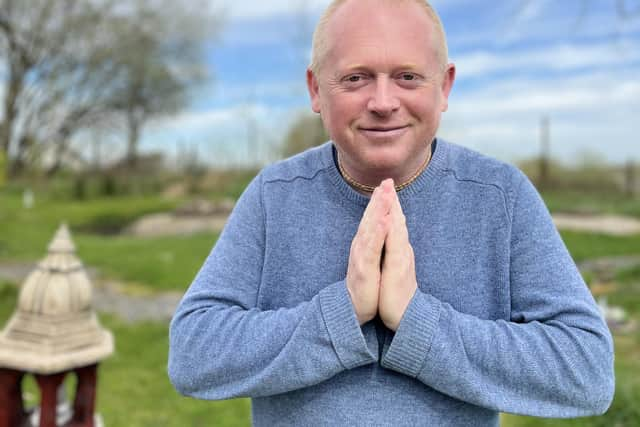
Co Fermanagh-based Hare Krishna monk, Tim McEvitt, talks about his memoir and living on Hare Krisnha Island in Lough Erne
In 1993, Dubliner and Hare Krishna monk, Tim McEvitt, was sleeping in a van with two fellow monks in a remote hilly area of Co Tyrone when they were roused from their slumbers by a “thick Belfast accent” demanding they get out with their hands on their heads.
The voice was that of an RUC officer and on exiting the van the trio were immediately frisked by soldiers, despite their polite protestations of “We're monks”.

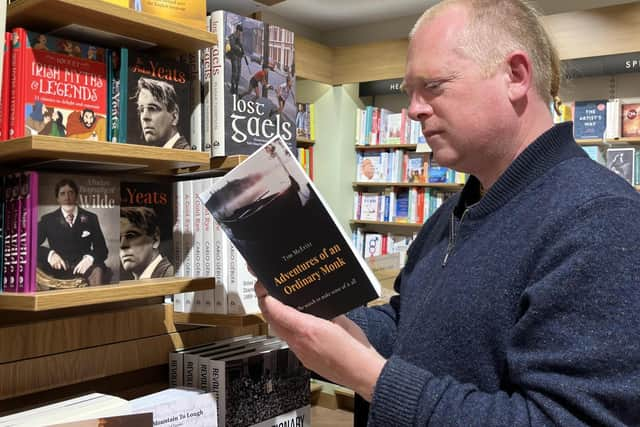
The incident is described comically by Tim in his memoir, Adventures of an Ordinary Monk, who writes about a soldier pointing his rifle at a supposedly “suspicious clump” in the van.
"It’s incense!”, I responded innocently. In India, one can purchase a cylindrical clump of 300 incense sticks neatly bound up together. I suddenly realised that, in this scenario, those fragrant sticks could well be mistaken for new-design dynamite, or even exotic drugs.”
This is just one of many extraordinary experiences in Tim’s memoir, which charts his life from aged 17 to 30, joining a Hare Krishna temple, embracing monastic life and living on a a 22-acre wooded island in Lough Erne called InIsh Rath.
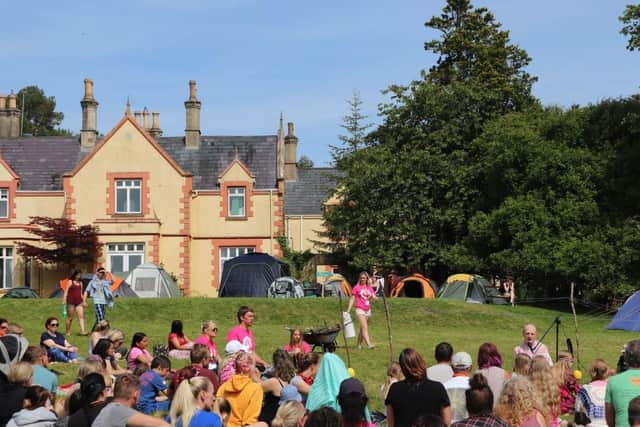
The island, once part of the lands of Lord Erne, was bought by Ireland’s Hare Krishna community in the 1980s for £125,000. It is home to deer and peacocks and a large Victorian House, previously a hunting lodge, which now houses a Hare Krishna temple.
Explaining why he decided to write the memoir, Tim, who had been brought up in the Catholic faith, said: “I lived on the island in Co Fermanagh for a bit more than seven years. That's kind of a bit unique and interesting, so I thought there'd be things to say about that and the beautiful people and very philosophically intelligent people, and maybe a few strange characters, I met over the years.”
Hare Krishnas, or members of the International Society for Krishna Consciousness (ISKCON), follow a branch of the larger Hindu tradition with some specific beliefs and practices. Their teachings primarily centre around devotion to Krishna, whom they believe is the Supreme God. The Bhagavad Gita, a 700-verse scripture is considered one of the most important texts. Devotion involves chanting the holy names of Krishna, studying sacred texts, performing rituals, and living a life in accordance with Krishna's teachings.
Like many Hindus, Hare Krishnas believe in reincarnation (the cycle of birth, death, and rebirth) and karma (the law of cause and effect). They follow a strict vegetarian diet, as they believe in ahimsa, or non-violence, and seek to avoid causing harm to any living being. High-profile adherents include former Beatle George Harrison.
One day in 1993 a young Tim was wandering around Dublin when his attention was piqued by a shop displaying Eastern texts and colourful, exotic sculptures in its window. The then 17-year entered the shop on Dame Street and his life changed forever.
"There was a very nice Englishman there who was manning the shop. I was chatting to him and he seemed very pleasant and invited me to go to their talks and events, so I started going to those.
“The wisdom and the philosophy made sense, and when I turned 18 I joined the temple.”
Tim, who does not have a Sanskrit name – a lot of Hare Krishna people don't have one – admitted his parents weren’t initially thrilled with his decision to become Hare Krishna.
“My mother thought it was a cult. It’s an obvious worry for any parents like them. There have been all kinds of weird religious cults, so if you don't know something, and these people wear different robes and stuff, it can be a worry.”
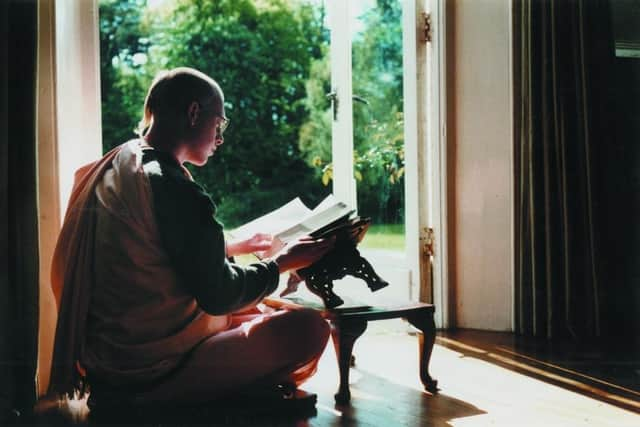
After training at the Hare Krishna Temple in London (in the house donated by George Harrison), Tim came back to live on Krishna Island. After six years there he resumed the Science degree at UCD he had dropped out of at 18, but whilst at university hankered to be back on the island.
“I just did a year and a half at university again. I got it out of my system, that interest in being in city life. I was missing the island too much, so I went back to the temple again.”
Tim now lives on the mainland across from Hare Krishna island, with his second wife Yen and four-year-old daughter Kayla; he has two teenage children from his first marriage.
Explaining why he no longer lives on Hare Krishna Island, he said: “A few months after Inish Rath was bought, 34 acres of land on the mainland across from it came up for sale. People that lived in the temple were given the option to buy a little plot of land or little old ruins to renovate them into houses. Our house now was a horse stable in the 19th century.”
Tim runs Lake Isle Retreats on the mainland as the 1850s house on Krishna Island is no longer suitable and requires investment.
“Our retreats are for everyone, including people not interested in spirituality or religion. Some of our guests just come to relax, attend some yoga, get a few massages, do some forest bathing, and they may or may not visit the island temple. It's an option for guests. Most guests, though, do choose to visit the temple, at least for a short time.”
Tim doesn’t have a mobile phone, but does have a computer for taking retreat bookings.
“I had to learn fairly quickly about Google search and so on. I got a little bit of help initially from Invest NI. I did a course with them and spent an hour learning about search engine optimisation, which I'd never heard of before, let alone anything else.”
He spends his days tending to his organic vegetables, which are served to retreat guests as well, and filling in potholes on their gravel lane.
“I get up between five and six every morning and do my meditation outdoors, which includes mindfulness walking and meditation walking in the meditation garden. I walk very slowly and on wooden beads repeat the Hare Krishna mantra for between an hour and two hours.”
According to Tim, the local community in Fermanagh have been very supportive of their Hare Krishna neighbours.
“When the temple was looking really nice in 2010, we did an open day and there must have been about 600 local people who came. There was a bouncy castle and a bit of music, it was a sunny day and it went great, everyone was just happy.
“The local media and also the local government are very supportive. At one time Fermanagh District Council gave £10,000 towards maintaining the building – when we were doing more tourism on the island. And another funding body gave £50,000 to assist visitors.”
Tim visits Krishna Island a few times a week, but is saddened by how rundown the house has become.
“I always had the feeling that Inish Rath island could be an important centre for helping people spiritually. When we were doing the retreats there 15 years ago it was looking fairly well for awhile, but now it looks a little bit scruffy.
"There are good spiritual people in the temple on the island, and there is a nice spiritual vibe. The ceremonies go on every day, from 4.30am, and have done so for 39 years. It’s a nice island, it's just that the place could be better in terms of management, and so on. In India, a temple of that standard would have hundreds, sometimes thousands, of visitors every day, so when everyone is donating a small rupee each you get the place paid for. In Fermanagh, it just gets a few visitors on Sunday, so it has a challenge with the income.”
Meanwhile, Tim can’t conceive of his life without Hare Krishna, “I can't really imagine how I could be without those kind of philosophical backups in my own mind about what's going on in the universe, and, in a more general sense, what the point is of everything.”
*Adventures of an Ordinary Monk – The search to make sense of it all, by Tim McEvitt, is available in bookshops and on Amazon.