
D-Day vetern George Spencer from Ballymena had bird's eye view of Normandy landings - but still feels guilty in 2024
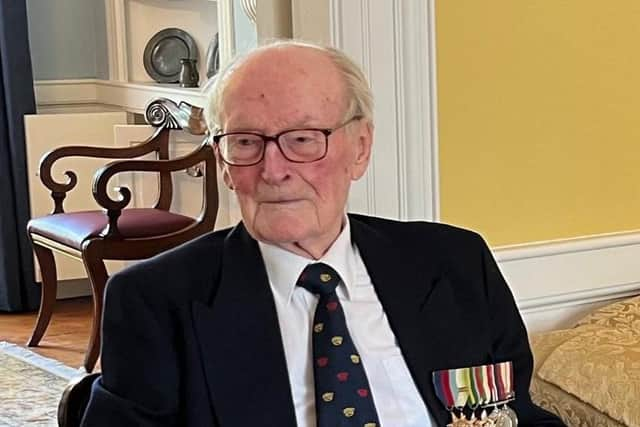
George Spencer from Ballymena had perhaps a better view of the D-Day landings at Normandy than any other person - but to this day he feels guilty about the experience.
The 98-year-old was a Royal Navy aircraft spotter on board HMS Nelson on 6 June 1944 when over 150,000 Allied troops invaded France to liberate western Europe from Nazi occupation.
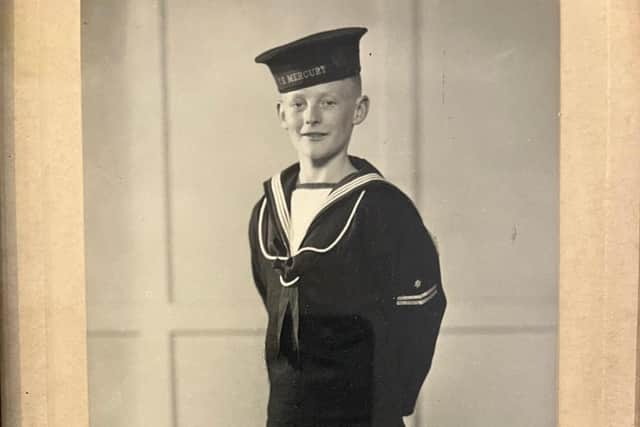
Only 18-years-old at the time, he was based in the crow's nest of the Royal Navy battleship, tasked with scanning the skies for imminent attacks by enemy aircraft.
"I must have only been a boy," he said of his experience on D-Day.
His battleship was anchored at Sword beach just off the French coast.
"Then suddenly they found they were in range of large German guns. So they upped the anchor very quickly and moved.
"My job was to identify enemy aircraft. It was a difficult job really, keeping my eyes where they should be looking for aircraft when there was so much of interest going on at the shore."
He could see everything happening on the shore line.

"Indeed I could."
Some 4000 Allied soldiers were killed in the invasion and thousands more were injured.
"It was difficult to keep my eyes where they should be. But then you only stay looking at the skies for 20 minutes and then your concentration goes."
His feelings on the day, as a teenager, were quite high.
"I was young and I found it quite an exciting business really."
But it is only with hindsight that he realised the impact of the day.
"When you're young, probably it's more difficult to realise the significance of the exciting stuff going on."
His ship was held back in reserve on D-Day itself but soon after engaged heavily with German positions along the coast - so much so that it exhausted all its shells.

"They were very large guns, with 16 inch shells. The barrel of each gun was as long as a cricket pitch. It was pretty noisy.
"I was glad not to be down in the bowels of the ship reloading the ammunition, it was an awful business. At least I was at least up in the fresh air."
His vessel escaped any damage up until then, but then had to sail back to Portsmouth for more ammunition.
However on the journey it detonated two acoustic mines and was damaged. It was then taken to America for repairs.
"It was a lot of excitement. It was a difficult time. I used to think that some other people were having a very shifty time by comparison."
Born in Nottinghamshire, he joined a naval training ship at only 12 years of age.
In the 1970s he moved to Northern Ireland, first Larne and then Ballymena, after meeting his late wife Jane Harris while stationed in Londonderry.
He retired from the Royal Navy a Lt Commander, aged 45, and went on to work as a senior administrator in the Royal Victoria Hospital in Belfast.
Prior to Normandy, he had also served with Force H in support of the Sicily Landings against Axis forces in 1943, leading to the surrender of the Italian fleet in Malta.
"I can remember the HMS Rodney fired a 16 inch shell over the top of us and it must have had a loose driving band or something because it made a terrible noise."
At one point he was manning an ant-aircraft Vickers 20mm 'Pom-Pom' gun on the ship.
"And I nearly shot down an American aircraft - a Lightning - because he was flying directly over the top of us - which he shouldn't have been doing."
They were also approached by a cluster of Italian aircraft at one point - but took pre-emptive action.
"They were on the horizon and quite a long way off. So we fired a 16 inch shell and it exploded somewhat near them, so they turned and didn't come any closer."
Asked what he would like today's teenagers to understand about WWII, he refers to a recent documentary he saw.
"It was a very good programme featuring interviews with both the British American and German soldiers, speaking about the impacts on themselves.
"They must have a difficult time living with their memories. It must have been an awful business.
"Even now I feel that I had it too easy. Some people had a very difficult time of it, both American, British and the Germans.”
George says it is important for future generations to continue to remember D-Day.
"Yes, I think so. It just involved so many people and had such an impact.
"I was lucky really. I feel a bit guilty that I was in such a comfortable position when so many people weren't."