
From Home Rule to the Somme and then Stormont, Wilfrid Spender helped to shape Northern Ireland
During the third Home Rule crisis Captain Wilfrid Spender, the youngest staff officer in the British Army, sacrificed a promising military career to identify himself more closely with Ulster’s cause because he had, as so many others did not, an acute appreciation of the strategic importance of Ireland to the security of the United Kingdom as a whole.
In September 1913, after a whirlwind romance and a 10-day honeymoon, he and his bride Lilian arrived in Belfast and Spender joined the Headquarters Staff of the UVF as Quartermaster-General. The UVF benefited enormously from his professionalism and expertise.
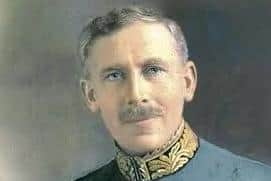

Through the influence of Spender, the UVF possessed an array of specialist units which would have been the envy of many a contemporary professional army: Special Service Sections, the Medical Corps, the Motor Car Corps, the Nursing Corps and the Signalling and Dispatch Riders Corps.
Spender was heavily involved in the organisation and planning surrounding the Larne gunrunning in 1914, especially the efficient distribution of the rifles and ammunition to the UVF across the province.
Spender was very enthusiastic about ‘the potentiality of the motor car’. About 500 cars of the Motor Car Corps were involved in the operation that night, approximately half the number in Ulster at the time. This superb piece of staff work was the first time in history that motor cars had been used for a military purpose. The Larne gunrunning, combined with the ‘Curragh mutiny’, obliged Asquith’s government to take Ulster unionist opposition far more seriously than they had done hitherto.
As the 36th (Ulster) Division’s GSO2 (General Staff Officer, Grade 2) Spender witnessed both the heroism and carnage of the Somme on July 1 1916, commencing his famous account, which that was widely carried by the British press, with the following words: ‘I am not an Ulsterman but, yesterday, the 1 July, as I followed their amazing attack I felt that I would rather be an Ulsterman than anything else in the world.’
In his concluding paragraph, Spender observed: ‘The Ulster Division has lost more than half the men who attacked and, in doing so, has sacrificed itself for the Empire which has treated them none too well. The much-derided Ulster Volunteer Force has won a name which equals any in history. Their devotion, which no doubt has helped the advance elsewhere, deserves the gratitude of the British Empire. It is due to the memory of these brave fellows that their beloved Province shall be fairly treated.’
Spender’s account appeared in The Times on July 7 but with final paragraph omitted, but it was included in the Morning Post on the same date. The account appeared anonymously in both papers, being attributed to an eye-witness in The Times and a correspondent in the Morning Post.
As serving soldiers were not to supposed to write to the press, for many years the identity of the author was unknown. The Ulster Division’s exploits on the Somme became legendary and they did so disproportionately because of Spender’s impassioned account. Their sacrifice, properly publicised by Spender, made the coercion of Ulster by Asquith or Lloyd George nigh impossible.
After the Great War Spender briefly joined the Ministry of Pensions, in London, to assist demobilised officers and their families, a role for which he was perfectly suited. However, in July 1920 Spender was approached by Sir Edward Carson and urged to return to Belfast to help reorganise the pre-First World War UVF to counter the descent into anarchy and chaos which was engulfing much of the rest of the island. The Ulster Special Constabulary, the rock on which the IRA’s insurgency floundered, evolved in part out of Spender’s reconstituted UVF. Thereby, Spender contributed significantly to the survival of the early Northern Ireland state.
In 1921 he was reluctantly prevailed upon by James Craig to become Cabinet Secretary to the new Northern Ireland government and in 1925 he became permanent secretary at the Ministry of Finance, thereby being responsible more than any other person for laying the foundations of the Northern Ireland Civil Service. A strong upholder of professional standards, he oversaw the creation of a professional civil service recruited by competitive examination, and favoured the creation of a ‘general staff’ of administrators.
Wilfrid Spender played a crucial role in the history of Ulster on an incredible number of occasions but nothing more comprehensively vindicated Spender’s entire career and his involvement in our affairs than Winston Churchill’s striking message to J M Andrews, Northern Ireland’s second prime minister, on the latter’s retirement in April 1943: ‘When you became Prime Minister in December 1940 was a dark and dangerous hour. We were alone, and had to face single-handed the full fury of the German attack, raining down death and destruction on our cities and, still more deadly, seeking to strangle our life by cutting off the entry to our ports of ships which brought us our food and the weapons we so sorely needed. That channel remained open because loyal Ulster gave us the full use of the Northern Irish ports and waters, and thus ensured the free working of the Clyde and the Mersey. But for the loyalty of Northern Ireland and its devotion to what has now become the cause of thirty governments or nations we should have been confronted by slavery and death, and the light which now shines so strongly throughout the world would have been quenched.’
In the late 1930s Spender had developed heart trouble and wished to retire but his retirement was delayed by the advent of the Second World War. He was finally able to retire in 1944.
In retirement he ruminated on his career and political preferences and concluded he was a unionist in the mould of Carson rather than Craig and an integrationist rather than a devolutionist. Appreciating the perils of excessive parochialism, he even expressed the unrealistic hope that Northern Ireland might one day voluntarily ditch Stormont and ‘return to Westminster’.
He died of heart failure on December 21 1960.
October 2026 will mark the 150th anniversary of Spender’s birth.