
How Eamon de Valera rode his luck to dodge post-Rising firing squad, and enjoy a political career of remarkable longevityof
As the senior surviving Irish Volunteer officer who had participated in the Easter Rising, Eamon de Valera enjoyed a political career of remarkable longevity from his election as MP for East Clare in 1917 until he stepped down as president in 1973.
He served several terms as ‘prime minister’ of the independent Irish state (initially as president of the Executive Council of the Irish Free State and subsequently as taoiseach) and completed two full terms as president of Ireland.
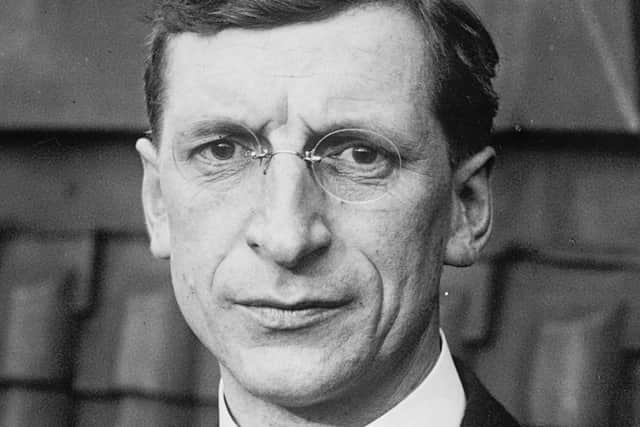

His career gives rise to two fascinating questions. How do we account for Dev’s political longevity? And, secondly, how did he avoid a rendezvous with a firing squad in the aftermath of the rebellion? Here we concentrate on the latter question.
Normally explanations focus on de Valera’s American birth. The son of Catherine Coll from Co Limerick and Juan Vivion de Valera, a Spanish sculptor, Eamon de Valera was born in Manhattan on October 14 1882. Although the 14th Amendment to the US Constitution guarantees birthright citizenship, a Home Office investigation in the summer of 1916 concluded that Eamon de Valera’s status was ambiguous.
On the last night of President John F Kennedy’s visit to Ireland in 1963, de Valera shamelessly played up the American angle for JFK’s benefit but Tom Clarke, the person most responsible for the rebellion, had acquired American citizenship in 1905 and that failed to save him.
De Valera, who died 50 years ago on August 29 1975, believed the key factor in his survival was that Asquith, the prime minister, ‘wanted no more executions, save those of the ringleaders, which they interpreted as those who signed the Proclamation’.
This is not an entirely satisfactory explanation because 15 men were executed – 16 if we include Roger Casement – but the Proclamation had only seven signatories.
Ronan Fanning in ‘Eamon de Valera: A Will to Power’ attributed de Valera’s survival largely to ‘luck’.
‘He was lucky that Boland’s mill [de Valera’s command post during the rebellion] was isolated on the city’s south-eastern periphery. Lucky that he was first imprisoned in Ballsbridge and not with the other leaders. Lucky that he was not transferred to Richmond Barracks for 48 hours and that his trial was delayed until May 8. Lucky that General Maxwell [the British GOC in Ireland] was summoned to London on May 5 by a government so alarmed at the impact on Irish public opinion that it urged him to bring the executions to an end.’
De Valera’s perceived lack of importance also facilitated his survival. He was almost completely unknown because he had only joined the IRB in 1915, had played no part in drafting the Proclamation nor was he a signatory to it. The intelligence file on him was very thin.
However, according to Fearghal McGarry, the insurgents under his command at Boland’s Mill and Mount Street Bridge were responsible for up to two-thirds of the Army’s casualties during the entire rebellion.
General Maxwell discussed the verdicts of the courts martial with W E Wylie KC, an Ulster-Scot and the son of a Coleraine Presbyterian minister, who had acted as prosecuting counsel in the courts martial of 160 of the insurgents. Having confirmed James Connolly’s sentence, Maxwell then asked Wylie who was next. Wylie replied by stumbling over de Valera’s exotic name. General Maxwell asked, ‘Is he someone important?’ Wylie replied, ‘No. He is a school-master who was taken at Boland’s Mill.’ On the strength of Wylie’s response, Maxwell commuted de Valera’s death sentence to one of life imprisonment. So much of 20th-century Irish history was to hang on Wylie’s answer.
Did W E Wylie live to regret his answer? In the early 1920s Wylie certainly had cause for serious regrets. As a result of his rejection of the Anglo-Irish Treaty, de Valera was single-handedly responsible for the Irish Civil War, a view shared by Professor Fanning.
In March 1922 de Valera made a series of blood-curdling speeches in Munster indicating that ‘if the Treaty were accepted, [by the electorate] the fight for freedom would still go on, and the Irish people, instead of fighting foreign soldiers, will have to fight the Irish soldiers of an Irish government set up by Irishmen’.
At Thurles, he said that they ‘would have to wade through the blood of the soldiers of the Irish government, and perhaps through that of some members of the Irish government to get their freedom’.
Many years later, referring to his conversation with General Maxwell, Wylie wrote: ‘I told the truth, what I knew it to be. But my God, I was far off the mark. But for Dev there would have been no split at the time of the Treaty, no documents 1, 2 and 3, no Civil War, none of the burning of houses and destruction of property and life that took place in 1922 and 1923, and none of the bitterness, the dreadful bitterness and personal hatred which exists between the two parts of the country now, not to speak of the destruction of our relations with England.
‘But am I right in this? Would someone else have taken Dev’s place in 1921? I doubt it. He had the 1916 halo. He had an unusual name. He had a cold reserved personality. He was a bit of a mystic, and an idol to the ordinary peasant and man in the street, and he was above all an absolute fanatical idealist about some things. His mind could not compromise on what he deemed to be principles. He was prepared to sacrifice himself and any one, indeed everybody else, rather than give away an inch. He looked into his heart to find what Ireland wanted, and his heart told him about an independent people, the Irish language, the past wrongs of Ireland, Gaelic culture, and a lot of things we should all forget and forgive. I find him a difficult man to place.’
Wylie’s assessment captured the man perfectly. Yet Wylie happily conceded that he could chair a meeting impressively and advocate compromise but if the subject was external relations and neutrality, for example, de Valera was a radically different man, prompting Wylie to conclude, ‘What evils excessive nationality brings in its wake!’