
Music that unites different religions in Ireland
Well-known Belfast flautist and retired Church of Ireland rector, the Rev Canon Gary Hastings, is one of a small group of traditional musicians to feature in a television programme on the history of the flute and fife in both parts of Ireland.
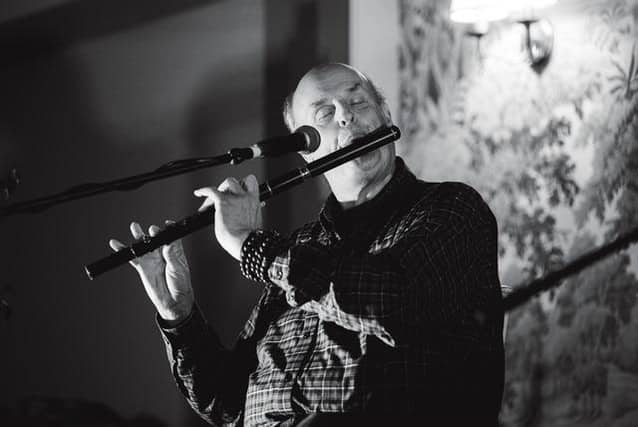

The East Belfast-born cleric served as rector for nine years in the historic St Nicholas’ Collegiate church in the centre of Galway city.
His entire Church of ministry has been in the Irish Republic with his last appointment taking him to Holy Trinity parish in Killiney, Dublin, in 2018.
Canon Hastings, 70, has recorded with famous traditional musicians including the Chieftains.
He says the television documentary, which was produced by the Irish Traditional Music Archive (ITMA), brought together a group of musicians from Protestant and Roman Catholic backgrounds who celebrate shared traditions, heritage and culture of the island.
The programme will broadcast tomorrow evening (Sunday at 9pm) on the Irish channel, TG4.
Gary Hastings says: "The programme’s focus is on the shared flute and fife tradition that gives a glimpse of the island’s shared music – north, south, east and west. The story is not black and white. It is alive with spirit, cultural diversity and shared history.
“It was a great honour that they remembered me. During the week, there were recitals, talks about Lambegs, flute-making and the culture of music in Ireland.
"There were four or five of us there and others came and went during the week. We got to talk to each other. Music is the theme of the programme and that is what we are all fascinated with as musicians."
Gary learnt to play the flute while studying for a physics degree in the University of Ulster in Coleraine.
It did not all go according to plan, as he explains: “I went to do a degree in physics but I came out able to play the flute. No degree in physics, but I went back and did a degree in Irish studies.”
Gary is a former Church of Ireland rector in Westport, Galway and Killiney and would still do a few music gigs.'
As for misconceptions about traditional Irish music – that it’s for Roman Catholic nationalist Ireland and not Protestant Unionists – Gary offers this insight.
“From research I did on Lambegs and Orange music, the main thing I got out of it was to find that the traditional music that I’d learned was exactly the same as boys on fifes and Lambegs.
“To realise that when you go back to the 1800s, there wasn’t what we call Irish traditional music, there was just music, because there wasn’t anything else. If you were of a certain social status in Ireland, that was all the music you had.
“For the Orangemen, that was all the music they had too. They used those tunes to march to, but I discovered a man in Ahoghill who was teaching fifers back in the 1920s and 1930s, and he was teaching the Hibernians the same fifing tunes, and they had drums as well.”
The rise of cultural Irish nationalism, the Easter Rising and the Irish Civil War saw music becoming political.
Northern Unionists took the view they could have nothing to do with it.
“That said, the intriguing thing is that in Orange halls all over Ulster, they were doing the same dances to the same music.
"People were dancing on Saturday evenings in Orange halls - quadrilles, sets, reels and hornpipes - and the irony is the Catholic nationalist population of Ireland dumped the music like hot potatoes and went on to jazz and pop.
“Catholic parish halls ended up not playing traditional Irish music whereas up north, Protestant Orange halls still had it. It’s all a bit weird and silly. When it comes to traditional Irish music, we have more in common than many would have you believe.”