
News Letter interview: 'Irish unity not inevitable' says Alastair Campbell as he dubs Drumcree dispute 'very depressing'
Modern political beasts do not come much bigger – nor more controversial – than Alastair Campbell.
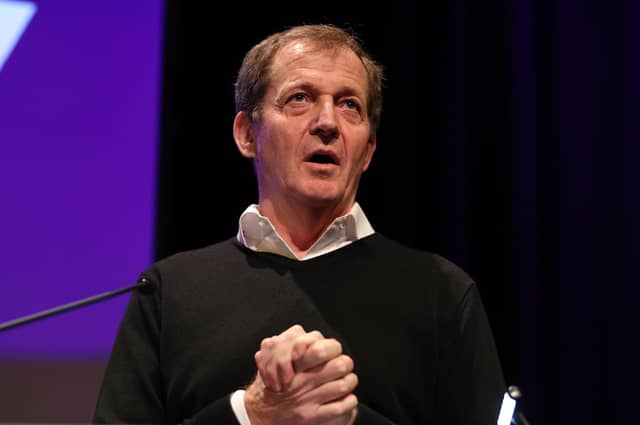

The Blair government’s chief spin doctor from 1997 to 2003, his tenure covered the most pivotal time of Northern Ireland’s modern history.
He is also the inspiration for the vicious, all-seeing enforcer Malcolm Tucker in the BBC series The Thick of It, and has been accused of – and denies – “sexing up” the case for war against Iraq.
Today a podcaster and author, here he reflects on the return of the Drumcree dispute and the prospects for the Union, as well as his ongoing battle with depression.
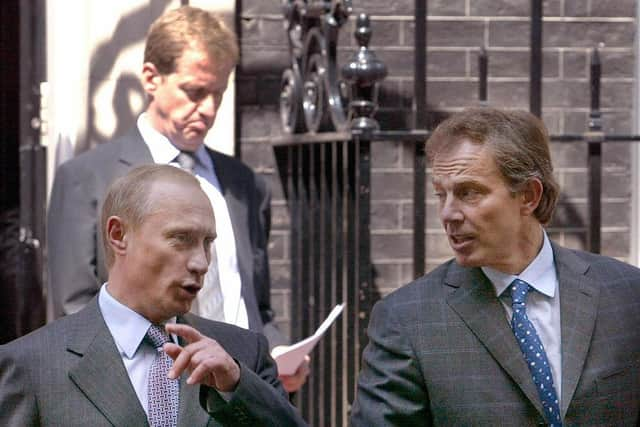
It comes as his new book ‘Persevilience: The Word the World Needs Now’ is out today.
He tells the News Letter it is “an attempt to persuade people we can develop a more positive mindset by understanding that perseverance and resilience are all very well and good, but they’re essentially negative concepts – they’re about struggling with difficult things you don’t particularly enjoy”.
On the other hand, perseviliance – his portmanteau of the two words – “is about seeing a challenge and a struggle and learning from it, adapting to it, and emerging from it stronger”.
“I’ll give you an example in a Northern Ireland context,” he said.
“I write in the book about the Omagh bombing, which at the time felt like it might have pulled the whole peace process crashing down.
“In fact, it turned out to be quite a significant turning point in the opposite direction, mainly because of the way that everybody reacted to it.
“So I guess the principle is trying to get good out of bad.
“I relate that to politics, to individual behaviour, to mental health, to grief, to relationships, and so forth. That’s what it’s about.”
Speaking of the peace process, he was asked his thoughts on the recent return of the Drumcree dispute.
“I just find the whole thing very depressing,” he said.
“When we were in government, Drumcree was an annual thing, it was an annual event that often became a crisis.”
He said it is “interesting” to see Breandan MacCionnaith in the news again.
Mr Campbell told the News Letter there was “something admirable about the relentlessness of his stubbornness”.
He said there is a need to “alleviate the enmities and divisions” beneath the surface in Northern Ireland, adding: “I do wonder sometimes whether we shouldn’t have tried to apply some sort of Truth and Reconciliation Commission process alongside the Good Friday Agreement.”
And what would that have looked like?
“I don’t know, but if it had been the South African model it would have looked like something involving civil society, involving the whole of South African society…
“It would probably have involved an amnesty, it probably would have involved all sorts of things that people would have found difficult.”
Whatever it involved, it would have been “something that wasn’t necessarily just done by the politicians”.
The news around Drumcree lately has reminded him of “what it felt like before”, just with less violence, he said.
“I can’t believe that we can’t do better in bringing some of these enmities to an end,” he said.
He was asked whom he blames for the renewed dispute: the Orangemen for persisting with a parade or those who are opposed to it.
“I don’t want to apportion the blame and say ‘50% that’ or ‘30% that.
“I think in these circumstances, we all have to at least admit to the role that we play, be it as an individual or as an organisation, in creating a situation which everybody accepts is not terribly healthy.
“There is a history of a marching tradition. Traditions are important. History is important.
“But… leadership has to apply the sense that just because something has happened again and again and again and again doesn’t mean it has to happen in the same way every time.”
Mr Campbell said that argument did not mean the Orange Order should be allowed a parade however.
“I’m simply saying: would it be the end of the world if they did take a different route?" he added.
“Would it be the end of the world if actually they were able to say the purpose of the march is this rather than this.
“A little bit of imagination would take us a long way.”
On power-sharing more generally, he said “there have been times when the dialogue between the two sides has been constructive, has been effective – so try to get back to that”.
Mr Campbell was asked whether he sees a united Ireland as likely or even inevitable.
“I don’t think anything is inevitable.
“If anything I think the debate is more complicated than it was because… the Republic of Ireland has actually done pretty well, not least by the way by staying in the EU, and actually that sense that everybody in the south wanted a united Ireland and there was this great division in the north is not necessarily the case any more.
“I think it’s complicated and I don’t have the answer, because ultimately the answer is going to be in the hands of the people on the island of Ireland as to how the politics play out.”
Was his new book inspired by his own personal, and publicised, bouts of depression?
“I think it probably was to a large extent,” he said.
“A lot of people when they get depression, the find it convenient to say it’s other people’s fault, they blame the people they think should help them, they take it out on people close to them.
“I think I started to get a lot better with the help of a psychiatrist who essentially said to me ‘look, you have to look at yourself when these things happen and you have to work out for yourself the best ways of dealing with it’.
“Now that might be medication. It might be psychiatric treatment or professional help, but often it can mean you actually just say to yourself ‘okay, that is the way I have thought about this before - can I think about it in this way?’
“‘That is the way I have acted in this circumstance before – can I do it differently?’”
Does he still suffer from depression?
“I do, yeah. What’s interesting is that since I’ve had this different approach to it, the bouts have been less intense and they’ve been less frequent.
“I think there’s something in the capacity I’ve developed to actually take a different approach to the way I think about things.”
He was asked for a real-world example of how he applies this, day-to-day.
“Let’s say I feel a depression coming on. It usually happens when I wake up and I’m just feeling empty and what have you.
“What I would have done 10, 20 years ago is one of two things.
“Either say ‘okay I am just going to lie in bed all day and not get up’ or I would say ‘I have a lot to do today so I am going to power my way through this’.
“And if I powered my way though it then at the end of the day I’d be absolutely shattered and totally exhausted.
“What I do now is say to myself ‘look, you have been here before, you know there are certain things that you should do that help you get out’.
“For example: shave.
“One of the first things that goes is the personal hygiene. So you just say: I am going to shave, I am going to brush my teeth.”
Other “little tactics” include if he cannot face going out for a run, he will walk up and down stairs for half an hour.
He will also phone up friends whom he has not spoken to for a while and tell them how he is feeling, “whereas before I would have just locked in on myself”.
Mr Campbell’s advice has echoes of another self-help figure: Dr Jordan Peterson.
His message is that people must not consider themselves powerless, and must take responsibility for their lives rather than blaming others.
He famously enjoins people to “make your bed” and “tidy your room”: take small, manageable steps towards sorting out their lives.
Does Mr Campbell see parallels with his own message?
“I don’t know enough,” Mr Campbell replied, adding that he knows of his books but has never read them.
“I certainly think that what a lot of people want to do – politicians like Trump and Putin – is they want us to think we’re powerless, they want us to think we have no agency.
“I think what I’m saying, and it sounds similar, is we have a lot of agency if we choose to use it and are honest with ourselves…
“Things can always change. I think sometimes we just have to say ‘okay if we want something to change we can look to others to change it or we can try and change it ourselves’.”