
Orchestra Review: Ulster Hall audience is treated to one of the great Tchaikovsky symphonies
The World Premiere of Amelia Clarkson’s composition The Rain Keeps Coming was performed on Friday evening by the Ulster Orchestra – and its title is particularly apt for this part of the world.
The main theme of this short Commission from the Ulster Orchestras and funded by the Ulster Orchestra Foundation and the Vaughan Williams Foundation, is “about finding the magic in feeling alive, even when caught in a downpour”.

Many people in the Ulster Hall will have identified with that. The composer herself was present to appreciate the warmth of the generous reception from the audience and players for her evocative piece.
After the musical rain stopped, we were on more familiar ground with prize-winning soloist Vadym Kholodenko’s brilliant performance of Beethoven’s ever popular Fifth Piano Concerto, perhaps better known to some as ‘the Emperor’.
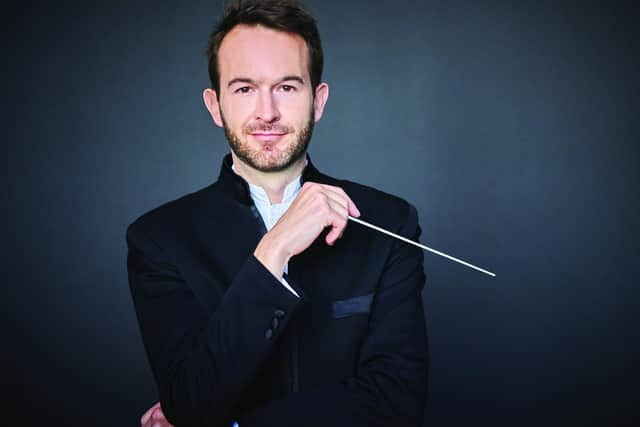
From the first few bars, Beethoven’s emphatic presence was dominant throughout. This was a fine interpretation by the soloist and conductor Andrew Gourlay who jointly presented all the lights and shades of this remarkable work, particularly in the adagio.
For many in the Ulster Hall the highlight of the evening was the full-blooded performance of Tchaikovsky’s mighty Fourth Symphony during which the conductor and players were particularly impressive in the third movement.
The Fourth Symphony is one of the three greatest Tchaikovsky symphonies, right through from the dramatic opening fanfare to the triumphant finale, which was greeted on Friday by enthusiastic applause, and rightly so.
Andrew Gourlay on the podium deserved special credit for preventing the familiar musical pyrotechnics from becoming just a hard wall of sound, as sometimes happens in the Ulster Hall, and also revealing the quiet beauty and tenderness of much of this symphony.
There is much speculation about Tchaikovsky’s rather dark view of fate allegedly threaded through this work, but allowing the music to speak for itself is the key to this most life- enhancing of symphonies.
Music apart there was one quibble.