
Presbyterian missionary’s daughter Helen Waddell was a brilliant scholar and author
The Rev Hugh Waddell, the father of writer Helen Waddell, was one of the Presbyterian Church in Ireland’s first missionaries to China. In the early summer of 1871 Hugh Waddell was obliged to return home through ill-health. He never returned to China but served as a missionary in Japan and became a lecturer in the Imperial University, Tokyo.
Thus, Helen Waddell, his 10th and youngest child, and her playwright brother Samuel Waddell (whose pseudonym was Rutherford Mayne) were both born in Japan in 1889 and 1878 respectively.
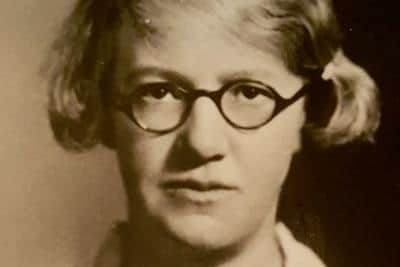

Helen spent the first 11 years of her life in Japan before her family returned to Belfast. Her mother died shortly afterwards, and her father married Martha Waddell, a cousin. Then Hugh Waddell himself died, leaving his younger children in the care of their stepmother. Following the marriage of her elder sister Meg, Helen was left at home to care for Mrs Waddell, whose health was deteriorating.
Helen was educated at Victoria College and Queen’s University, Belfast, from which she graduated with a first-class honours degree in English in 1911. She was unable to pursue her academic career until 1920 because she assumed responsibility for looking after her invalid stepmother who was a domestic tyrant and a secret alcoholic.
Mrs Waddell was also a thorough-going killjoy. She insisted that Helen no longer see her schoolfriend Cathleen Nesbitt because she was on the stage (‘unworthy of a Christian’), play golf with her friends or have a social life.
Nevertheless, during the intervening years she published her first book, ‘Lyrics from the Chinese’ (1915). ‘The Spoilt Buddha’, her first play, was performed at the Opera House by the Ulster Literary Society. She also contributed articles to national newspapers, including the Manchester Guardian.
With the death of her stepmother in 1920, Helen’s life was no longer on hold and she enrolled in Somerville College, Oxford, to embark on a doctorate. A travelling fellowship from Lady Margaret Hall in 1923 allowed her to conduct research in Paris. Her study of the secular origins of the stage resulted in the publication of ‘The Wandering Scholars’, her first major book, in 1927.
The ‘Goliards’ (or ‘wandering scholars’) were a group of clergy who wrote satirical poetry in Latin – Helen had fallen in love with the cadences of Latin poetry at the age of nine because it ‘satisfied’ her ear – in the 12th and 13th centuries.
These ‘wandering scholars’ moved from university to university throughout France, Germany, Spain, Italy, and England and protested at the shortcomings of the Church, not least the abuses and corruption which were widespread within the medieval institution, through their songs and poetry.
The book was published with a small print run because it was believed to have limited popular appeal. Confounding expectations, it rapidly went through three editions within a year and secured for Helen the A C Benson Foundation silver medal of the Royal Society of Literature, making her the first woman to win the prestigious award.
In 1929 Helen published ‘Medieval Latin Lyrics’, effectively a companion volume to ‘The Wandering Scholars’, consisting of further translations of the poetry of the Goliards. A second anthology, ‘More Latin Lyrics’, was compiled in the 1940s but was published posthumously.
From 1929 to the outbreak of the Second World War every book she published enjoyed stunning success. ‘Peter Abelard’ (1933), her historical novel recounting the tragic love story of Abelard and Heloise, went into 30 editions. Helen became a celebrity, mixing with royalty (including Queen Mary), members of the Cabinet (including the prime minister Stanley Baldwin) and the upper echelons of society. Her literary friendships included W B Yeats, Virginia Woolf, Rose Macaulay, Siegfried Sassoon and Max Beerbohm.
She continued to contribute articles to various journals, to lecture and to broadcast and became assistant editor of The Nineteenth Century, the monthly literary magazine founded in 1877 by Sir James Knowles as a forum for intellectual debate.
Her refusal to accept the many offers of marriage she received was due, as far as can be ascertained from her correspondence, to refusing to compromise on love. She would not marry a man she did not love.
However, she had a close relationship with Otto Kyllmann of the Constable publishing house. Recognising that despite her fame, Helen was rather poor, he offered her permanent employment at Constable as a literary advisor and reader.
Although conscious of her Ulster-Scots ancestry, she felt that ‘after 300 years of Irish climate and Irish land’ she was ‘no longer Scottish’ and that her language was ‘English with the Irish idiom’. She counted the Rev James Porter of Greyabbey, the Northern Star’s celebrated satirist who was hanged outside his own meetinghouse in the aftermath of the 1798 Rebellion, among her ancestors. Although not stridently political, we may infer that her sympathies were broadly nationalist rather than unionist.
Waddell received honorary degrees from Columbia (New York); Queen’s University, Belfast; Durham; and St Andrews.
The onset of Alzheimer’s put an end to her writing career in 1950 and for the last 10 years of her life she was completely incapacitated, a particularly cruel fate for a scholar and a prolific letter-writer.
Although she died in London on March 5 1965, during these years she largely lived with her sister Meg at Kilmacrew House, near Banbridge. She is buried, alongside her mother and grandmother, in the neighbouring churchyard of Magherally, where Meg's husband, J D Martin, was minister.
The inscription on her headstone reads: ‘She lifted a veil from the past.’
In a similar vein, the president of Columbia University, of which she was a fellow, described her as ‘the Middle Ages’ most famous interpreter’.
Unfortunately for Helen’s reputation that era’s religious passions and concerns do not hold the same fascination for modern readers in our more secular age as they did in the interwar years. Thus, she is not as highly regarded today as Dorothy L Sayers and Vera Brittain, contemporary alumni of Somerville College. Nevertheless, Helen Waddell ought to be remembered as a brilliant literary scholar, poet and letter writer and translator.
Happily, in 1986 she was the subject of a first-class biography by Dame Felicitas Corrigan.