
PSNI 25th anniversary: My policing journey took me to Ground Zero, says Brian Docherty
As the youngest appointed member of the inaugural Policing board, it is perhaps my experiences outside the formality of Board meetings that shaped my contribution, fearless naivety and perceived wisdom within it.
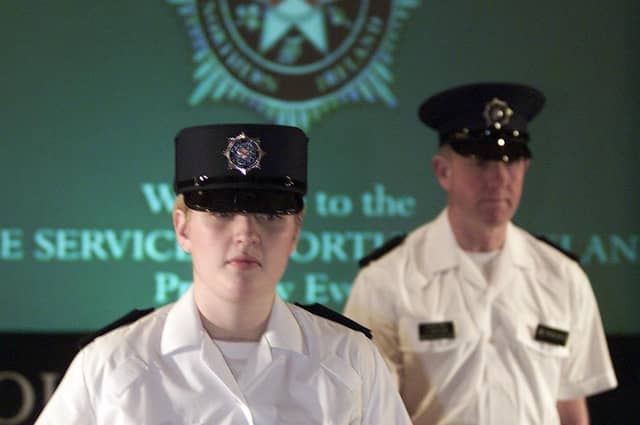

As a working-class community worker from Londonderry practicing in a Loyalist area and with several family and friends as members of the security forces, my initial affinity approaching the role, was one of concern for the legacy of the RUC and the sacrifice of past and serving officers.
As we emerged from the particularly volatile mid- 90s, I also saw first-hand the challenges both officers and communities faced.
I remember, during one policing reform public consultation event in Londonderry, being struck by the comments of a frustrated community colleague as he left the same meeting; ‘what was the point of me standing there defending the RUC, when they can’t ‘ f***ing’ defend themselves’ - a reflection of the relief many officers at the same meeting had at the time, for the opportunity for a career change.
For change was certainly in the air at that time, as we approached and crossed a new Millennium and entered a post Good Friday Agreement honeymoon period of generosity, consensus and hope.
In November 2001, just before we had our first official Board meeting Mediation NI, co-ordinated by the late, brilliant Brendan McAllister, invited a number of us to spend time with the NYPD in New York, a trip comprising other Board members, senior Police officers, politicians and ‘influencers’ of the time.
Sitting next to David Ervine on the flight, spending time with Baroness May Blood, Monica McWilliams, David Adams and others I received valuable and welcome advice on the dynamics and intricacies of local politics and high profile decision-making – a real-time education which has stood me in good stead ever since.
We arrived in New York two months after the 9/11 terrorist attacks to find a City that had lost its confidence and swagger – a city that had effectively lost its two front teeth.
As we were given a tour of a still smouldering ground zero we heard NYPD officers recount their experiences of that dreadful day and reflect on how, as a consequence of the tragic events, there emerged a new respect and empathy for a policing service that up to that point had largely lost public confidence.
The comparisons didn’t end there. I remember being impressed at seeing taxis, public buildings, homes - in a wave of patriotism- be confident enough to proudly fly the US flag alongside that of their country of heritage – in a very public display of togetherness and willingness to recognise the importance of national security and public safety.
There is no doubt that this common sense of collectivity also characterised the early years of the Policing Board. Led by Sir Desmond Rea as chair and Dennis Bradly as vice-chair, this indomitable pair with differing personalities dovetailed perfectly to form a formidable leadership.
As an independent member, I was impressed by the approachability of the political membership, many of them household names – old school politicians who took me under their wing – such as William Hay, Joe Byrne, Fred Cobain, Eddie McGrady and particularly Sam Foster – generous with their advice, battle hardened and much more conciliatory and progressive in their thinking than history might have since afforded them.
Their public versus private media persona may often have been inconsistent but the spirit of making policing work remained largely genuine.
Despite recognising the value of reform, there are elements of the Patten Recommendations that I didn’t agree with. On a trip one weekend, with officers on patrol across the City, I saw first- hand the extreme challenges they faced and that the honourable principle of community policing, particularly in nationalist areas was a long way off.
The strategic decision to heavily resource relationship building in areas previously hostile to policing has no doubt been to the detriment of those where strong relationships have since deteriorated.
I heard regularly of the fall in officer morale as experienced officers retired and resources became increasingly restricted - officers expected to maintain high standards whilst being part of the most scrutinised and accountable policing service in the world.
I heard from a young PSNI applicant who had lost his father and saw his mother seriously injured, both to republican terrorists, then lose his dream of following them into a career in policing because he wasn’t the preferred religion – a young man who in the years since has carved out a very successful career as a senior police officer in England.
In the 25 years since and on reflection, I have become frustrated with calls to reintroduce the 50/50 recruitment process rather than all of us, political, church and civic leaders taking responsibility to encourage all sectors of society to consider a career in policing.
I am exasperated that 25 years later there are huge swathes of my home city where officers simply aren’t accepted, where a simple recruitment fair can lead to hostility.
For three years as a board member of senior football team Institute FC we were instructed to adhere to the Brandywell stadium policy of ‘self-policing’ and for several weekend found myself in the bizarre situation of police riders escorting team and supporter buses as far as Craigavon bridge to then leave myself, team officials and local community leaders to ‘police’ the further stretch of the Foyle Road.
Recent public disorder at Derry City games have shown how precarious this arrangement can be.
For community policing to work, there is merit only if it is based on genuine partnership and respect.
Participating as I did in a recent conference on policing, during Derry’s Feile it unfortunately became clear to me, that for many, any form of a ‘policed state’ under British (or indeed Irish) rule remains an anathema.
It is however, important to remember that despite occasional variances in levels of civic stability, we have, relative to other parts of the British Isles, low levels of crime. We live in largely safe communities. Any civilised society requires policing to maintain this security.
The Patten Report, subsequent reform and the first and subsequent Policing Boards have helped create the building blocks required for this security. I am proud to have been in some small way part of this, but cognisant too, of the need for all us to recognise that we still have work to do.
• Brian Docherty is a well-known community activist in the Waterside area of Londonderry and across the city. He was previously a member of the first Policing Board