
‘Queen of crime’ P D James and the debt she owed to her Christian faith
When Kingsley Amis described P D James as ‘Iris Murdoch with murder’ she was almost certainly greatly flattered by the compliment because James repudiated what she regarded as the artificial distinction between literary fiction and genre fiction and Murdoch was regarded as ‘the Queen of literary fiction’.
Colin Dexter, the creator of Inspector Morse, described James as ’one of the most stylish and distinguished modern crime writers.’ A reviewer in the New York Times noted that ‘A Taste for Death’ was ‘graced by one of the most felicitous prose styles I know. Ms James is simply a wonderful writer’.
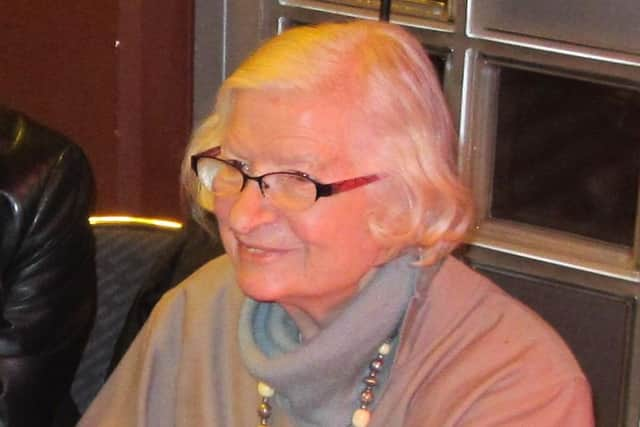

Although in the tradition of Dorothy L Sayers (whom she greatly admired), Margery Allingham, Ngaio Marsh and Josephine Tey, her literary influences included Jane Austen (her favourite novelist), Graham Greene and Evelyn Waugh.
An Anglican and a vice-president of the Prayer Book Society, she described ‘The Book of Common Prayer’ and the ‘Authorised Version of the Bible’ as having been ‘central to my life and to my craft as a novelist’.
The title of ‘Devices and Desires’ is lifted from the General Confession in the Prayer Book: ‘We have followed too much the devices and desires of our own hearts.’ She regarded Thomas Cranmer’s Prayer Book as ‘one of the great glories of English literature’.
Phyllis Dorothy James was born in August 1920 in Oxford, the eldest daughter of a tax inspector. When the family moved to Cambridgeshire James attended Cambridge girls’ high school. Although academically very bright, her cash-strapped father attached no priority to his daughter’s education so she left school when she was 16. She followed her father into the Inland Revenue before working in a theatre where she met her husband, Ernest Connor Bantry White, a Dublin Anglican who was training to be a doctor.
They married in 1941 and had two daughters. Connor served with the Royal Army Medical Corps in India during the war. He returned from the war shell-shocked and was repeatedly hospitalised and finally institutionalised, before his death in 1964.
Assuming financial responsibility for the family, James studied hospital administration and through a combination of hard work and sheer ability rose from filing clerk to principal hospital administrator at the North West Regional Hospital Board in London where she was in charge of five psychiatric hospitals.
Since childhood James had aspired to be a writer but feared she had left it too late to embark on a writing career. In her late 30s she began writing her first novel, ‘Cover Her Face’ (the first in the Adam Dalgliesh sequence) on the train to and from work.
When she had completed her manuscript she sent it to Elaine Greene, a London literary agent. Having read the manuscript, Greene attended a dinner party later that evening, where she met Charles Monteith, an editor from Faber and Faber, and told him about the novel.
Monteith, who was from Lisburn, said that Faber was looking for a new detective-fiction writer since the recent death of Cyril Hare, and Elaine replied: 'I think I have what you are looking for.' Greene sent Monteith the manuscript of ‘Cover Her Face’ the next day and he accepted it. It appeared in 1962.
In 1968, she became a principal in the criminal policy department of the Home Office, where she worked until she felt able to retire in 1979 to write full-time. By this stage she had published six more novels in which her experience in the NHS and the Home Office was put to good use in, for example, ‘Shroud for a Nightingale’ and ‘Death of an Expert Witness’. The central figure in 14 of James’ 21 novels is the cerebral senior detective and published poet Adam Dalgleish. The son of a Norfolk rector, he is not a practising Christian but a ‘reverend agnostic’ who is respectful of Christianity and the church of which his father was part and in which he was brought up.
A chief inspector in the first novel, by the second he is a chief superintendent and eventually a commander, heading up a small elite squad of CID officers working on only the most sensitive cases. Highly intelligent, literary, sensitive and self-sufficient, he processes everything and misses nothing. A widower who lost his wife in childbirth, he finds late love with a Cambridge academic in ‘Death in Holy Orders’ and marriage in ‘The Private Patient’ – somewhat to the chagrin of Detective Inspector Kate Miskin, who harboured some romantic designs on her boss.
‘Tall, dark and handsome’, Dalgliesh could be regarded as James’ Mr Darcy. On her own admission, she even endows him with the qualities she most admires. He may even be a masculine version of herself.
The name Dalgliesh was chosen as a tribute to the author's English teacher at Cambridge girls’ high school. James learnt only years later that Miss Dalgliesh's father was called Adam.
Although James said in 2011 that ‘The Private Patient’ was the final Dalgliesh novel, at the time of her death she had been planning another Dalgliesh novel.
Her final novel ‘Death comes to Pemberley’ might be irreverently described as ‘Jane Austen with murder’.
A drama based on the novel was broadcast over Christmas 2013.
Baroness James of Holland Park died from cancer at her home in Oxford on November 27 2014.
Politics scarcely features in ‘Time to be in Earnest’, her memoir published in 1999, but she does make some observations about the Belfast Agreement, identifying its central flaw: ‘Sinn Fein/ IRA would not have signed unless they believed it was a significant move towards a united Ireland; the Unionists would not have agreed had they not been convinced that the arrangements … would strengthen the Union. Both sides cannot be right.’
Referring to Tony Blair’s role, she noted: ‘There is no great difficulty in achieving at least a temporary peace if one is prepared to propitiate the terrorists.’
And finally, she deplored the early release of murderers, ‘some of whose crimes were atrocious even by the standard of murder’ and their ability to bomb their way to a conference table.