
Sir Keith Park, the shrewd Kiwi who did more than anyone to win Battle of Britain
Air Chief Marshal Sir Keith Park was a New Zealand soldier (who had served at Gallipoli), a Great War flying ace (winning two MCs, a DFC and a Croix de Guerre) and an outstanding RAF commander during the Second World War.
During the Battle of Britain Park commanded No 11 Fighter Group which consisted of 23 squadrons tasked with the defence of London and south-east England. He maintained high morale during those critical months by regularly flying his Hurricane to visit his various stations. In 1940 he was one of the few high-ranking air force officers in the world able to fly a modern fighter.
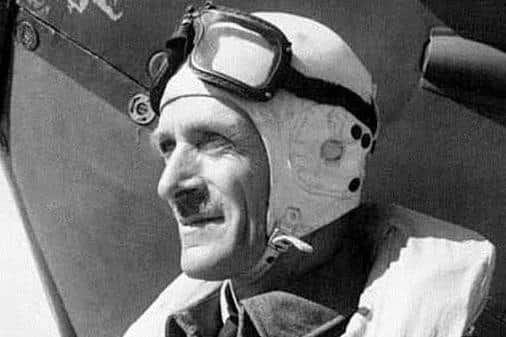

Park personally commanded the RAF on several crucial dates in the late summer of 1940, most notably August 13 (‘Eagle Day’ – ‘Eagle’ was the code word for the German operation to destroy RAF Fighter Command and August 13 was the first day of that operation), August 18 (‘The Hardest Day’ – because both sides recorded their greatest loss of aircraft during the battle) and September 15 (’Battle of Britain Day’).
The Battle of Britain reached its zenith on Sunday September 15. The day started with a large German raid on London consisting of 100 bombers and 400 fighters. It ended with 56 German planes being shot down at the cost of 26 RAF fighters.
While some accounts offer slightly different figures – for example, 61 German planes to 29 RAF fighters – the important point is that the ratio remains broadly similar.
At the height of the battle Winston Churchill visited No 11 Group’s HQ at Uxbridge and asked Park, ‘How many reserves have we?’ ‘There are none,’ was Park’s reply. There is no clearer indication of the nature of the life-and-death struggle in which the UK was engaged. The margin was very narrow but two days later Hitler called off ‘Operation Sealion’ (the German code word for the invasion of the UK) until further notice.
Park was a shrewd tactician with an astute grasp of strategic issues. He had the great ability to adjust quickly to evolving Luftwaffe tactics. Colonel Adolf Galland, the pride of the Luftwaffe, admitted that ‘this had the most demoralising effect on us fighter pilots, who were already overtaxed by physical and mental strain’.
Unfortunately, not all of Park’s colleagues had the wit to appreciate his genius, especially Trafford Leigh-Mallory who commanded No 12 Fighter Group (which was responsible for the defence of the Midlands). When requested, No 12 Fighter Group was to assist No 11 Group. Leigh-Mallory was senior to Park, ambitious and believed he ought to have had command of frontline No 11 Group rather than No 12 Group which he thought of as an inferior command. Accordingly, he sought to undermine Park at every turn.
Leigh-Mallory, and his protégé Douglas Bader, argued in favour of a ‘Big Wing’ formation which they employed, with very little success, to hunt German bomber formations. Leigh-Mallory and Bader contended that a large formation (three to seven squadrons) attacking simultaneously was more effective than the same number of aircraft arriving separately, and it was better for morale.
Park preferred to deploy squadrons either singly or in pairs. Park contended that ‘Big Wing’ formations were unwieldy, difficult to manoeuvre into position, and rarely in the right place when needed.
Perhaps the principal reason the ‘Big Wing’ formations did not work, as Park fully appreciated, was that they took too long to form. Time was of the essence. At the outset of the Battle of Britain, it took 15 minutes for a German raid to reach a target just south of London, and 17 minutes for a Spitfire squadron to respond and gain enough height to attack. The RAF needed to improve its response time and it did.
Leigh-Mallory lobbied hard in political circles to secure Park’s removal and advanced bogus claims for the success of ‘Big Wing’. While Sir Hugh Dowding, the Air Officer Commanding Fighter Command, supported Park, the air ministry backed Leigh-Mallory. Although Park was right and Leigh-Mallory was wrong, Leigh-Mallory’s campaign succeeded. Leigh-Mallory, when he took over No 11 Group in December 1940, pushed for ‘Big Wing’ offensive operations over France. They proved both ineffective and costly.
Richard Saul, the Dublin-born commanding officer of No 13 Group, wrote to Park on hearing of his departure from No 11 Group and paid tribute to ‘the magnificent achievements’ of his group over the previous six months, acknowledging that ‘they had borne the brunt of the war, and undoubtedly saved England’.
Park was promoted to Air Chief Marshal on December 20 1946 and returned to New Zealand, where he became active in public life and in support of various charitable causes, notably the New Zealand Foundation for the Blind and the New Zealand Epilepsy Association. He became a valued member of Auckland City Council, serving three terms between 1962 and 1971. He lived in New Zealand until his death on February 6 1975, aged 82.
As Andrew Marr points out in his ‘History of the Making of Modern Britain’ (2009), neither Dowding nor Park were mentioned in the Air Ministry’s official history of the Battle of Britain, a fact which perhaps tells you everything you need to know about official histories.
It has been left to others to recognise Keith Park’s true place in history. In February 1947 Air Chief Marshal Lord Tedder observed: ‘If ever any one man won the Battle of Britain, he [Keith Park] did. I don't believe it is recognised how much this one man, with his leadership, his calm judgment and his skill, did to save not only this country, but the world.’
Although once firmly in the Leigh-Mallory camp, Douglas Bader eventually acknowledged that ‘the awesome responsibility for this country’s survival rested squarely on Keith Park’s shoulders. British military history of this century has been enriched with the names of great fighting men from New Zealand, of all ranks and in every one of our services. Keith Park’s name is carved into history alongside those of his peers’.