
The five Royal Schools set up during the Plantation of Ulster have stood the test of time
Very few institutions on this island have survived long enough to celebrate their 400th anniversary. The principal churches, Trinity College, Dublin, and the five ‘free schools’ established by James I (of England ) & VI (of Scots) as part of the Plantation of Ulster spring most readily to mind.
Several individuals could perfectly legitimately claim credit for the Royal Schools. For example, George Montgomery, simultaneously the Bishop of Derry, Raphoe and Clogher, wrote to Robert Cecil, Earl of Salisbury, in July 1607: ‘Having spent a whole year in the northern and most barbarous parts of Ulster, and finding the great difficultly of reducing this people to civility, unless a course be taken for the education of the youth in learning and loyalty, he again entreats his Lordship’s furtherance of his first motion to His Majesty for the erection of free schools in the bishoprics of Derry, Raphoe and Clogher...’
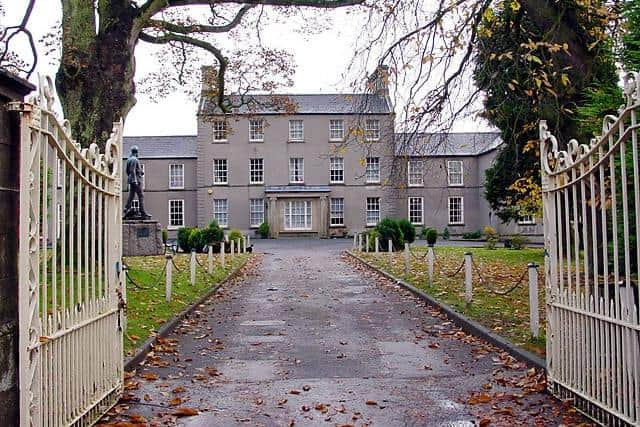

The following year Captain John Leigh, High Sheriff of Tyrone, observed in a report to the King that ‘the best gentlemen’ wanted to have schools for their sons and those of their tenants.
Bishop Montgomery and Captain Leigh were pushing against an open door because James I & VI was a clever and learned monarch with a keen appreciation of the value of education. His tutor had been the formidable George Buchanan – an intellectual of European stature, tutor of Montaigne and a friend of Tycho Brahe – and the young Jamie Sext (as Scots often refer to James I) had been a good student. Before the end of the year an Order in Council ordained that ‘there shall be one Free School at least appointed in Every County, for the education of Youth in learning and religion’.
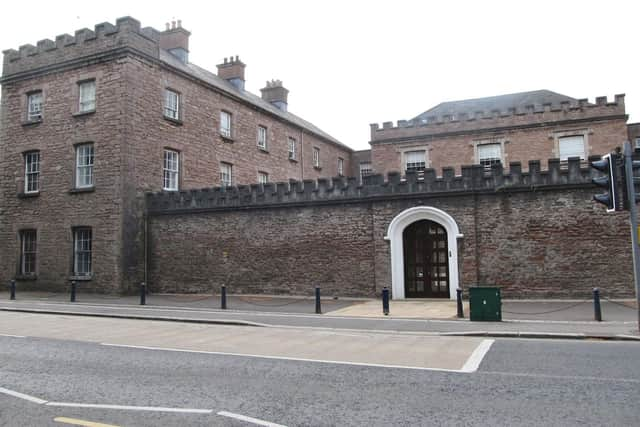
Royal Schools were established in five of the six plantation counties: Armagh, Cavan, Donegal, Fermanagh and Tyrone. The London Companies were to meet the educational needs of County Londonderry rather than the Crown.
However, a decade was to elapse before some of the schools were functioning. Thomas Lydiat was appointed headmaster to County Armagh’s Royal school in 1608 or 1609. Cavan was also quick off the mark, John Robinson being appointed master for the school in Cavan in 1611. A master for the school at Dungannon was appointed in 1614. The first ‘Master and Rector of the Free School at Donegal’, Bryan Morrison, was appointed in 1618, the same year as Geoffrey Middleton was appointed headmaster of the free school in Fermanagh.
All five schools have complex histories. For example, the Royal School in Fermanagh was originally earmarked for Lisgoole, the site of a 12th-century Augustinian foundation (which in 1583 became a Franciscan abbey) on the shores of Upper Lough Erne, between Enniskillen and Bellanaleck, but was actually built in Lisnaskea, Lord Balfour receiving the ‘Recusants’ Fines’ of Cavan and Fermanagh to help meet the building costs. In 1619 the school was ‘two storeys high of good stone, 64 feet long and 20 feet broad, with roof framed and ready to be set up’. By 1622 the roof was ‘up and shingles ready to be put on it’. It was transferred to Enniskillen in 1643 and moved to its present site, Portora Hill, in the 1770s.
Sir Arthur Chichester, the principal architect of the Plantation, ensured that the Tyrone school intended for Mountjoy was built in his own town of Dungannon. Armagh’s Royal School started life in Mountnorris, strategically placed between Armagh and Newry, and eventually moved to various locations in Armagh city during the 17th century. The so-called ‘Old Building’ of the present Royal School, Armagh, dates from 1774 and owes much to the munificence of Primate Robinson, the Anglican Archbishop of Armagh from 1765 to 1794.
Almost all the schools have experienced amalgamations and mergers. In 1971 the Prior School, Lifford, which had been founded in 1870 in the county town of Donegal, was amalgamated with the Royal School, Raphoe. In 1986 the Royal School, Armagh, merged with Armagh Girl’s High School. In the same year Dungannon Royal merged with the Girls’ School, Dungannon. A Royal School for Girls had been founded in Dungannon in 1889 and was located in the North wing of the Royal School between 1892 and 1926. It then became Dungannon High School for Girls, a distinct entity located on a self-contained campus adjoining Royal School lands on Ranfurly Road. So, the merger of 1986 was more in the nature of a re-merger with the Royal School. Enniskillen Royal Grammar School, a merger between Portora Royal School and Enniskillen Girls’ Collegiate School, came into existence in 2016.
The Royal schools have been served by a great many headmasters. During its first 400 years ‘Portora’ has had 25 headmasters, while Armagh and Cavan have each had 22. Dungannon managed to go through five headmasters in as many years in the early 1930s. Some headmasters were extraordinarily gifted and inspirational teachers. Others attract attention for different reasons. During the 1641 Rebellion John Bullingbroke, the headmaster of the Royal school in Tyrone, and his family were ‘robbed and stript of goods, chattels, and other personal estates etc’ by the insurgents. Bullingbroke and one of his children died ‘through hunger and cold’ in the great forest of Glenconkeyne, on the western shore of Lough Neagh. Thomas Lydiat, the first headmaster of the Royal school in Armagh, died a violent death in April 1646 during the English civil war. Trying to prevent the destruction of his books, Roundhead soldiers hurled him down the stairs of his Oxfordshire rectory with fatal consequences. John Starkey, one of Lydiat’s successors also died a violent death. In 1642 Irish insurgents threw the 80-year-old Starkey and his two daughters into a turf bog pool near Charlemont where all three were drowned. Joseph Stock was briefly headmaster of Portora at the end of the 18th century, leaving to become Bishop of Killala in 1798. He had scarcely arrived in Killala when he and his family were taken prisoner by General Humbert’s expeditionary force. A gifted scholar and linguist, Stock survived to write Narrative of What Passed at Killala during the French Invasions of 1798, a much admired and objective account of the French occupation of the town. In 1810 Stock was translated from Killala to the diocese of Waterford.
In addition to educating a local or provincial elite, the five Royal Schools have also been responsible for educating an interesting collection of people who have left their mark on the wider world.
Portora can boast of Oscar Wilde, playwright and poet; Samuel Becket, writer, dramatist, poet and winner of the Nobel Prize for Literature in 1969; and Henry Francis Lyte, the hymn writer and author of ‘Abide with me’.
Armagh can claim credit for Lord Castlereagh, architect of the Act of Union and the outstanding Foreign Secretary of the 19th century; and Richard Wellesley, who served both as Governor General of India and Lord Lieutenant of Ireland, as well as being the brother of the Duke of Wellington.
Dungannon has produced Brigadier John Nicholson, a legend in his own lifetime on the North-West Frontier, who was mortally wounded at Delhi while suppressing the Indian Mutiny in September 1857; and W. F. Marshall, the ‘Bard of Tyrone’. Marshall famously described his alma mater as ‘The Old Grey Mother’ and wrote the school song.
Isaac Butt, the Orange Tory who founded the Home Rule movement and provided Irish nationalism with its dominant political ideology between the 1870s and the outbreak of the Great War, was a product of Raphoe.
Cavan Royal modestly concedes that it is a small school and cannot boast illustrious alumni comparable to ‘its more famous northern sisters’. Nevertheless, distinguished past pupils include William George Fegan, Professor of Surgery at Trinity College, Dublin, and Kester Heaslip, a distinguished Irish diplomat.