
Widow of American Revolutionary War hero could trace her distinguished family roots back to Killinchy
Janet Livingston, wife of American Revolutionary War General Richard Montgomery, was a descendant of the Livingston family of New York, which traces its lineage to the Scottish minister Rev John Livingston (1603-1672), the first resident Protestant minister of Killinchy and a figure memorialised by the Livingston Centre in the village.
The Livingston family includes an astonishing number of prominent Americans – presidents (George H W Bush and George W Bush), a first lady (Eleanor Roosevelt), congressmen, senators, governors, businessmen, entrepreneurs and military heroes. The Livingston Centre at Killinchy Parish Church is a cultural and historical gem well worth a visit.
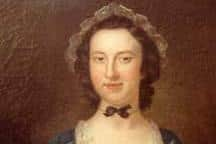

Janet Livingston was born on August 27 1743, into the wealthy colonial elite of New York, and was a sister of Chancellor Robert R Livingston, a prominent New Yorker who was later a member of the five-man committee which assisted Thomas Jefferson in drafting the Declaration of Independence.
Livingston, as chancellor, administered the presidential oath of office to George Washington in 1789. He was also the lead negotiator for the Louisiana Purchase.
Janet spent her childhood at Clermont, the family home on the banks of the Hudson River.
Richard Montgomery was the son of a prominent Donegal landed and political family from Convoy. Disappointed at being passed over for promotion to major, Richard sold his commission in April 1772 and moved to New York where he embarked on the life of a gentleman farmer.
Although he had decided never to marry, in July 1773 he married Janet Livingston, whom he had met eight years earlier when he was stationed in New York after the Seven Years’ War. Initially, Janet was under the impression that he had renewed their acquaintance out of ‘politeness’.
The Livingston family held strong ‘Patriot’ views which Montgomery readily embraced. In May 1775 he was elected to represent Dutchess County in the New York provincial congress.
After the wedding, Montgomery leased his farm to a tenant and moved to a small house in Rhinebeck, New York, for a little more than two years. He bought some surrounding land and set to work fencing, ploughing fields, building a grain mill, and laying the foundation for a larger home. He claimed that he was ‘never so happy’ in all his life but feared that such happiness could never last.
Three months into their marriage, Janet told him of a dream she had in which Montgomery was killed in a duel. Montgomery replied: ‘I have always told you that my happiness is not lasting ... Let us enjoy it as long as we may and leave the rest to God.’
As we all know, Major-General Richard Montgomery was not killed in a duel but died invading Canada.
Because of his military experience, Richard had been appointed a brigadier-general in the American continental army on June 22 1775, an appointment he accepted with reluctance because he was unwilling to leave his idyllic life with his wife or to take up arms against his British fellow countrymen.
On the morning of December 31 1775 leading an unsuccessful bid to storm Quebec, Montgomery’s men faltered when they reached a blockhouse at Cape Diamond on the outskirts of the city. He was killed by artillery fire while trying to urge them forward. Thus, Richard Montgomery became the first hero of the American Revolutionary War.
Janet was devastated by her husband’s death. She never ceased to refer to him as ‘my general’ or ‘my soldier’ and was fiercely protective of his reputation.
After Richard’s death, she moved to the house near Rhinebeck on which he had begun work before the war. Janetretained a keen interest in politics for the rest of the war and was a harsh critic of those who favoured and supported the British connection.
After the war, former Continental Army General Horatio Gates proposed marriage, but Janet declined.
Janet Livingston Montgomery never remarried but proved to be an extremely astute businesswoman and manager of her lands and market gardening enterprises. Planting flowers and fruit trees brought her much pleasure. In 1809 she wrote to her brother Edward Livingston: ‘If I have a pleasure, it is in cultivating my plants ... the garden is a sheet of blossoms and flowers.’
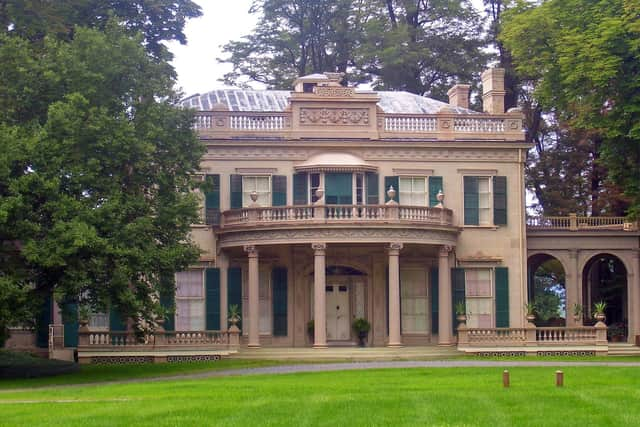
In 1802 Janet Montgomery surprised everyone by acquiring a 434-acre working farm. At the end of a half mile-long avenue bordered by deciduous trees, Janet built a new Federal-style house of fieldstone, which she named Château de Montgomery, or Montgomery Place.
Janet Livingstone was a regular visitor to the home of George and Martha Washington in New York during his presidency.
When George Washington died in 1799, Janet sent Martha a letter of condolence, stating that she could empathise with her friend, now that they were both widows.
After 42 years, General Montgomery's remains were removed at the request of the state legislature to New York City and interred in St Paul's Chapel churchyard. The journey from Quebec to New York was welcomed by civic worthies at Albany, the state capital, on July 4, 1818.
Janet stood alone, at her own request, on her porch and through a telescope watched the steamer Richmond bring her husband's remains down the Hudson River. She was so overcome with emotion that she fainted.
When his remains arrived in New York City, 5,000 people attended the procession. Janet wrote: ‘What more could I wish than the high honor that has been conferred on the ashes of my poor soldier.’
The city of New York erected a monument under the portico of St Paul’s Chapel on the Broadway front. A tablet was also erected on the spot where he fell at Quebec by the Sons of the American Revolution in 1901.
Despite being a widow for 53 years, Janet Livingston Montgomery lived a full and rich life. She died in November 1828 at the age of 85 at Montgomery Place.