
Baroness Foster blames Theresa May for Irish border 'mistake' - despite 2016 letter to PM which sought no 'impediment' to North-South trade
Arlene Foster says Theresa May’s government made a mistake on post-Brexit border arrangements – despite a 2016 letter from the former first minister in which she welcomed the former PM’s position on keeping the Irish border open.
Baroness Foster has also explained the party’s aim in negotiating a deal to prop-up Mrs May’s government was about “prosperity” – saying it delivered “the best broadband infrastructure in virtually the whole of Europe”.
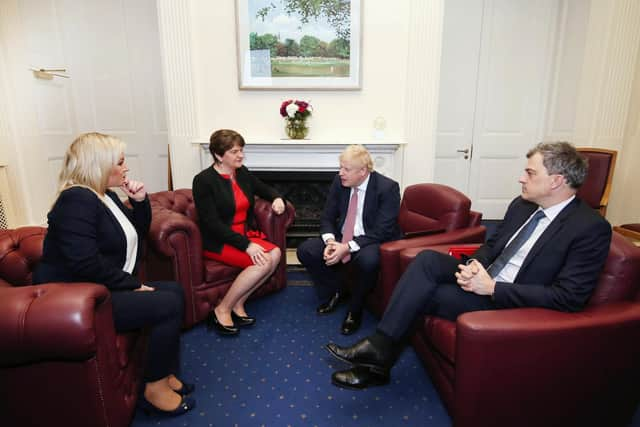

The former first minister was reflecting on the Brexit years in a BBC podcast with former Tory minister Michael Gove. The pair reminisced on the pivotal political and constitutional choices facing the UK during those years – including the political conundrum Brexit posed for Northern Ireland.
A Brexit which included the UK leaving the EU’s single market and customs union – which Baroness Foster supported – meant a border was inevitable, the only question was where it would be.
In the aftermath of the referendum, the former DUP leader had expressed support for Mrs May’s position on keeping the Irish land border open, and then rejected her ‘backstop’ proposal.
Michael Gove – hosting the podcast – served in both Theresa May and Boris Johnson’s governments while when Dame Arlene was First Minister of Northern Ireland.
In the discussion, both blamed initial decisions by Theresa May for the current trade arrangements, saying she had accepted the principle of the EU’s demands about Northern Ireland’s position.
Mrs May had proposed a “backstop” – which meant the province would be treated differently from the rest of the UK – but also tied Great Britain in to a common customs territory with the EU until a solution was delivered to avoid the need for the sort of customs controls within the UK which now exist under the Protocol.
The DUP – and the subsequent leadership of the Tory party – rejected the backstop proposal out of hand. What followed was the current Northern Ireland protocol arrangements.
In the interview, Mrs Foster said other border solutions “weren’t taken up” by Theresa May – who she said “made a mistake” on the issue of how to handle the Irish frontier.
“The idea that there wasn’t going to be a border on the island of Ireland was a mistake” Mrs Foster said.
That’s despite a joint letter from former first ministers Arlene Foster and Martin McGuiness to Prime Minister May in 2016 in which they appreciated her “stated determination that the border will not become an impediment to the movement of people, goods and services” – and said the frontier “has particular significance for the agri-food sector and animal health”.
Critics say those aims, and their prioritisation by the UK government, coupled with the DUP’s pursuit of a Brexit outside the EU customs union, left something akin to the current Irish Sea border deal as the only option available.
Baroness Foster challenged Mr Gove on what he had done to fix the “mistake” made by Mrs May – to which he said himself and Boris Johnson could have “been a bit more robust at that point”. He also said he wished he had been clearer with Mrs May that “she didn’t need to accept the premise that the EU were asserting that there were different ways of resolving the admittedly intricate issues that existed” over the Irish border.
Mr Gove said the EU had originally wanted Northern Ireland to be fully within the single market, but “we managed to move them away from that”.
Dame Arlene, questioned on her decision to prop-up Theresa May’s government, said “what we were looking for in that was to bring prosperity to Northern Ireland.
“And we were able to bring money into Northern Ireland, which allowed us to have now the best broadband infrastructure in virtually the whole of Europe, which I'm incredibly proud of, to bring money into our health service and to our education system. So it was a deal that was good for Northern Ireland”.
The full interview is available on BBC Sounds.