
BBC apologises for presenter's remark that Kingsmills massacre was 'direct reprisal' for loyalist killings
The BBC has said sorry for a claim that the Kingsmills massacre was a “direct reprisal” for earlier loyalist murders.
The DUP MP Gregory Campbell had complained about it, and following the apology he said concerns remain about “consistency in how the BBC provides context when marking key events from the Troubles”.
The “direct reprisal” remark had been made by a presenter on Radio Ulster’s Good Morning Ulster (GMU) show around the time of the 50th anniversary of the attack last month.
Mr Campbell said: “I acknowledge the response from BBC Northern Ireland and the apology issued in relation to the inaccurate reference made on GMU about the Kingsmill massacre.
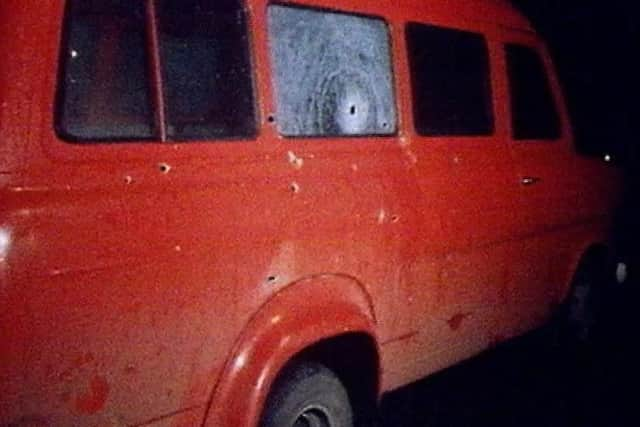

"However, my complaint was not solely about that error, but about a wider issue of editorial consistency.
"In covering Kingsmill, listeners were repeatedly reminded of loyalist killings in the days beforehand.
"Framing it as the BBC presenter did risked implying context or causation for what was, in reality, a carefully planned and sectarian massacre carried out by republican terrorists.
"By contrast, when the BBC marks Bloody Sunday, listeners are not routinely reminded of IRA murders in Londonderry just days before, or of the death earlier that same day of Major Robin Nigel Alers-Hankey, the first British Army officer murdered during the Troubles.
"This is not about justifying or diminishing any loss of life. It is about fairness and consistency by the BBC.
"Selective context gives the very real risk of further reducing confidence in the BBC’s claims of commitment to due impartiality.”
Following an inquest into the murders of the 10 Protestant civilians on January 5, 1976, coroner Brian Sherrard had ruled in December 2024 that “the attack, while ostensibly in direct response to the murderous attacks on the Reavey and O’Dowd families by loyalist terrorists on the evening of January 4, 1976, was not spontaneous but had been planned well in advance”.
He had added: “The evidence presented to the inquest confirms that such a ruthlessly efficient venture could not have been organised and executed within 24 hours.”
The apology to Mr Campbell was made in a letter this week from the interim head of news and current affairs at BBC Northern Ireland.
That letter said: “As you know, we provided extensive coverage of events to mark the 50th anniversary of the IRA killings of 10 Protestant men at Kingsmills, Co Armagh.
"Our reports included testimony from Alan Black and the families of those who had been murdered and referenced HET and inquest findings.
"We said that Kingsmills took place ‘during one of the worst 24 hour periods of the Troubles’ – a point that was echoed/reinforced by Kenny Donaldson in his interview on GMU when he talked about commemorative events for Kingsmills being part of ‘a very difficult day for the area with 16 innocents’ having been ‘murdered across that 24 hour period’ in 1976, and also that many people viewed that time as ‘being the closest that this place came to civil war’ and that it was ‘a particularly dark, dark period’.
"We described the IRA killings at Kingsmills as ‘an overtly sectarian attack’ – reflecting the findings of the second inquest into what happened – and that no convictions had been made.
"We accept that the presenter’s reference on GMU to ‘the Kingsmills’ massacre’ as having been ‘a direct reprisal’ by the IRA for other killings by loyalist paramilitaries in the local area was a mistake and it’s something for which we apologise.
"It was therefore helpful/important in this context that Kenny Donaldson was able to immediately correct this error of fact, referring to the HET’s findings and how the IRA attack had been planned some time in advance.
"BBC Newsline’s report about Kingsmills on January 5 referred to the ‘horror, loss and ongoing impact’ of the killings that had taken place.
"And it is this sensibility that informs our reporting about Troubles events and legacies more generally – mindful always of the sensitivities and hurts involved and also the unresolved nature of many Troubles-related cases.
"I hope this is useful and have made my senior team aware of the points that you’ve raised and also this reply.”