
BBC refuses to reveal costs of 'failing' Radio Foyle - as cash-strapped organisation forced to shed staff and shows
The BBC has been criticised for refusing to reveal how much it spends each year running Radio Foyle – despite its audience being too small to register in official measures.
It comes amid huge cuts at the public service broadcaster, with dozens of staff in Northern Ireland facing the chop in the coming months – and programming likely to be cut.
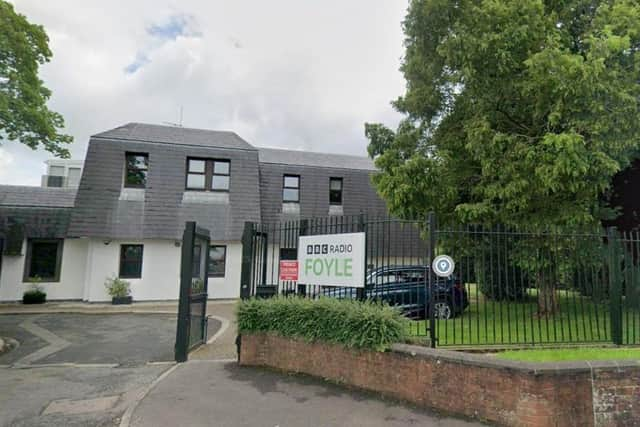

Last month, the corporation avoided questions on whether the Londonderry station is registering less than 1000 listeners – and how much it costs per year.
The News Letter submitted a Freedom of Information (FOI) seeking to force the BBC to reveal the cost of running Radio Foyle, which was rejected. The BBC says it does hold the information, but does so “for the purposes of journalism, art or literature” – and therefore FOI laws don’t apply.
TUV chairman councillor Allister Kyle said nobody is asking the BBC to reveal its editorial secrets, merely the cost of running BBC Radio Foyle.
Mr Kyle, set to run for the TUV in East Londonderry next year, said: “With the BBC refusing to confirm or deny that the station has under 1,000 listeners it is time for some clarity. Hiding behind a decision notice which upheld the decision to not publish the cost of a new evening programme initiative and a technology rollout does not justify refusing to spell out the cost of a failing station to licence fee payers.
“One suspects that with falling listening and viewing figures across the board BBC Northern Ireland is scared that the increased focus on Radio Foyle could have wider ramifications for the whole operation.
“With growing numbers of public turning to alternative media both for news and entertainment it’s harder and harder to justify the BBC tax on the population through the licence fee.
“It’s an outdated funding model for an organisation which has failed to keep pace with changes in the media landscape and, as a result of its own ideological bias, has lost the trust of the public.”
In its response to the News Letter, the BBC said the annual cost of operating BBC Radio Foyle “is directly linked to the decision-making process in relation to commissioning, planning and delivery of BBC’s radio content. This is because the costs inform future decisions about the allocation of resources to continue the provision of the radio service”.
It cited previous rulings which exempted the BBC from releasing information in cases it believes to be similar.
In July, questions were raised about how the BBC can justify continuing to run the bespoke radio service for the North West, despite its “negligible” listening figures.
The broadcaster says it doesn’t have a figure at hand for how much BBC Radio Foyle costs the licence fee payer – and has not disputed the suggestion that the station has less than 1000 listeners for its programming.
The Londonderry-based service has been defended by the Foyle MP Colum Eastwood – who says his party “will not accept any further erosion of local public broadcasting”.
However, the TUV said “preserving a radio station with negligible listener figures would only add to the impression that the BBC is a relic of a former age”.
The public broadcaster is currently looking at at swingeing cuts to its services across Northern Ireland, believed to be worth in the region of four to six million pounds. The staff reductions have been described as unprecedented, and there could be cuts to programmes.
Radio Foyle will not be protected from these savings, and questions have again been raised within the corporation about its future.
The BBC has previously told the media regulator Ofcom that “monitoring the performance of Radio Foyle is difficult as its listening figures are too small to be published” on official audience figures and are “instead combined with BBC Radio Ulster”.
The News Letter asked the BBC whether this suggests that Radio Foyle programming is registering less than 1000 listeners, and for its best estimate for the Radio Foyle audience. We also asked how can it justify maintaining a radio service with which the public are barely engaging, and whether this money could be better spent on other services focusing on the North West, such as online / digital services.
A BBC spokesperson said: “We have significant savings to make over the next period. This will affect many different aspects of the BBC’s work in Northern Ireland, including a reduction in staffing numbers.
“A voluntary redundancy process is currently underway and decisions about any necessary changes to local BBC output and services will be finalised in the autumn time. We want to maintain the reach, relevance and distinctiveness of the service that we provide – maximising audience benefit in an always changing world and using BBC resources to best effect.”
TUV had said that “preserving a radio station with negligible listener figures will only add to the impression that the BBC is a relic of a former age which can no longer justify its own existence”.
SDLP MP Colum Eastwood said: “I have raised the importance of Radio Foyle with successive British Governments and have consistently opposed attempts to cut this vital local service.
He said Foyle has been “a launching pad” for some of the NI’s finest journalists – while “providing trusted local news, sport and current affairs for generations of listeners”
“Too often, when the BBC looks to make savings, Radio Foyle finds itself in the firing line. We will not accept any further erosion of local public broadcasting and I will continue pressing the BBC to ensure Radio Foyle remains at the heart of its plans for the future.”