
Belfast Council 'ignoring concerns of staff, public and politicians' over looming Irish language blitz across whole city's parks, sports grounds and civic buildings
Lawyers giving a green light to blitz the Irish language across Belfast, even in staunchly unionist areas that oppose it, is “astonishing and deeply disappointing”, the DUP has said.
Under a new policy, every council-owned park, playground, leisure centre and sports pitch in the capital city is to get new signs in both Irish and English.

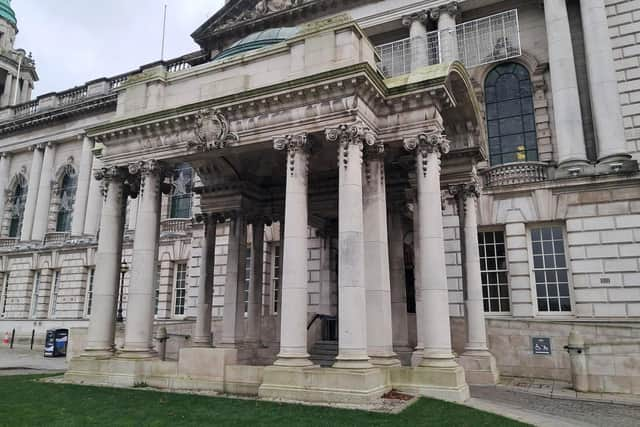
Major buildings such as city hall and some street signage in the heart of Belfast will also be reworked, while the council’s current logo will be junked and replaced with on including Irish which, it has been claimed, has staff who live or work in loyalist areas worried about their safety should the Irish-text logo feature on their uniforms.
The policy was approved last year, but was delayed when all three unionist parties jointly signed a “call-in” motion that would have sent it back for more scrutiny.

Council lawyers this week rejected that call-in, concluding the blitz will not adversely affect the protestant, unionist and loyalist community.
Their verdict clears the way for the policy to come into effect, but was greeted with incredulity by the leader of the DUP wing of Belfast Council, Sarah Bunting.
“The decision to dismiss the call-in is both astonishing and deeply disappointing,” she told the News Letter, arguing the council “has simply chosen to ignore” concerns of staff, councillors and the general public.
She asked: “How can such a conclusion be reached when concerns around community tensions, perceptions of exclusion and the lack of meaningful engagement have been consistently raised throughout this process?”
Ms Bunting added the policy could spark disputes among council staff, potentially damaging “staff morale, industrial relations and frontline service delivery”. She said: “To dismiss those risks without proper consideration is irresponsible.
“[The call-in] was never about opposing language rights. It was about ensuring that decisions are properly scrutinised, workforce concerns are addressed and community relations are protected. The fact that these legitimate concerns have been deemed to have no merit speaks volumes.
“At a time when Belfast faces significant challenges, the council should be focused on delivering core services and bringing communities together, not pursuing policies that risk creating further division and uncertainty.”
The first phase of the language blitz takes in the city centre, west Belfast’s Gaeltacht quarter, and landmarks such as Belfast Castle and Belfast Zoo. Eventual plans will blaze it over the whole city.
In the medium term, the council plans to add Irish to facilities in any wards where between 5% and 15% of people declared they had some ability in the language.
That could include several areas in unionist east Belfast – according to census data, a ward containing Belmont Park falls into that category, as do parts of the Cregagh, Sydenham and Ballyhackamore districts.
The policy is not connected to a different, and in itself controversial, system of building street signs in Irish if as few as 15% of residents agree – though nationalists have now started pushing them through in areas that fail to make even that threshold.
Communities will not be surveyed over whether Irish signs should be added to parks, sports grounds and civic buildings in their areas.