
Belfast Council rejects Armed Forces Covenant by a single vote - DUP bid to bring help for veterans falls in the face of Nationalist opposition
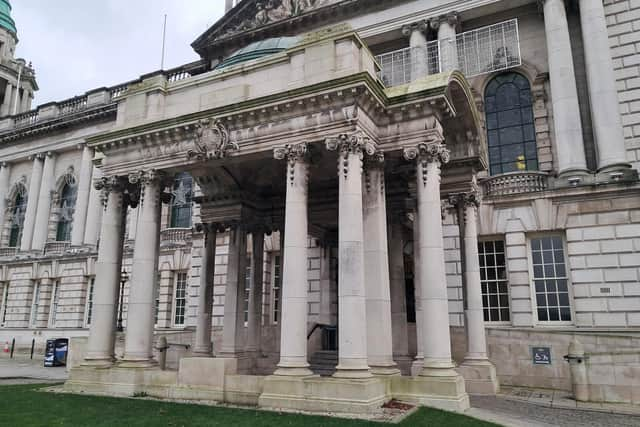
Belfast City Council has decided to reject the Armed Forces Covenant by a single vote.
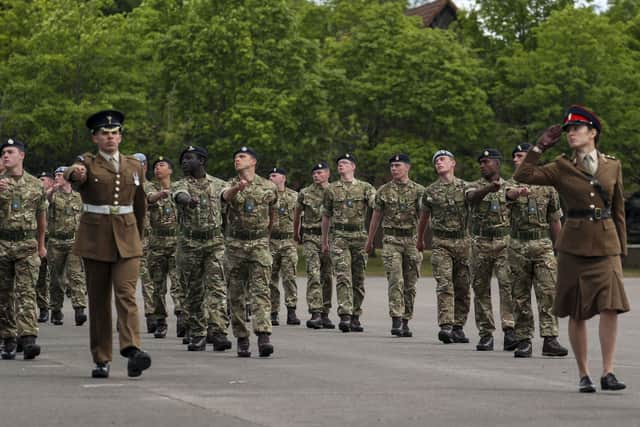
The covenant, a set of pledges providing help for veterans struggling to adjust to civilian life, was thrown out by the council due to Nationalist opposition.
Originally the council had agreed to adopt the covenant, a move that supported by Unionists and Alliance – and that passed by a single vote at the start of January.
But it was rejected by Nationalists, who used equality tests concluding it would have a “minor impact” to justify overturning the initial decision.

The DUP tonight (Monday) tried to have that second decision overturned, which would’ve meant the council adopting the covenant after all.
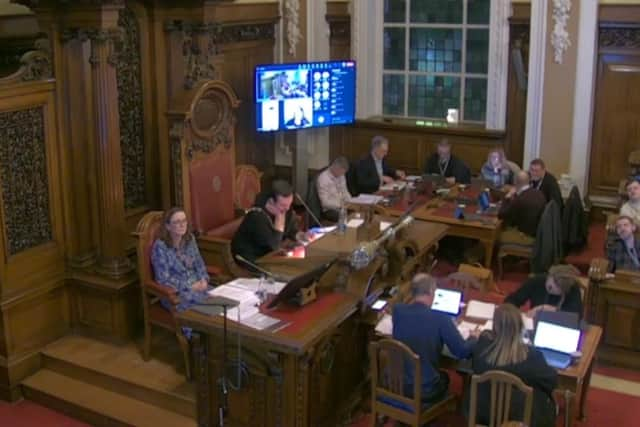
They narrowly failed, with 29 councillors voting to reject helping veterans, while 28 were in favour and two Green politicians abstained.
DUP alderman James Lawlor, the council’s official Armed Forces Champion, originally brought the idea of signing up to the covenant to City Hall.
He told Monday night’s debate that he was frustrated to have to fight the battle again, only now “with the goalposts moved thanks to Sinn Fein”.
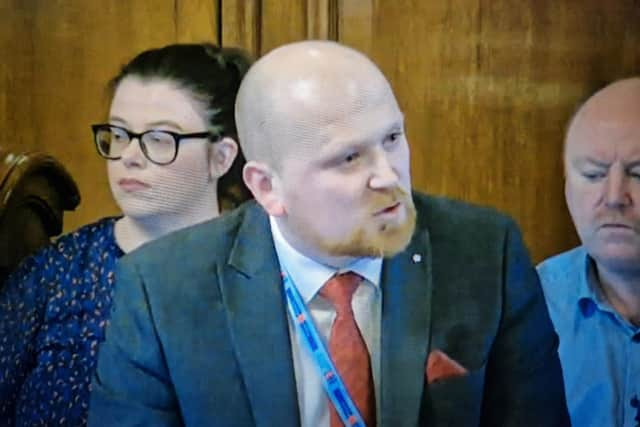
“Passing this motion would recognise that veterans are very much part of our city, and shows them the respect their service deserves,” he said.
Suggesting that the SDLP and Sinn Fein regularly grandstand about equality in the council chamber, he added: “They cannot have it both ways. They cannot be the standard-bearers for equality, while denying it to our veterans.”
Ulster Unionist alderman Sonia Copeland felt that parties opposed to the covenant are “focusing on a narrow and politically charged narrative”.
She characterised the military as “more than just a defence force, a humanitarian force” vital to disaster response in the UK and internationally.
"They are not the actions of an oppressive force, or a community who seeks to divide,” she added.
But Sinn Fein councillor Ciaran Beattie rejected that idea, insisting the British Army “were an oppressive force in this country”, adding: “They did bring hardship on Bloody Sunday, in Ballymurphy, to the multiple young people they shot in the head with plastic bullets – there’s no pretending this didn’t happen.”
That drew the ire of DUP councillor Bradley Ferguson, who accused Mr Beattie of supporting “an army that done to death” people in the La Mon bombing, “disappeared” Jean McConville, and killed Protestants on their way to church.
“The British Army done their best,” he said. “At times, there was the odd one or two wrong, but they wore uniforms and stood to the front; they didn’t hide in bushes and shoot people in the back of the head or burn people to death.”
Disappointed that the the debate had “degenerated into a tit-for-tat thing”, Alliance councillor Michael Long reinforced that his party believes signing up to the covenant is important on equality grounds.
Green councillor Aine Grogan said her group would abstain due to the party’s anti-war principles, though she broadly supported the idea of helping veterans.
SDLP councillor Carl Whyte said: “There is no preferential treatment for victims of armed forces, so I don’t see why we would support preferential treatment for the armed forces themselves.”
With Nationalists outnumbering Unionists on the council, the Armed Forces Covenant was rejected.