
Boyne Bridge Belfast: Bridge which archaeologists say King William III 'extremely likely' to have crossed is preserved despite removal of newer bridge above it
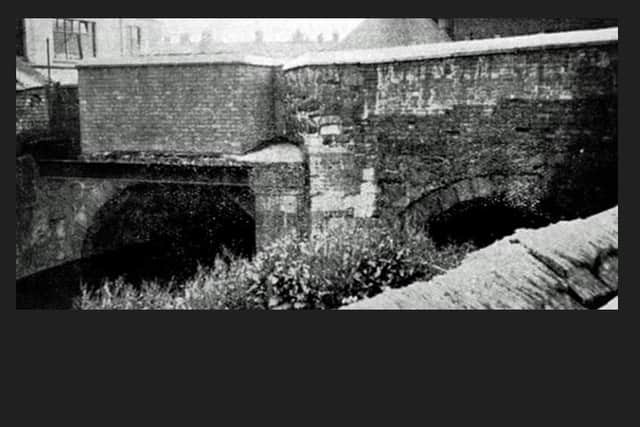
A bridge that archaeologists say King William III is "extremely likely" to have crossed has been preserved for future generations in south Belfast, despite the removal of the Boyne Bridge above it.
Dismantling was completed this week of the Boyne Bridge in Sandy Row, which was built in 1936 to allow traffic to pass over a railway link to Lisburn at the time.
Despite bitter opposition from locals, the bridge was removed to make way for access to Translink’s new Belfast Grand Central Station.
However Translink has now confirmed that it has preserved the older bridge underneath, which will now be central to a wider public realm design.

Not only that, she added that dismantling the 1936 bridge has been overseen by an archaeological specialist so that “key elements will be repurposed for significant artworks to enhance the public realm space in the local area”.
William Dickson, chairman of the local Blackstaff Residents' Association, was so convinced that an older bridge lay under the 1936 bridge - and that King William III passed over it - that he lobbied for an archaeological investigation. Now he has provided a copy of the resulting report.
The Archaeological evaluation at Belfast Transport Hub on behalf of Translink was completed in 2020 by Christina O’Regan, Fred Hamond & Tom Meharg of the Irish Archaeological Consultancy Ltd.
The report says a bridge existed at the south end of the Boyne Bridge since 1611 and - affirming local folklore - concluded that is "extremely likely" that King William III passed over it en route to the Battle of the Boyne.

The report states: "A road bridge over the River Blackstaff is documented hereabouts in 1611. It was rebuilt or extensively repaired in the early 1640s and by 1689 was known as the 'Great Bridge'. As local folklore attests, it is extremely likely that King William III passed over it en route to the Battle of the Boyne in 1690."
By the 1720s, the bridge was known as Saltwater Bridge to reflect the fact that the river it passed over at that time - the Blackstaff - was tidal.
They concluded it still remains buried just north of the junction of Sandy Row with Linfield Road and Hope Street (National Grid 33340/373676).
A spokeswoman for Translink confirmed the findings of the report and said it was submitted to the DFI Planning and DfC Historic Environment Division in line with Translink’s statutory obligations.
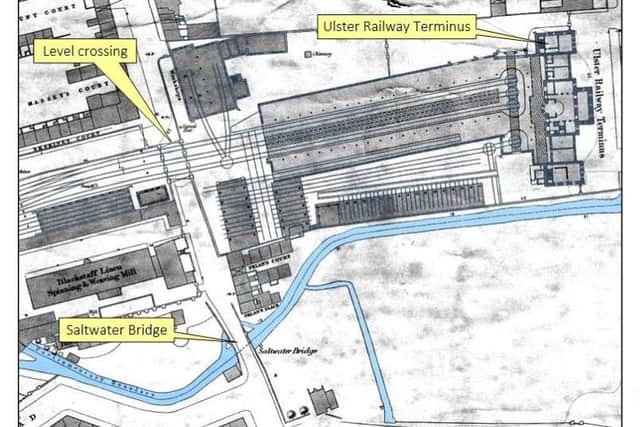
“As part of this process, we outlined our intention to maintain the remains of the Saltwater Bridge in-situ, in line with industry best practice. The remains of the Bridge have not been disturbed during the construction project, and the bridge will be retained in-situ."
Despite losing the 1936 bridge, William Dickson said it has been "a major success" to preserve the original 17th Century structure.
Another major success, he said, was Belfast City Council accepting their proposal to name the new road ‘Boyne Bridge Place’.
"Campaigners will continue to work for the best possible outcome in recognising the historical importance of the site and especially the buried 1642 bridge which for 160 years was known as the Boyne Bridge.
"It was this bridge that King William III and his army crossed in 1690 on their way to the Battle of the Boyne,” he added.