
Brighton bomb 40th anniversary: Jo Berry says she wants bomber Patrick Magee to say 'nothing was worth killing for'
A woman whose father was killed in an IRA bomb 40 years ago at the Tory party conference in Brighton would like to hear the bomber say "nothing was worth killing for".
Jo Berry's father Sir Anthony Berry MP was killed in the bomb attack forty years ago this weekend - and she has made headlines for her friendship with the man convicted of planting it - Patrick Magee.
While many people recoil at the idea, Jo says that the process of humanising her father to Magee has caused him to question the morality of what he did.
She hopes that one day he will accept that he had an alternative to terrorism, but in the meantime she finds solace from people telling her that her story has inspired them to make positive changes in their lives.
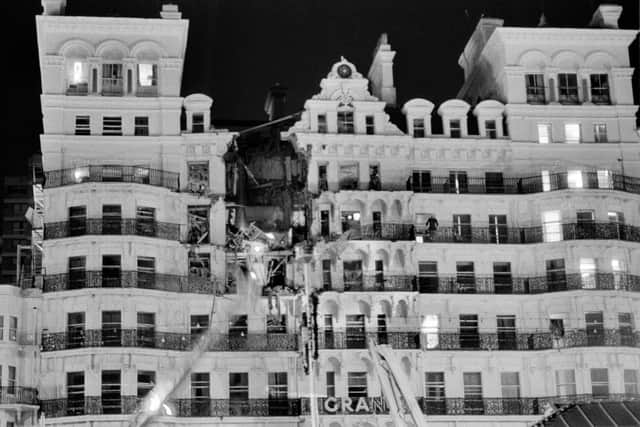
The bomb killed five people and injured 34 others on 12 October 1984.
Others killed were Eric Taylor (North-West area chairman of the Conservative Party); Lady Jeanne Shattock (wife of Sir Gordon Shattock, Western area chairman of the Conservative Party); Lady Muriel Maclean (wife of Sir Donald Maclean, president of the Scottish Conservatives) and Roberta Wakeham (wife of Parliamentary Treasury Secretary John Wakeham).
However it missed the IRA's target, Margaret Thatcher, who addressed the party conference hours later.
At 15, Jo was deeply impacted by the Vietnam war and began to study the non-violent politics of Ghandi. She spent several years in the Himalayas "searching for inner peace and studying meditation" and arrived back in the UK just months before the bomb - aged 27.


Magee was jailed for the bombing and released in 1999 under the Belfast Agreement. She met him 16 years later.
"Then he started his journey. He would later say that he was disarmed by my empathy.
"He arrived with a sense of political righteousness - 'they were the oppressed and their need for violence was the only way,” Jo said.
Her intention was not to ask if he felt remorse, but "to see him as a human being".
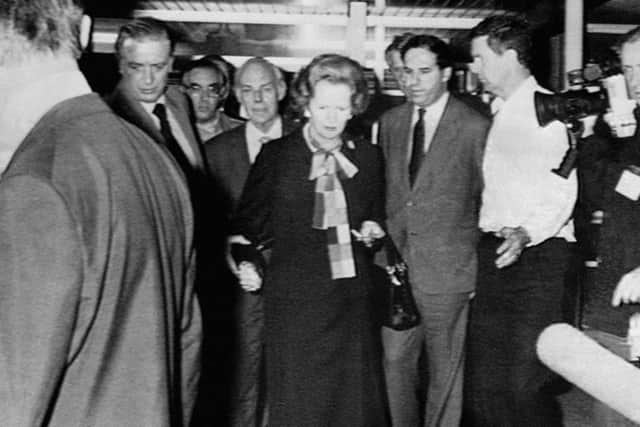
After hearing her side of the story, he later replied to her: "I don't know who I am anymore. I am sorry I killed your dad".
However, he still claims that the IRA had no choice.
"I think he is conflicted. He has said that in public... and he does ask himself, 'was it right'?
"When he first met me, he saw my dad as a legitimate target, which is a very cruel and unfair thing to say, but that's the nature of people who kill.
"What's happened since is that he now knows my dad is a wonderful human being, and he knows the impact, and he's conflicted. He feels the pain of knowing that this wasn't a legitimate target. He was a wonderful man, and that's not easy. That's why I meet him. It's because it's rehumanising my dad, and he's able to hear the impact [of the murder]."
She would like him to finally say that "nothing was worth killing for" - but accepts he might not.
"And in the meantime when we have spoken at engagements together, we've had people come up who say that they've resolved grievances, built bridges with enemies because of what they've heard. That means something to me."
Jo believes killers may have difficulties renouncing violence because they may lose their identity and role in the world. And she accepts that while she is ready for reconciliation with Magee, he is not - because he still justifies violence.
As a practitioner of restorative justice in homicide cases, she acknowledges: "If the perpetrator is going to justify their actions, I don't bring them together [with the victim]". She acknowledges her own path has not followed that example.
Kenny Donaldson, director of victim's group the South East Fermanagh Foundation, said that the organisation's thoughts are with all those who were directly impacted, on the 40th anniversary of the bombing.
He said: "There was no justification for the Brighton Bomb, those who carried it out and the ideology that sent them to do so had alternatives, but they chose not to take them; they made their choices, and they must now own responsibility for the human carnage they inflicted.”
• Jo Berry and Patrick Magee will speak at Clonard Monastery, Belfast at 7pm on October 22.