
Bringing assisted dying bill back to Parliament is quickest way to change the law, says Kim Leadbeater MP
Bringing the assisted dying bill back to Parliament is the quickest way to change the law, the MP behind the proposed legislation said as some supporters called for a referendum on the issue.
Kim Leadbeater said while she understood that the public “want their voice” to be heard in the long-running and divisive assisted dying debate, she believes the bill returning to Parliament in the next session is the best way to address it.

The Terminally Ill Adults (End of Life) Bill will run out of time to become law when debate tomorrow – its last scheduled sitting for this session of Parliament – ends.
It had proposed allowing adults in England and Wales with fewer than six months to live to apply for an assisted death, subject to the approval of two doctors and an expert panel.
It is understood the final debate tomorrow is likely to focus on the process and how the bill has ended up running out of time, rather than continued discussion on its contents.
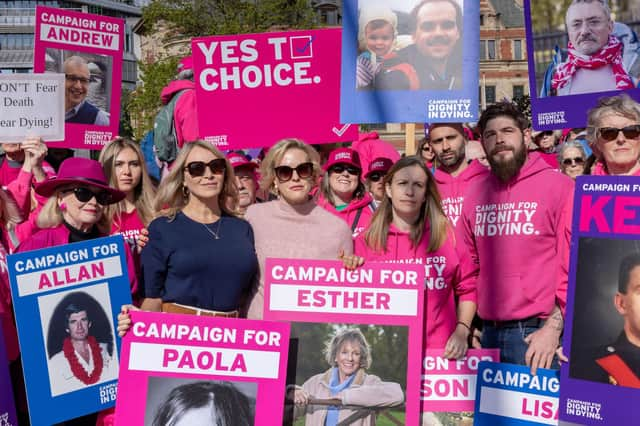
Supporters and opponents of a change in the law gathered outside Parliament yesterday to both praise and criticise the House of Lords for the time they have taken to scrutinise the bill.
More than 1,000 suggested changes to the bill – believed to be a record for backbench legislation – were tabled in the Lords when it reached committee stage and it has now run out of time.
Ms Leadbeater, who joined demonstrators, repeated her assertion that it was “wrong, democratically and morally, that the House of Lords have talked the bill out and allowed it to fall”, after it twice passed votes in the Commons, albeit with a narrower majority second time around.
Peers in the Lords have insisted they have simply done their job of scrutinising legislation which they argue is not safe.
George Fielding, a spokesman for a coalition of disabled people, grassroots organisations and campaign groups, said they were intent on “reclaiming the truth”.
He said: "The House of Lords has not obstructed democracy – they have fulfilled their democratic duty by scrutinising legislation that carries profound consequences for some of the most vulnerable people in our society.
“Disabled people are coming together to say clearly: laws on assisted suicide and euthanasia cannot be viewed in isolation from the realities of inequality, underfunded care and systemic disadvantage.
“We are here to thank the Lords for taking the time to listen, to question and to strengthen this debate – and to remind the public that there are more humane, compassionate and life-affirming ways to support people at the end of life.”
Ms Leadbeater has confirmed she will be one of the MPs to add her name to the ballot of private members' bills in Parliament's next session, in a renewed attempt to change the law.
Responding to calls from some campaigners yesterday for a referendum on the issue, Ms Leadbeater said: “The public want to speak, so I understand why they want their voice because they feel that Parliament has failed them.
“But we need to get it back through Parliament as that is the quickest way to get this done.”