
British-Irish institute not ‘academic ivory tower’ as it asked for state funding
An institute for British-Irish studies insisted to Irish civil servants that it should not be viewed as an "academic ivory tower" as it pitched for state funding, according to memos.
Representatives of the Institute for British-Irish Studies (Ibis) at UCD met with civil servants at the Department of the Taoiseach in 2001 about possible government funding after it was noted by officials its work was constrained by a "lack of financial resources".

A senior civil servant is to have said during the meeting that there were issues with the amount of government funding being allocated to research into "the Northern situation".
A meeting was held between director of the Ibis John Coakley and the Taoiseach's officials in April 2001 .
It was held two years before a private gift of £350,000 given to fund the institute was due to expire in September 2003 , according to documents released as part of the National Archives in Dublin .
Among the topics discussed during the meeting were areas of research for the institute and possible sources of funding.
It was noted that a development proposal by the Ibis set out four areas of research: on constitutional change; on identity and conflict; on international ethnic conflict documentation; and on a peace forum.
On the second theme, the research would involve examining "Britishness" in Ireland and "Irishness" in Britain .
Assistant secretary general in the Department of the Taoiseach Wally Kirwan said he would need to consult with colleagues and said there was "an issue as regards the extent to which the Department could or should get involved in this area".
It was noted that the department had no unallocated funding that would be relevant to the institute.
He also said that "the Northern situation was the subject of a lot of research".
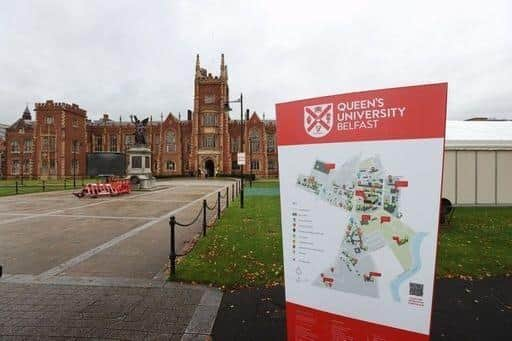
He mentioned the Centre for Cross-Border Studies in Armagh, the Centre at Queen's University in Belfast , the centres at the University of Ulster and in departments of various other universities.
"All this was fruitful, but the proliferation of centres did raise issues about the allocation of Government funding, particularly any such funding outside the regular HEA ( Higher Education Authority ) channels."
Mr Coakley said there was a "public policy need for an institute such as Ibis".
"The institute was not to be regarded as an academic ivory tower, but rather as a useful resource to the public sector."
Mr Kirwan said that the work of the Ibis was "very valuable" and said the forum for peace would be useful in the context of Ireland securing a seat on the UN Security Council "in terms of bringing our wisdom to bear on international situations such as Kashmir ".
Mr Coakley said that a mix of both public and private funding was needed by the institute, but said public funding was needed to "secure the long-term future of the institute".
Mr Kirwan said "no such subhead existed within the Department of the Taoiseach " to provide such funding, and suggested it would be the same for the Department of Foreign Affairs .
The note said that it was suggested at the meeting that former US president Bill Clinton's contribution to the peace process could be marked in some way.
But Mr Kirwan, referencing the fallout from the revelation of Mr Clinton's affair with White House intern Monica Lewinsky , "cautioned that the present investigations involving the former president could influence whether the idea goes ahead or not" and that it would "depend on the degree of controversy generated".
He also cautioned against "giving the issue of 'Britishness' in Ireland too high a profile, as there were sensitivities involved in this area, even though it was a legitimate focus of academic inquiry".
In a separate document compiled by civil servants, it was also noted that the Study of Social Change in UCD "clearly states that the activities of the IBIS take place under the umbrella of that organisation".
The documents states that the Institute for the Study of Social Change (ISSC) was founded in 1999 and received research funding of £3.494 million from the Higher Education Authority , for research including British-Irish studies.
In a letter from Mr Coakley to Mr Kirwan dated September 2001 , he said that Ibis had received "no core funding from government in any form".
He said that the Ibis received £2,980 from the ISSC to cover the costs of two computers and one meeting of the British-Irish consortium, and would not receive any further funding.
In a confidential note on the Ibis dated October 2002 , an Irish civil servant said it was "difficult to assess the value of Ibis activities" to the government.
It said its activities involve "occasional" public lectures involving political figures which "do not seem to fit the role" as a think-tank that would help inform the government on north-south east-west policy issues.
- This article is based on documents contained in the file labelled 2025/125/305 in the National Archives of Ireland .