
Budget 2026: What the Chancellor's plans mean for people in Northern Ireland - from home heating oil to petrol prices
Cuts to tariffs on home heating oil are among measures the government has set out to help Northern Ireland in its 2026 Budget – with more cash on the way to Stormont to help cut rates for struggling businesses.
Chancellor John Healey says the plans by the Labour administration will provide “breathing space for today” and “hope for the future”.
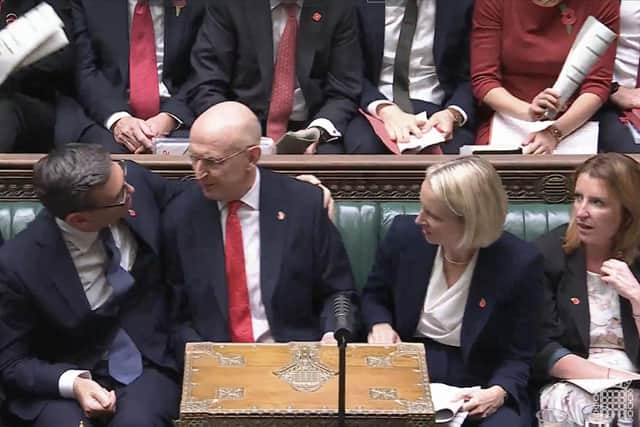

However, the Conservative opposition says the financial plans by Andy Burnham’s government are “not good enough, not strong enough, not bold enough”.
Kemi Badenoch said Labour was “addicted to spending other people’s money” as she criticised the government’s record on welfare spending.
Locally, the Northern Ireland Executive will receive an additional £270 million as a result of budget decisions. The government says this is on top of the “record Spending Review 2025 settlements” and an additional £740 million allocated at previous budgets.
The government says its plans to temporarily suspend tariffs on kerosene fuel will both lower production costs for the UK’s agricultural sector and support households that rely on heating oil to heat their homes.
Given Northern Ireland’s reliance on kerosene as the main source of home heating oil, the government pitched the plan as a particular help to the province.
“Food and kerosene suspensions will be in place for two years until December 2028. Fertiliser tariffs will be suspended until December 2027”, the budget document says.
Ministers also say the government is “continuing to invest in Northern Ireland’s stability, economic potential and unique contributions to the UK” – valuing the local economy at £68 billion per year.
New announcements relating to the province were £7.5 million of new investment for Queen’s University Belfast’s Centre for Secure Information Technologies (CSIT) Cyber AI Hub, to “further grow Northern Ireland’s globally strong cybersecurity and AI sector”.
There is also £1 million of new funding for a Northern Ireland Investment Summit, with the government committing to “strengthen East-West trade”, and highlight “dual access to the UK internal market and EU market”.
In industry, a British Industrial Competitiveness Scheme has been introduced in GB for electricity intensive manufacturing industries – and the Northern Ireland Executive will receive funding to deliver a comparable scheme.
There is also a promise to establish new Defence Technical Excellence Colleges in Scotland and Wales, and work with the Northern Ireland Executive on “a region-wide defence skills and apprenticeship programme”.
Nationally, a planned increase in fuel duty has been scrapped – with Mr Healey saying it would help motorists with the cost of living. The Chancellor said that the 5p cut to fuel duty, which was due to end on December 31, would be extended until July 2027. The cut was introduced by the Conservative government in spring 2022 to freeze fuel duty at 52.95p per litre for both petrol and diesel.
“For anyone who relies on their car for their work, from care workers to engineers, I am increasing the higher mileage rate from 25p to 35p per mile, and making permanent the increase to the standard mileage rate introduced earlier this year”, the Chancellor said.
RAC senior policy officer Rod Dennis said drivers “may breathe a mild sigh of relief” at Mr Healey’s announcement, but “many are likely to be disappointed the Chancellor didn’t go further to support them – not least as the freeze is only in place until next summer”.
He added: “The freeze only avoids making an already difficult situation worse – it doesn’t make filling up any cheaper".
The government also announced a one-off £100 payment for 20 million households in council tax bands A-D in England to help deal with rising energy bills, with equivalent funding for Scotland, Wales and Northern Ireland.
The Chancellor said that that around 70,000 small retail, hospitality and leisure businesses in England will be taken out of paying business rates altogether – with funding to be provided to Stormont for a similar scheme here.
Retail NI Chief Executive Glyn Roberts said: “The Executive now has an opportunity to use this additional funding to make a real difference. It must prioritise small business rates relief, support independent retailers and help tackle the growing high street vacancy crisis.
“Northern Ireland’s small businesses cannot afford to be left behind. The Executive must ensure that this Budget delivers tangible benefits for our local economy and the businesses at the heart of our communities.”
Import taxes will be removed on more than 100 food products, including gherkins and marmalade – and products for industry such as fertilisers.